
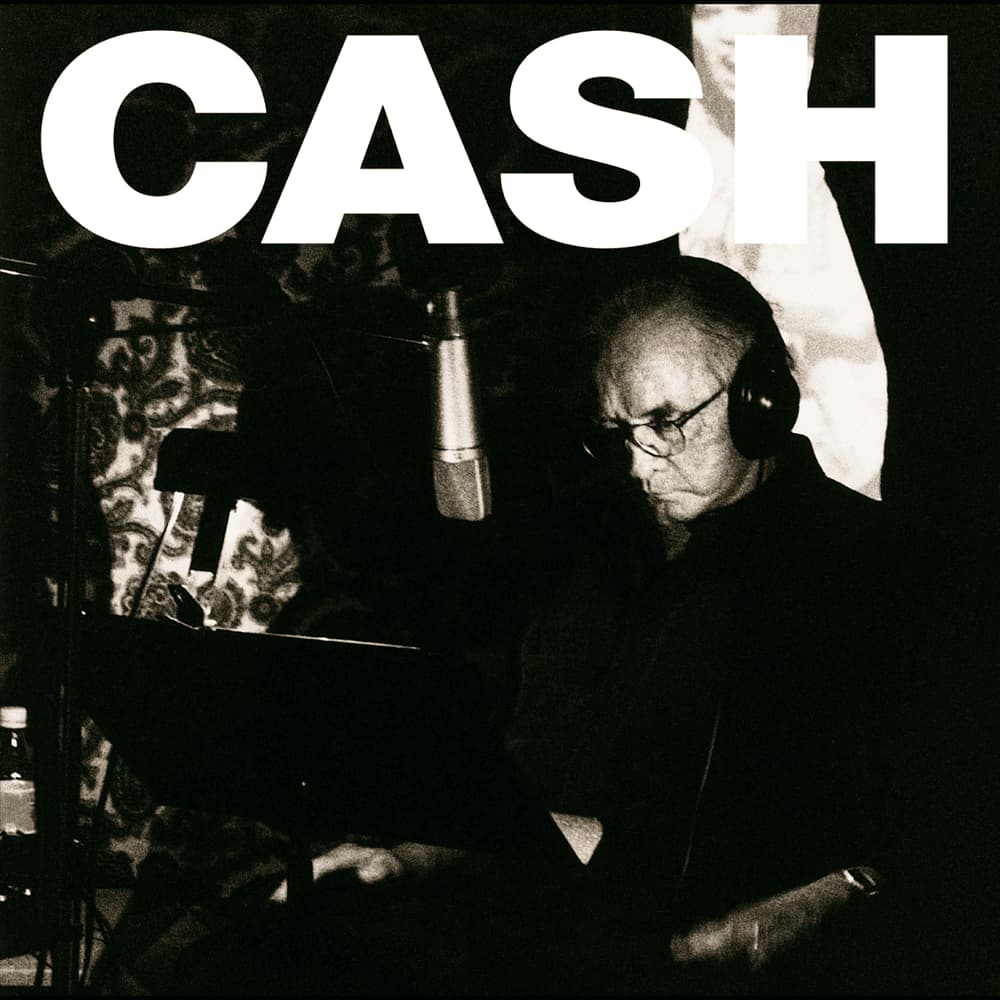
The Final Train Whistle: A Darkly Humorous, Profoundly Moving Farewell from the Man in Black.
Some songs arrive with the fanfare of a hit single; others arrive with the quiet gravitas of a final, private conversation. Johnny Cash’s “Like The 309” belongs definitively to the latter. It is not a chart story in the traditional sense it was never released as a primary single but its profound significance to the legendary American songbook lies in its context: it is the last song that Johnny Cash ever wrote and recorded before his passing in September 2003. It serves as the defiant, witty, and deeply poignant final original statement from one of music’s most towering figures.
This song appeared posthumously on the album “American V: A Hundred Highways,” which was released on July 4, 2006, nearly three years after his death. The album itself was an immense success, debuting at Number 1 on both the US Billboard 200 and the US Top Country Albums chart a testament to the enduring love for The Man in Black. While “Like The 309” didn’t chart as a single, its inclusion on the Number 1 album ensured that this final message reached the ears of millions of listeners, who recognized it immediately as the capstone of an extraordinary career.
The story behind “Like The 309” is the very definition of melancholy inspiration. Cash wrote and recorded the song in the Cash Cabin Studio in Hendersonville, Tennessee, during the incredibly difficult, final months of his life in 2003, shortly after the death of his beloved wife, June Carter Cash. He was frail, suffering intensely from chronic asthma and other ailments, yet his collaboration with producer Rick Rubin on the American series had reignited his creative spark, giving him, as Rubin noted, a “main reason for being alive.”
“Like The 309” is quintessential Cash a classic train song, but with a startling twist. In his youth, trains symbolized freedom, adventure, and escape; here, the train becomes the ultimate metaphor for the final journey, the one that carries him away. The lyrics are darkly comic and breathtakingly honest, an unflinching look at his own mortality:
“They’re puttin’ me in my box on the 309”
The train, the 309, is coming to carry his coffin.
But the most gut-wrenching, yet utterly courageous, line is his raw self-assessment of his declining health. Cash had suffered from severe breathing difficulties, and he incorporates this physical reality into the narrative with a defiant gallows humor:
“I got my asthma comin’ down like the 309”
In the recording, one can hear the fragile, wheezing quality of his voice—a voice that was literally giving out. By incorporating his illness into the song’s central metaphor, Cash does what he always did best: he faces the brutal truth head-on, stripping away all pretense. It’s a remarkable act of emotional transparency, a way of laughing or at least, wryly commenting in the very face of his demise.
The genius of this composition lies in its tone. It is not a lament; it’s a reckoning, full of a strange, steady resignation. It connects his childhood love of trains a motif that runs from “Folsom Prison Blues” to his train-themed concept album directly to his end. The song is short, simple, driven by a raw acoustic arrangement, focusing every ounce of weight on his weathered voice and the directness of the lyric. It’s the sound of a man who has made peace with his fate, a final message delivered with the same rugged integrity and profound insight that marked his greatest work.
For those of us who have followed Johnny Cash through the decades, from Sun Records to Folsom Prison, and through his late-career renaissance, “Like The 309” is more than just a song; it’s an intimate goodbye. It’s the last word from an American original, reminding us that even in the face of the inevitable, there is room for poetry, humor, and an unshakeable connection to the deep, resonant rhythm of the railroad the rhythm that had been the heartbeat of his music all along. It’s a powerful, nostalgic piece that reminds us of a simpler time when a man could sum up his entire life on a wooden box guitar.
 Oldies Songs