
A tender promise whispered through time, where love is measured not by passion, but by devotion.
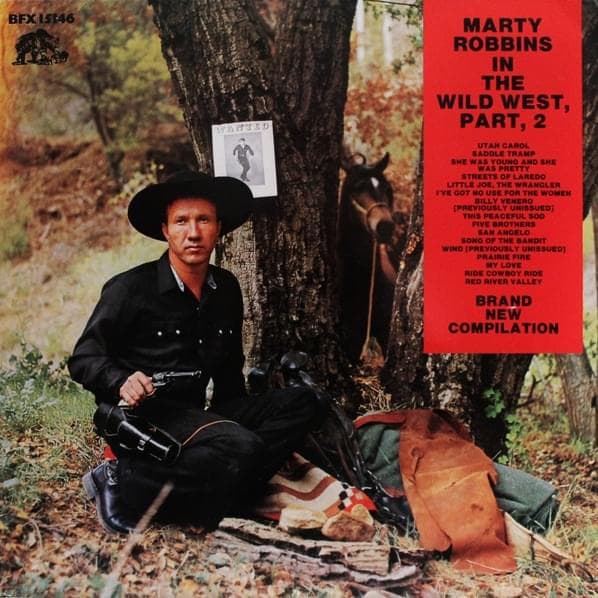
When Marty Robbins recorded “My Happiness” in the early years of his career, he was still shaping the voice that would later define some of the most enduring songs in American country and western music. Though the song did not dominate the national charts upon his release, it became a quiet favorite on radio and among listeners who recognized sincerity when they heard it. In many ways, “My Happiness” stands as an emotional cornerstone, not because of commercial triumph, but because it reveals the heart of the artist before fame fully claimed him.
The song itself was already well known before Robbins recorded it. Written by Borney Bergantine and Betty Peterson, “My Happiness” had been a major pop success in 1948. But Marty Robbins did not approach it as a pop standard. He reshaped it with the gentleness and emotional restraint that would later become his signature. His version feels less like a performance and more like a personal vow, spoken quietly, without ornament or excess.
At this point in his life, Marty Robbins was a young man grounded in traditional values, shaped by faith, family, and an unwavering belief in sincerity. Unlike many performers chasing novelty or flash, Robbins believed that a song should comfort rather than impress. “My Happiness” reflects that belief completely. It is a song about love not as excitement, but as responsibility. Love here is not fleeting. It is chosen, protected, and placed above personal desire.
Musically, the arrangement is soft and unhurried. There is no dramatic build, no moment designed to overwhelm. Instead, the melody unfolds patiently, allowing the listener to settle into its warmth. Robbins’ voice is calm, steady, and remarkably sincere. He does not strain for emotion. He trusts the words. That trust gives the song its quiet power. Each line feels deliberate, as if spoken to one person alone.
Lyrically, “My Happiness” expresses a love that finds fulfillment in giving rather than receiving. The narrator’s joy exists entirely in the happiness of the one he loves. There is humility in this perspective, and a deep emotional maturity. The song does not ask for guarantees. It offers reassurance. It speaks of devotion without condition, a love willing to stand quietly in the background, content simply to remain.
What makes Marty Robbins’ interpretation especially moving is what it suggests about his character. Throughout his career, Robbins was known not only for his storytelling genius, but also for his integrity. He believed that music carried responsibility, that songs should uplift rather than wound. “My Happiness” feels like an early declaration of that philosophy. It is gentle without being weak, emotional without being dramatic.
Within the broader arc of Robbins’ catalog, the song stands apart from his later epic ballads and western narratives. There are no gunfights, no tragic endings, no sweeping landscapes. Instead, the setting is intimate and still. Yet this simplicity reveals something essential. Before Marty Robbins became a master storyteller, he was a man who understood quiet devotion. This song captures that understanding beautifully.
Culturally, “My Happiness” resonates because it reflects a time when love songs often spoke of commitment rather than conquest. It belongs to an era when promises were meant to last, and words were chosen carefully. Listening to the song today feels like opening an old letter, its edges softened by time, its message unchanged.
The enduring appeal of “My Happiness” lies in its honesty. There is no attempt to persuade, no attempt to impress. Marty Robbins simply offers his voice and lets the emotion speak for itself. That restraint is what gives the song its lasting strength. It does not demand attention. It earns trust.
In “My Happiness,” Marty Robbins reminds us that the deepest love stories are often the quietest. They are not written in grand gestures, but in steady presence, patience, and care. The song remains a gentle testament to a kind of love that endures precisely because it asks for nothing in return.
 Oldies Songs