
A Bridge Across Time: Love’s Simple Grace in a Changing Country Landscape
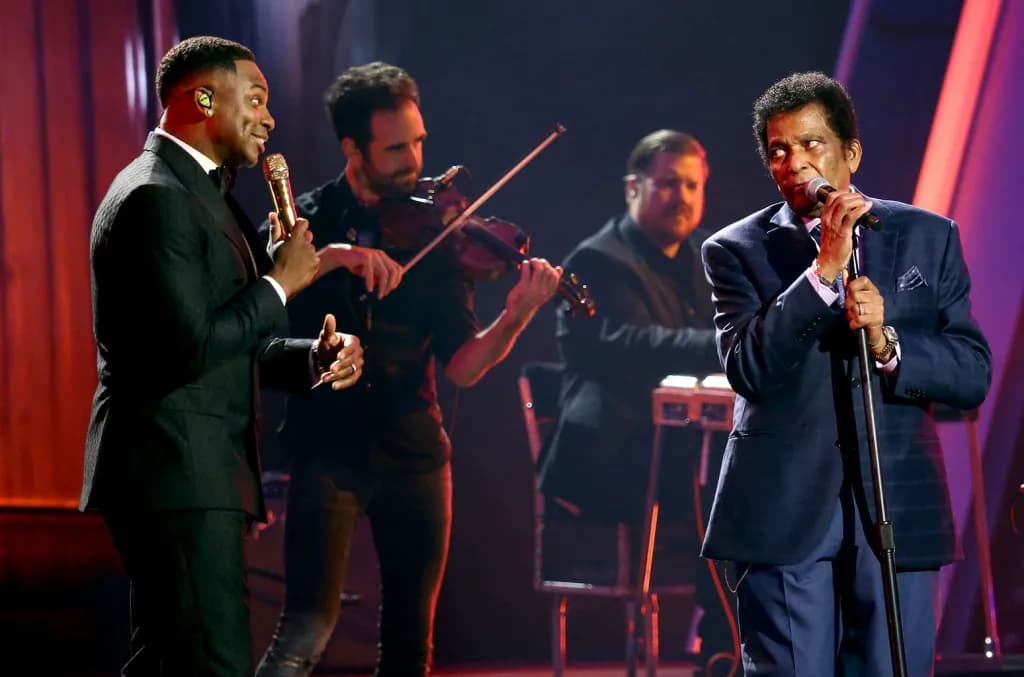
When Jimmie Allen joined Charley Pride to perform “Kiss an Angel Good Mornin’” on the stage of the Grand Ole Opry in 2020—just before the CMA Awards—it was more than a performance. It was a benediction, a passing of the torch between two Black country artists separated by nearly half a century of struggle and triumph. Originally released in 1971 on Pride’s album Charley Pride Sings Heart Songs, the single became one of his defining moments, soaring to No. 1 on the Billboard Hot Country Songs chart and crossing over to reach the pop Top 30. Nearly fifty years later, Allen’s respectful partnership with Pride reintroduced this timeless anthem of domestic devotion to a new generation, reminding audiences that tenderness and tradition still have a place in modern country music.
The creation of “Kiss an Angel Good Mornin’,” written by Ben Peters, embodies the elegant simplicity that defined Charley Pride’s artistry. In an era when country music often gravitated toward heartbreak and honky‑tonk lament, this song stood out as an ode to everyday love—a portrait of quiet constancy rather than grand passion. Pride’s warm baritone, steady and unhurried, gave weight to lyrics that spoke not of longing but of gratitude. The melody glides with an easy swing, its rhythm evoking the gentle repetition of morning rituals, those small acts through which affection becomes enduring.
At its core, the song is about grace—the kind found not in divine revelation but in human connection. Pride’s delivery made it believable that happiness could reside in simple gestures: a morning kiss, a tender word before parting. That sincerity resonated deeply at a time when America was mired in social upheaval; his voice offered reassurance that love could still be steadfast amid uncertainty. The universality of that message helped the song transcend racial and genre boundaries, turning what might have been a modest domestic scene into a cultural statement about unity and decency.
When Jimmie Allen stood beside Pride on that Opry stage decades later, the moment carried layers of significance beyond nostalgia. Allen, one of contemporary country’s few prominent Black voices, represented continuity and progress—the living echo of what Pride had made possible. Their duet transformed “Kiss an Angel Good Mornin’” into both homage and renewal: the elder’s calm authority intertwining with the younger artist’s reverent energy. It was as if history itself had taken harmony.
Listening now, one hears more than melody or lyric; one hears lineage. The song endures not because it shouts its message but because it whispers it with conviction—that love, tended daily and humbly, is what redeems us all. Through every chord and every repetition of that tender refrain, “Kiss an Angel Good Mornin’” reminds us that affection is both ritual and revelation—a lesson as vital today as it was when Charley Pride first sang it into American hearts.