
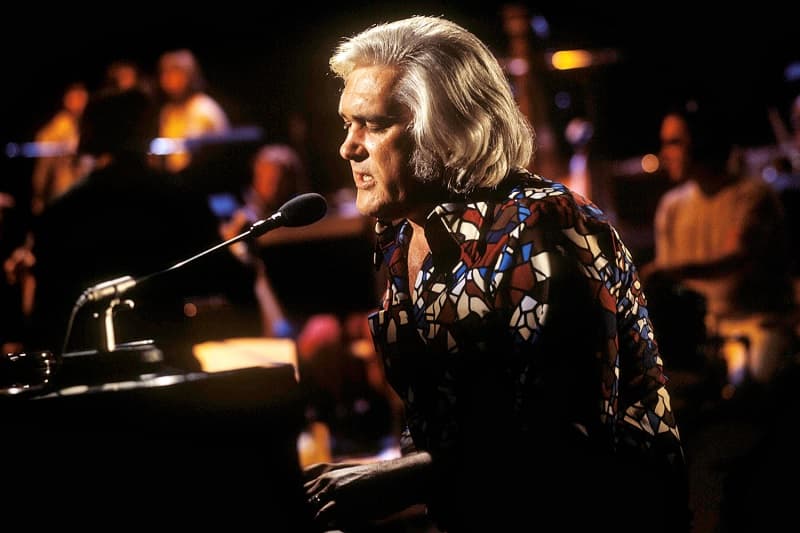
A Tender Portrait of Love Lost and Longed For
When Charlie Rich released “The Most Beautiful Girl” in 1973, the song didn’t simply climb the charts—it conquered them. Featured on his crossover masterpiece Behind Closed Doors, it reached No. 1 on the Billboard Hot 100, the Hot Country Singles chart, and the Easy Listening chart simultaneously, a rare trifecta that few artists before or since have achieved. This moment marked the full flowering of Rich’s artistry: a country-soul hybrid polished to a mirror sheen, yet still trembling with human vulnerability. In a single stroke, he bridged Nashville’s emotional honesty with the cosmopolitan smoothness of pop, crafting a ballad that was both intimate confession and universal lament.
At its core, “The Most Beautiful Girl” is a study in regret—an aching narrative of love squandered and the desperate wish for redemption. Written by Billy Sherrill, Norro Wilson, and Rory Bourke, the song exemplifies Sherrill’s genius for transforming raw country sentiment into lush, orchestrated pop drama. But it is Rich’s voice—smoky, restrained, and steeped in lived experience—that turns the lyric from mere heartbreak into revelation. His phrasing wavers between tenderness and torment; every syllable feels like a plea uttered too late. The melody glides with deceptive simplicity, but beneath its surface lies a quiet storm of remorse.
What makes “The Most Beautiful Girl” endure is its delicate balance between confession and composure. Unlike many heartbreak songs that wallow in despair, this one stands at the intersection of self-awareness and self-destruction. The narrator recognizes his fault—his sharp words, his carelessness—and now must confront the hollow echo left behind. There’s no dramatic reconciliation here, no grand gesture; only the haunting image of a man searching for the woman he drove away. The emotional power stems from what remains unsaid: the empty spaces between verses where memory lingers like perfume on an abandoned pillow.
Musically, the track encapsulates the early 1970s shift in country music toward sophisticated production values without sacrificing authenticity. The piano lines shimmer with gospel undertones; gentle strings sigh beneath Rich’s baritone; and the rhythm section moves with unhurried grace, allowing every note to breathe. It’s a masterclass in restraint—proof that emotional depth often resides not in volume but in silence and space.
Culturally, “The Most Beautiful Girl” stands as one of those rare songs that transcends genre boundaries while preserving its emotional purity. It invited pop audiences into country’s confessional heart and reminded country listeners that elegance need not dilute sincerity. Half a century later, it remains a mirror held up to our own moments of loss—a timeless reminder that beauty fades most painfully when it walks out the door we should have held open.
 Timeless Melodies