
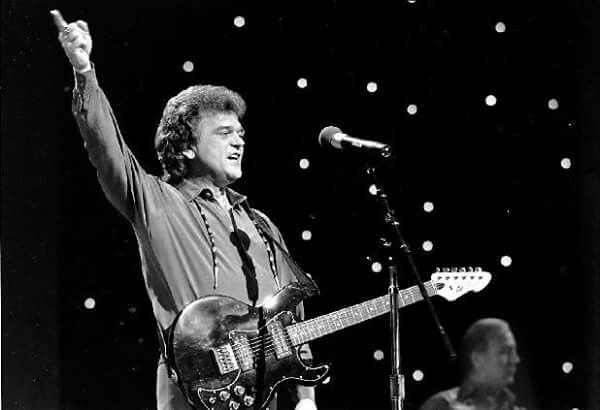
A Voice of Heartache and Grace: Conway Twitty Brings “I May Never Get To Heaven” to Life
In 1979, Conway Twitty delivered one of the most emotionally resonant performances of his career with “I May Never Get To Heaven,” a song that would become a defining moment in his long list of country music achievements. Released as part of the album Cross Winds, the track marked his 22nd number one hit on the country charts, further solidifying his position as one of the genre’s most influential voices .
Originally written by Bill Anderson and Buddy Killen, the song had existed for nearly two decades before Twitty recorded it. Earlier versions had been performed by artists such as Don Gibson, but it was Twitty’s interpretation that brought the composition widespread recognition and commercial success . His 1979 recording, produced in Nashville, captured the essence of classic country storytelling with remarkable clarity and restraint.
The emotional core of “I May Never Get To Heaven” lies in its reflection on love that has been experienced and lost. The narrator does not dwell on regret, but instead finds solace in having once come close to something transcendent. Lines such as “I may never get to heaven, but I once came mighty close” encapsulate this theme with poetic simplicity, expressing gratitude rather than despair . This perspective aligns closely with the traditional country music focus on heartfelt, relatable human experiences.
Twitty’s vocal performance is central to the song’s enduring appeal. Known for his smooth yet deeply expressive delivery, he brings a quiet intensity to each line. Rather than relying on vocal power alone, he emphasizes phrasing and emotional nuance, allowing the listener to fully absorb the meaning behind the lyrics. This approach reflects his broader artistic style, which often centered on themes of love, longing, and personal reflection .
The 1979 live performances of the song further highlighted Twitty’s ability to connect with audiences. On stage, he maintained the same sincerity found in the studio recording, reinforcing the authenticity that defined his career. The simplicity of the arrangement allowed his voice and the story to remain at the forefront, a hallmark of traditional country music during that era.
Decades later, “I May Never Get To Heaven” continues to resonate with listeners across generations. Its message remains timeless, reminding audiences that even fleeting moments of love can carry lasting significance. In an age of increasingly complex productions, the song stands as a testament to the enduring power of honest storytelling.
Through this performance, Conway Twitty not only achieved commercial success but also delivered a piece of music that continues to speak to the universal human experience of love and memory.
 Timeless Melodies