
A Gentle Escape Beneath the Night Sky: Youthful Romance and Dreamlike Calm in “Moonlight Swim”
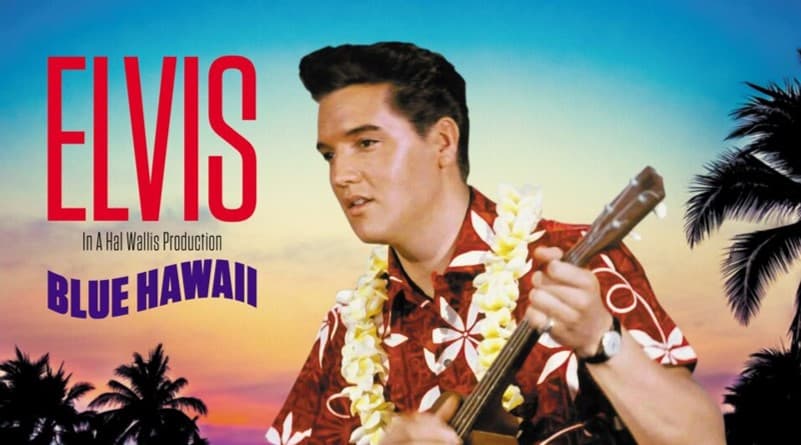
“Moonlight Swim” reveals a lighter, more tender side of Elvis Presley, one that often lived quietly beneath the swagger and explosive energy of his early rock ’n’ roll years. Recorded in 1961 and featured in the film Blue Hawaii, the song captures a fleeting moment of youthful romance carefree, intimate, and suspended in time. It is Elvis stepping away from rebellion and rhythm, inviting the listener instead into a soft nocturnal dream.
The song was written by Sylvia Dee and Ben Weisman, the latter being one of Elvis’s most prolific and trusted songwriters during his Hollywood period. Together, they crafted a piece that feels deliberately simple, almost weightless. “Moonlight Swim” was never meant to dominate charts or redefine popular music. Its purpose was subtler: to create atmosphere, to suggest closeness, to let emotion float rather than drive forward.
While “Moonlight Swim” was not released as a major charting single, its context is essential. It appeared on the Blue Hawaii soundtrack album, which became one of Elvis Presley’s most commercially successful records, reaching No. 1 on the Billboard Top Pop Albums chart and remaining there for 20 consecutive weeks. The album’s success cemented Elvis’s position not just as a rock ’n’ roll icon, but as a central figure in early 1960s popular culture. Within that enormously popular collection, “Moonlight Swim” served as a quiet interlude a moment of softness amid brighter, more exuberant numbers.
Musically, the song is built on restraint. Gentle guitar lines, soft percussion, and subtle vocal backing create a calm, almost hypnotic setting. The arrangement never rushes. Instead, it moves at the pace of a warm evening breeze, allowing the melody to unfold naturally. There is a deliberate lack of tension, reinforcing the song’s theme of escape from responsibility and urgency.
Elvis Presley’s vocal performance is key to the song’s charm. He sings with ease and warmth, his voice relaxed and unforced. There is no attempt to impress, no dramatic flourish. Instead, he sounds present, content, and emotionally open. This understated delivery makes the song feel personal, as though it were being sung to one person rather than an audience. It is Elvis not as icon, but as companion.
Lyrically, “Moonlight Swim” paints a scene rather than tells a story. The imagery is gentle and romantic: moonlight, water, quiet togetherness. There is no conflict, no obstacle to overcome. The song exists entirely in the present moment. That simplicity is precisely its strength. In a world often crowded with expectation and noise, the song offers stillness.
Within the broader arc of Elvis Presley’s career, “Moonlight Swim” belongs to his early 1960s film era a period sometimes criticized for formulaic songwriting. Yet songs like this reveal why that criticism is incomplete. While not every soundtrack number carried depth, many captured emotional moods with remarkable clarity. “Moonlight Swim” succeeds because it does not try to be more than it is. It embraces its role fully.
There is also an undercurrent of nostalgia that has grown stronger with time. Listening now, the song feels like a postcard from a more innocent cultural moment, when romance in popular music could be suggested rather than stated outright. Elvis’s voice, still youthful and smooth, carries none of the wear that would later mark his performances. It preserves a version of him and of an era that exists only in memory.
For listeners who know Elvis primarily through his towering hits or later, more dramatic recordings, “Moonlight Swim” offers a different perspective. It reminds us that his appeal was not rooted solely in power or charisma, but also in tenderness. He understood when to pull back, when to let silence and softness speak.
Today, “Moonlight Swim” endures as a quiet pleasure rather than a bold statement. It does not demand attention, yet rewards it. In its gentle melody and unhurried mood, the song invites listeners to step briefly out of time to remember nights when nothing mattered beyond closeness, calm, and the soft glow of moonlight on the water.
In the end, “Moonlight Swim” is not about spectacle or ambition. It is about presence. And in that small, intimate space, Elvis Presley reminds us that sometimes the most lasting impressions are made not by what shouts the loudest, but by what whispers softly and stays.