
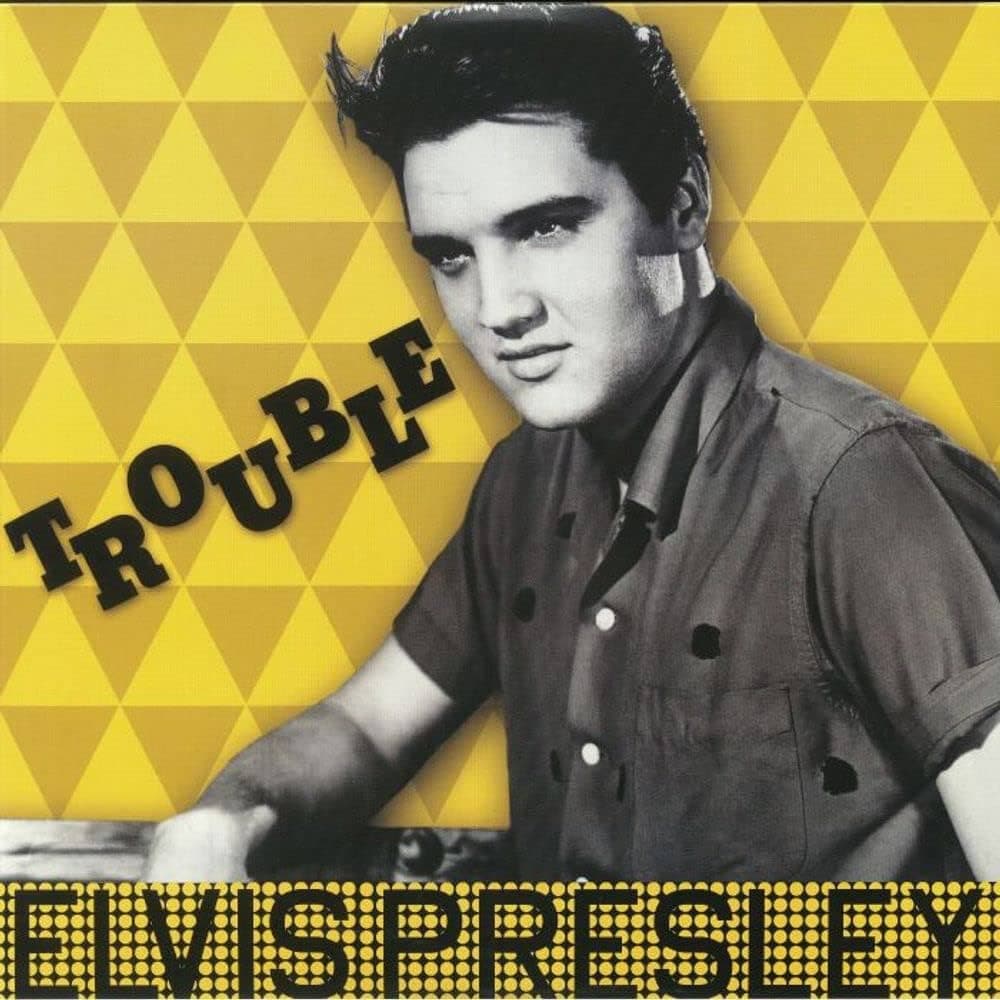
A gritty anthem of danger, desperation, and the dark side of love “Trouble” by Elvis Presley bares all with raw swagger and heartbreak
“Trouble” crackles with restless energy and a sense of menace a song that feels like a warning, a confession, and a cry for help all at once.
When Trouble was recorded by Elvis Presley, it captured a very different mood than many of his earlier romantic or rock-and-roll hits. The song was recorded on July 2, 1958, during the sessions for what would become the soundtrack to the film King Creole. While “Trouble” was not released as a chart-topping single in the same way his biggest hits were and thus lacks a definitive high position on some mainstream pop charts it nonetheless emerged as one of those tracks with enduring power and legacy.
“Trouble” was written by Jerry Leiber and Mike Stoller, songwriters known for their edgy, evocative lyrics and ability to tap into deeper emotional and social undercurrents. The song begins with a bass-heavy riff, a step back from the cleaner pop and rockabilly sounds of the era and right away, it sets a tone of foreboding. When Elvis’s voice enters, there is a grit and urgency: “If you’re looking for trouble, you came to the right place.” The declaration carries weight it’s not a flirtatious tease, but a dark promise, a confession.
Musically, “Trouble” stands out in Elvis’s catalogue. The arrangement blues-tinged, rough around the edges leans into a darker mood: insistent rhythm, compelling bass line, raw energy, and backing vocals and instrumentation that swell just enough to amplify tension. The tempo is driven, pulsating as if echoing a heart pounding in fear, anger, or adrenaline. The choice to use this style reveals a willingness to explore the shadows, the flawed souls, the danger underlying romance and desire.
Lyrically, the song paints a portrait of a man who’s aware of his darker side someone who doesn’t hide his flaws but instead confronts them, warns others, and himself. The repeated “trouble” becomes a refrain of defiance and sorrow: love, danger, self-destruction, longing, and the messy intersection of all three. For listeners, especially those who have lived through love’s sharper edges, it resonates as an honest reflection not sentimental, but real.
“Trouble” also showcases a turn in Elvis’s artistic journey. Coming from his early rockabilly and pop successes, this song reflects a maturity a readiness to inhabit more complex emotional terrain, to channel pain, risk, and intensity. It stands as a bridge between youthful rebellion and the darker ballads and soul-tinged recordings he would explore later.
For those who remember the late 1950s and early 1960s the nights when radio played soul and blues under soft lights, or the pulse of a jukebox in a small-town diner “Trouble” often evokes memories. It might recall a time when music acknowledged shadows, when heartbreak came with honesty, when love was not always safe or kind, but always real.
Over decades, the song has gained new life. Its use in later films and media has reintroduced it to new generations, who hear in its swagger and sorrow a timeless truth: that life, love, and human hearts often walk on the edge and sometimes, music is the only way to tell the story.
Ultimately, Elvis Presley’s “Trouble” stands not just as a song, but as a testament to vulnerability and danger, to the complexity of love, to the soul that aches and fights all at once. It reminds us that some songs don’t soften memory; they sharpen it.