
A Final Cry from the Heart: Love, Longing, and a Voice Reaching Beyond Time
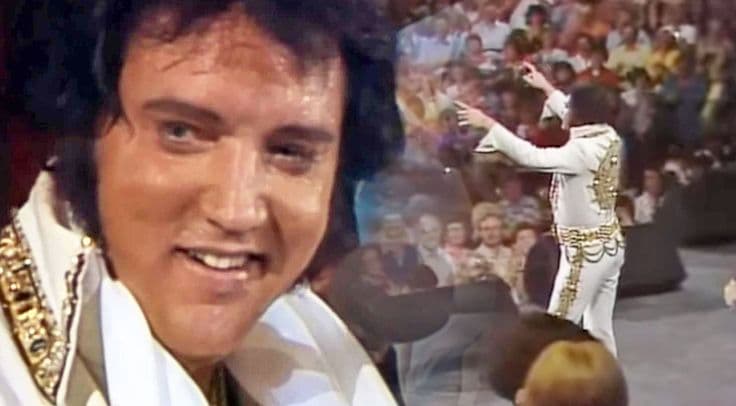
When Elvis Presley performed “Unchained Melody” in 1977, it was no longer just a love song. It became a moment of reckoning between past and present, strength and fragility, memory and farewell. Though Elvis had never released a studio single of the song during his lifetime, his live performance, most famously captured in Rapid City, South Dakota, on June 21, 1977, would later stand as one of the most emotionally charged moments of his career. After his death, that performance took on a weight no chart position alone could ever explain.
Originally written in 1955 by Alex North (music) and Hy Zaret (lyrics) for the film Unchained, “Unchained Melody” had already lived many lives before Elvis touched it. The song had been recorded by numerous artists and was widely regarded as one of the greatest love ballads of the 20th century. Yet when Elvis Presley finally embraced it on stage only weeks before his passing he transformed it into something profoundly personal.
In 1978, RCA released Elvis’s live rendition as a single. The response was immediate and deeply emotional. In the United Kingdom, the song reached No. 1 on the UK Singles Chart, making Elvis the first artist to score posthumous No. 1 hits in multiple decades. In the United States, it peaked at No. 41 on the Billboard Hot 100 and reached No. 3 on the Adult Contemporary chart, a testament to its resonance with listeners who understood the gravity behind the performance.
What sets Elvis’s “Unchained Melody” apart is not technical perfection, but emotional exposure. By 1977, Elvis’s physical condition was visibly fragile. His movements were limited, his breathing labored. Yet when he sat at the piano and began to sing, something extraordinary happened. The room grew still. His voice—strained, trembling, but unmistakably his rose with effort and conviction. Every note sounded earned.
The lyrics of “Unchained Melody” speak of separation, time, and aching devotion. In Elvis’s hands, those words seemed to transcend romantic longing and drift into something broader loss, regret, endurance, and the human desire to be remembered. When he sings “I’ve hungered for your touch a long, lonely time,” it no longer feels addressed to a lover alone, but to life itself, to the audience, to something just out of reach.
Musically, the arrangement is sparse, built to support rather than hide the truth of the moment. Elvis accompanies himself at the piano, grounding the performance in vulnerability. There are no theatrical distractions, no grand production. The focus remains entirely on the voice and on the effort it takes to release it. This restraint allows the emotional gravity of the song to unfold naturally.
Historically, this performance has become inseparable from Elvis’s legacy. It stands as one of the last great artistic statements of his life, not because it was planned as such, but because it was honest. There is no illusion here, no attempt to recreate youth or reclaim former glory. Instead, Elvis offers what he has left: emotion, memory, and voice.
For many listeners, “Unchained Melody” gains meaning with time. Youth hears romance. Experience hears distance, longing, and the passage of years. In Elvis’s version, especially, the song becomes a meditation on waiting for love, for peace, for release. It resonates deeply with those who understand that love does not always arrive when we are strongest.
Within the vast catalog of Elvis Presley, this performance occupies a unique space. It is not about reinvention or cultural impact. It is about presence. About standing before an audience and singing the truth of where you are, without disguise.
Decades later, “Unchained Melody” remains one of the most revisited and revered moments in Elvis’s history. Not because it was flawless, but because it was real. In that final stretch of his life, Elvis did not retreat from the song’s emotional demands. He met them fully.
And in doing so, he left behind a performance that feels less like entertainment and more like a farewell one last, aching expression of love, carried on a voice that refused to fall silent.