
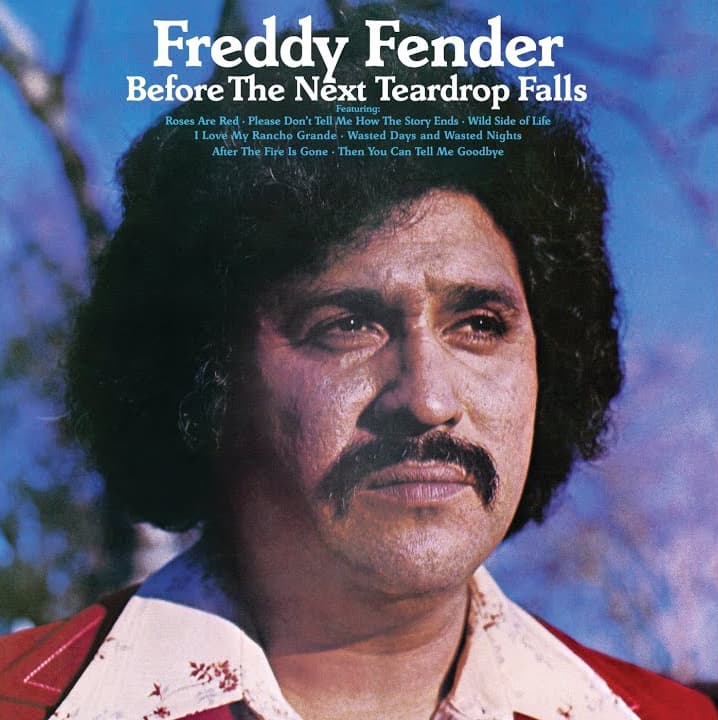
A Ballad of Regret and Redemption, Sung Through the Smoke of Time
When Freddy Fender released “Wasted Days and Wasted Nights” in 1975, it was more than a hit—it was an exhalation of survival. Featured on his album Before the Next Teardrop Falls, the song soared to No. 1 on the Billboard Hot Country Singles chart and crossed over into the pop Top 10, a rare feat for a Tejano-rooted artist at the time. Its success marked a triumphant rebirth for Fender, who had originally recorded the tune back in 1959, only to see its promise extinguished by personal hardship and a prison sentence that stalled his early career. Sixteen years later, with the same tender drawl but a voice tempered by time and loss, he reclaimed his composition—and in doing so, reclaimed himself.
The story behind “Wasted Days and Wasted Nights” is as layered as its lonesome melody. When Fender first penned it, he blended the weeping guitar tones of early rock and roll with the romantic melancholy of border music—a fusion that mirrored his own bicultural identity as Baldemar Huerta, a Mexican-American artist navigating two worlds. But it wasn’t until after his rediscovery in the mid-1970s that the song truly resonated with mass audiences. The intervening years had given Fender’s voice a lived-in fragility; his delivery in the 1975 version carries not just heartbreak but a weary acceptance, as though he is singing to ghosts—of love lost, of time wasted, of opportunities that once slipped through trembling hands.
Lyrically, the song is deceptively simple: an elegy to love gone wrong, sung from the ruins of regret. Yet beneath its straightforward phrasing lies a universal ache—the recognition that remorse can become a kind of companion, one that lingers long after passion fades. Fender doesn’t rage against betrayal; instead, he croons with resignation, his phrasing curling around each note like cigarette smoke in a dimly lit bar. The arrangement reinforces this sense of emotional stasis: gentle guitar arpeggios glide over a rhythm section that moves at a dreamlike pace, never rushing toward resolution. This stillness—this suspended sadness—is what gives the song its enduring gravity.
Culturally, “Wasted Days and Wasted Nights” stands as both confession and conquest. It embodies the resilience of an artist who refused to let adversity silence him. Fender’s revival in the ’70s helped open doors for future generations of Latino artists in country and pop music, proving that authenticity could transcend linguistic and cultural boundaries. Each play of this song feels like stepping into a sepia-toned photograph—one where time slows, memory aches, and forgiveness hovers just out of reach. It remains one of those rare recordings where pain becomes beauty simply because it has been lived long enough to be understood.