
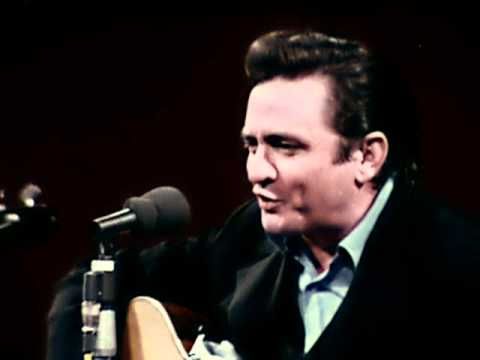
Voices Behind the Walls, The Night Johnny Cash Turned San Quentin into a Stage of Truth
Johnny Cash delivered one of the most unforgettable performances of his career on February 24, 1969, inside San Quentin State Prison. Among the songs performed that day, “A Boy Named Sue” stood out not only as a surprise highlight but as a defining cultural moment in American music history.
Written by Shel Silverstein, the song was relatively new to Cash at the time. In fact, he had only recently received the lyrics and decided to test it live in front of the prison audience. He was not fully familiar with the words and occasionally referred to a lyric sheet during the performance. This spontaneity contributed to the raw authenticity that made the recording so compelling.
The setting itself played a crucial role. Cash had already built a reputation for performing in prisons, showing empathy toward inmates and those living on the margins of society. At San Quentin, that connection reached a new intensity. The audience responded with energy and immediacy, turning the performance into a shared emotional experience rather than a conventional concert.
“A Boy Named Sue” tells the story of a man seeking revenge on his estranged father, who left him with nothing but a guitar and a name that brought lifelong ridicule. The narrative unfolds with humor, violence, and ultimately reconciliation. Its talking blues style and vivid storytelling made it stand out from traditional country songs.
What makes this performance particularly remarkable is its impact after the show. The live recording was released as part of the album At San Quentin and quickly became Cash’s biggest crossover hit. It reached number two on the Billboard Hot 100 and topped the country charts, marking his only top ten pop single in the United States.
Critically, the success of “A Boy Named Sue” was unexpected. Even within the concert, other songs were anticipated to be the main highlights. Instead, this impromptu performance became the defining moment of the entire event, demonstrating the power of authenticity over polish.
More than five decades later, the San Quentin performance remains a landmark example of live music at its most honest. Johnny Cash did not simply perform a song. He captured a moment where storytelling, audience connection, and cultural relevance converged in a way that still resonates today.
 Timeless Melodies