
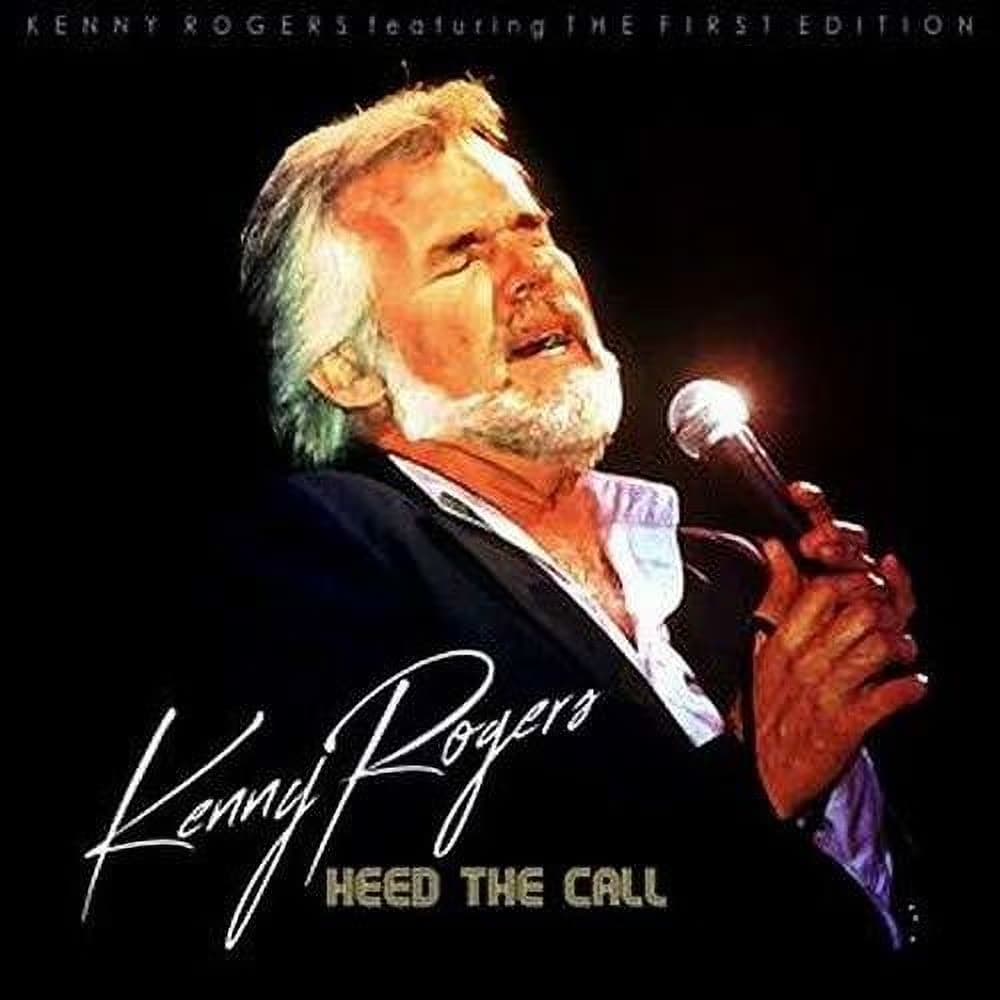
A reflective anthem of conscience — when Kenny Rogers urged a restless generation to listen within
In 1967, long before the silver-bearded storyteller of country legend took shape, Kenny Rogers stood as frontman of The First Edition, a group navigating the evolving currents of late-1960s American music. Among their early recordings, “Heed the Call” emerged as one of the most thoughtful and quietly persuasive. Released that year as a single, the song reached No. 33 on the Billboard Hot 100 and rose impressively to No. 5 on the Billboard Easy Listening (Adult Contemporary) chart, confirming that Rogers’ appeal extended beyond youthful pop audiences into more reflective listeners.
Written by Kenny Rogers and Kin Vassy, “Heed the Call” was not a protest anthem in the loud, defiant sense that characterized much of the era. Instead, it carried a gentler but no less urgent message. The late 1960s were marked by civil rights struggles, generational conflict, and mounting social tension. Music became a vehicle for expression — sometimes explosive, sometimes contemplative. This song chose the latter path.
Musically, “Heed the Call” blends folk-rock warmth with polished pop sensibility. The arrangement is measured and balanced — steady percussion, layered harmonies, subtle instrumentation — allowing the lyrical message to remain clear and central. Rogers’ voice, even in his early thirties, already carried a distinctive warmth. It was not yet the gravelly narrative instrument of his later country years, but it possessed a reassuring steadiness, a tone that suggested sincerity rather than spectacle.
The song’s central theme is responsibility. It urges listeners to recognize a moral summons — to “heed the call” of conscience rather than ignore it. There is no anger in its delivery, no accusatory edge. Instead, it invites introspection. It suggests that change begins not in confrontation alone, but in awareness. That restraint is precisely what makes the song enduring. It speaks softly, but with conviction.
This period of Rogers’ career is sometimes overshadowed by his later solo triumphs. In 1968, The First Edition would achieve even greater success with “Just Dropped In (To See What Condition My Condition Was In),” which reached No. 5 on the Billboard Hot 100. That psychedelic-tinged hit became emblematic of the era’s experimentation. Yet “Heed the Call” reveals another dimension — a thoughtful songwriter concerned with ethical reflection rather than sonic novelty.
Looking back, the song feels almost prophetic in the arc of Rogers’ career. Throughout the 1970s and 1980s, he would become known for narrative songs that explored moral crossroads — “The Gambler”, for instance, distilled life lessons into simple, memorable lines. In “Heed the Call,” one can already hear that inclination toward guidance and reflection. Even then, Rogers was less interested in rebellion than in understanding.
The production reflects the studio craftsmanship of its time — clean, radio-friendly, carefully structured. But beneath that polish lies an earnest plea. The song does not demand immediate action; it encourages thoughtful response. That distinction gives it a certain dignity. It belongs to a moment when popular music believed it could shape conversation without shouting.
Today, revisiting “Heed the Call” offers a glimpse into a transitional chapter — not just for Kenny Rogers, but for American music itself. It captures an era when artists wrestled with social questions while still rooted in melody and harmony. The song may not carry the commercial weight of Rogers’ later chart-toppers, yet it stands as a meaningful early statement.
In the end, Kenny Rogers did not build his legacy solely on tales of gamblers and lovers. Songs like “Heed the Call” remind us that his artistic journey began with reflection — with a young musician asking listeners to pause, to listen inward, and to answer when conscience speaks.