
A surreal awakening from innocence to awareness, where confusion becomes a mirror of the times
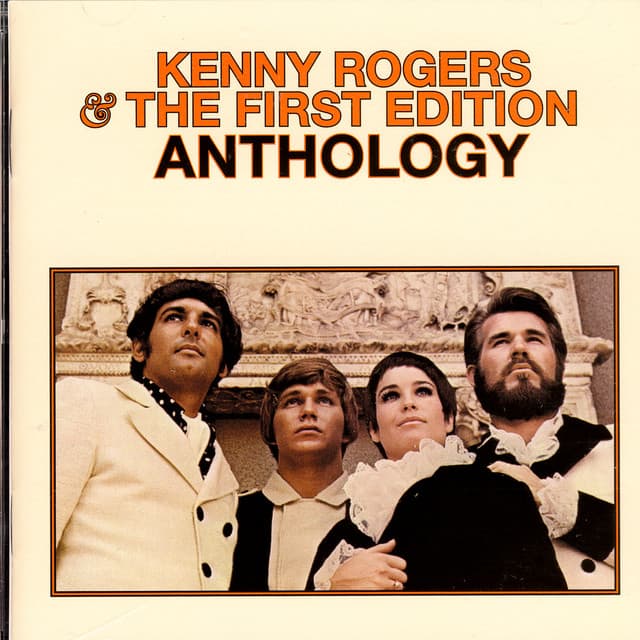
Released in 1968, “Just Dropped In (To See What Condition My Condition Was In)” by Kenny Rogers & The First Edition remains one of the most striking and unconventional records to emerge from the late 1960s. From the moment it arrived, the song signaled that this was not ordinary pop fare. It climbed to No. 5 on the Billboard Hot 100, reached No. 1 in Canada, and became the defining hit from the album The First Edition. These chart positions were remarkable not only for their success, but for what they represented: a mainstream audience embracing a song that was strange, introspective, and quietly unsettling.
At the time, Kenny Rogers was still far from the polished storyteller he would later become. Fronting The First Edition, he was navigating a musical landscape shaped by psychedelia, social unrest, and a growing sense of disillusionment among younger generations. “Just Dropped In”, written by Mickey Newbury, captured that atmosphere with uncanny precision. It did not explain itself. It did not reassure. Instead, it invited listeners into a fragmented state of mind, where nothing felt quite solid or certain.
The song opens with a distorted, circular guitar riff that immediately disorients the ear. This was intentional. From the very first seconds, the listener is placed inside a mental fog. When Kenny Rogers’ voice enters measured, calm, almost detached it contrasts sharply with the swirling arrangement beneath him. That contrast is crucial. The vocal delivery is not panicked; it is observant, as if the narrator is watching his own confusion from a distance.
Lyrically, “Just Dropped In” unfolds like a series of disconnected thoughts. Lines appear, fade, and reappear, echoing the feeling of drifting in and out of clarity. While many listeners initially associated the song with psychedelic experimentation, Mickey Newbury later clarified that it was not about indulgence, but about self-examination. The “condition” referenced in the title is not physical, but emotional and psychological a moment of realizing that something inside has shifted, perhaps without permission.
This ambiguity is what gives the song its lasting power. It does not dictate meaning; it reflects it. For some, it sounded like the confusion of a rapidly changing world. For others, it felt deeply personal, echoing moments of self-doubt, regret, or sudden awareness. In an era when music increasingly sought to challenge rather than comfort, “Just Dropped In” stood as a quiet but firm declaration that uncertainty itself could be art.
The album The First Edition benefited enormously from the success of the single, but it was the song that truly defined the group’s identity. It positioned Kenny Rogers & The First Edition as something harder to categorize neither purely pop nor strictly rock, but existing in a thoughtful, introspective space between genres. This would later inform Rogers’ solo work, even as his style became more narrative and accessible.
Musically, the production was daring for its time. The use of reversed effects, layered guitars, and an almost claustrophobic mix gave the song a dreamlike quality that bordered on unease. Yet it never collapsed into chaos. There was structure beneath the surface, just as there was clarity beneath the confusion described in the lyrics. That balance is what allowed the song to cross over into the mainstream without losing its edge.
In hindsight, “Just Dropped In (To See What Condition My Condition Was In)” feels like a turning point not only in Kenny Rogers’ career, but in popular music itself. It demonstrated that chart success did not require simplicity, and that audiences were willing to sit with discomfort if the emotion felt honest. It also revealed Rogers as a vocalist capable of subtlety and restraint, qualities that would later define his greatest work.
Decades later, the song still feels oddly current. Its sense of quiet alienation, its refusal to offer easy answers, and its reflective tone resonate long after the final note fades. It is not a song that begs for attention. It simply exists, waiting to be rediscovered, reminding us that sometimes the most important journeys begin not with movement—but with stopping, looking inward, and asking where we truly stand.
In the end, “Just Dropped In” is less a song than a moment of recognition. A realization, gently spoken, that awareness itself can be unsettling but necessary. And that, perhaps, is why it has never truly left us.