
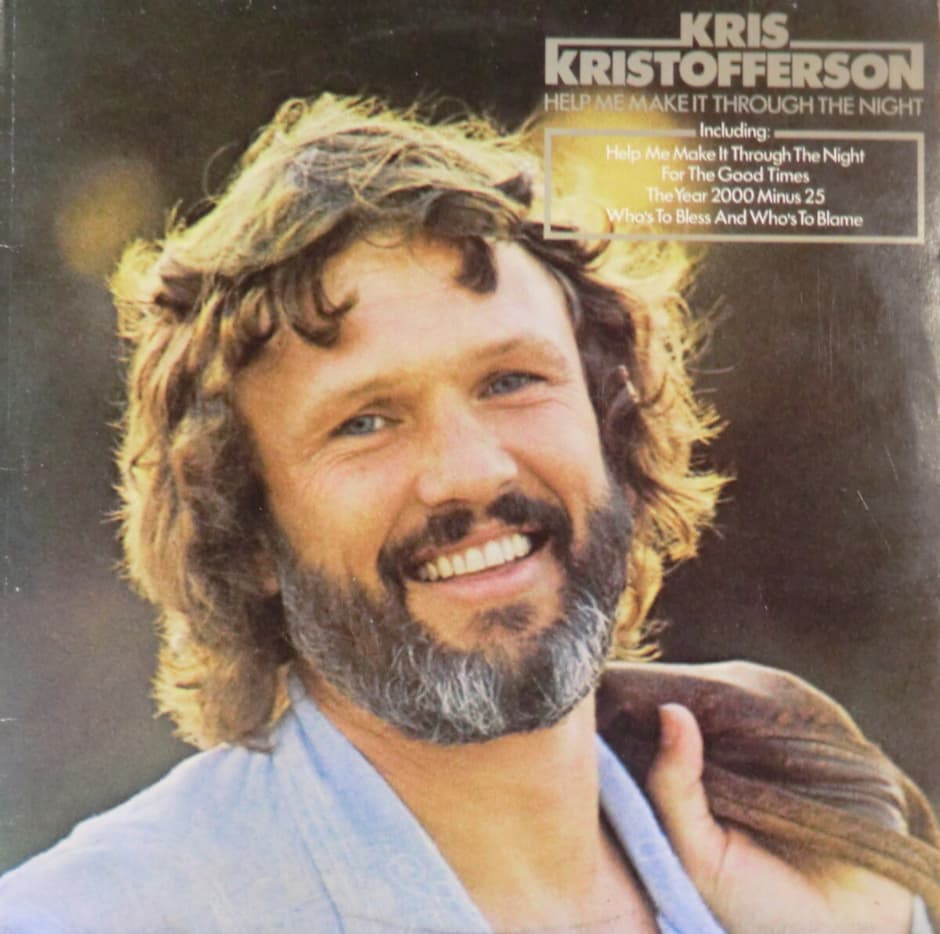
A Whispered Plea for Solace in the Loneliness of the Human Heart
When Kris Kristofferson released “Help Me Make It Through the Night” in 1970 on his debut album Kristofferson, few could have predicted that this quietly confessional ballad would become one of the most enduring songs in country music history. Initially, it was a modest success for Kristofferson himself, but it reached the top of the U.S. country charts the following year through Sammi Smith’s hauntingly intimate interpretation, which also crossed over to the pop charts and earned her a Grammy Award. Yet even before Smith’s version took flight, the song’s tender vulnerability had already marked Kristofferson as a new kind of songwriter—one who stripped away Nashville’s rhinestone polish to reveal the raw pulse beneath.
The origins of “Help Me Make It Through the Night” lie in Kristofferson’s distinctive ability to blur boundaries: between country and folk, between masculine stoicism and emotional honesty, between solitude and connection. Written at a time when American music was shifting from post-war optimism to introspective realism, the song feels less like a composition and more like a confession whispered into the dark. Its premise is deceptively simple—an individual reaching out for comfort in the small hours—but its emotional resonance is vast. It captures that universal moment when nightfall magnifies every ache of loneliness, when we crave not romance or permanence, but merely the warmth of another presence to fend off despair until morning.
Kristofferson’s lyrical approach was revolutionary for its time. He eschewed metaphorical ornamentation and moral pretense, choosing instead an unguarded directness that was almost shocking in its candor. The voice in the song does not beg for love—it asks for company, for human touch without judgment. This was not the tidy sentimentality of mainstream country; it was something more adult, more honest, acknowledging desire and vulnerability as twin facets of survival. In that way, it aligned with the broader cultural awakening of the late 1960s and early 1970s—a period when personal freedom and emotional truth began to eclipse traditional ideals of propriety.
Musically, “Help Me Make It Through the Night” is restrained but profoundly evocative. Its slow tempo and spare arrangement mirror the stillness of midnight contemplation. The melody drifts gently, allowing every word to settle like dust in lamplight. Kristofferson’s own gravel-edged vocal delivery lends an unvarnished authenticity; when he sings, it feels less like performance than confession. Later interpretations—from Smith’s sultry melancholy to Willie Nelson’s weary tenderness—each found new shadings within its simplicity, testifying to its universality.
At its heart, this song endures because it articulates what many fear to admit: that strength sometimes means surrendering to our need for closeness. In a few unadorned lines, Kristofferson captured an eternal human truth—that even the most self-reliant soul occasionally longs for another heartbeat beside their own as they make it through the night.
 Oldies Songs