
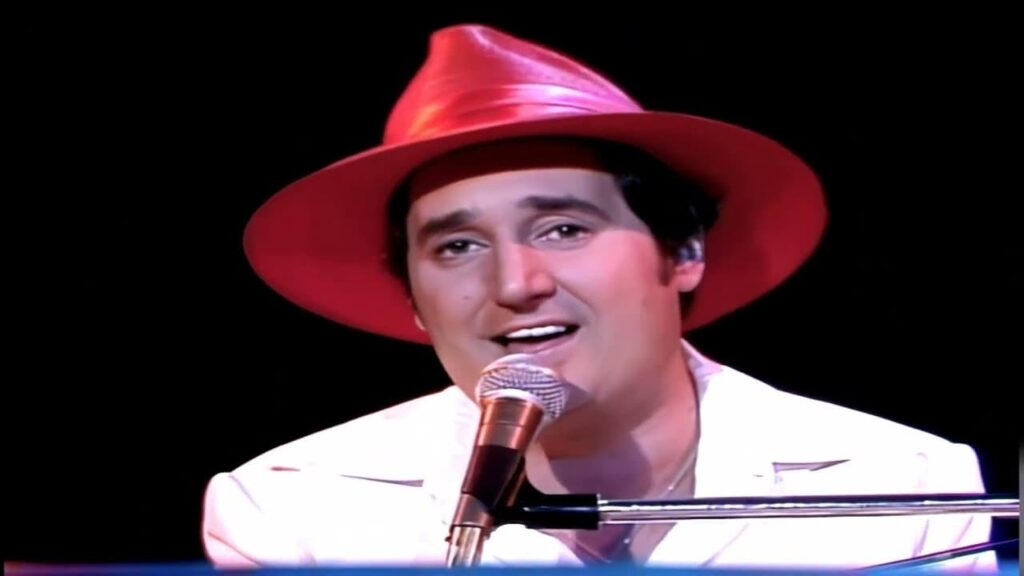
LAUGHTER IN THE RAIN: NEIL SEDAKA LIGHTS UP “THE MIDNIGHT SPECIAL” — AND FANS SAY A HALL OF FAME HONOR IS OVERDUE
When Neil Sedaka appeared on the legendary TV show The Midnight Special to perform his hit Laughter in the Rain, it was more than just another television performance. For many fans, it was a reminder that one of rock and pop’s most influential songwriters still hasn’t received the recognition many believe he deserves — induction into the Rock and Roll Hall of Fame.
Released in 1974, Laughter in the Rain became one of Sedaka’s biggest comeback hits, reaching No.1 on the Billboard Hot 100 in early 1975. The song marked a triumphant return for the Brooklyn-born singer-songwriter after several years away from the American charts, proving that his melodic gift and timeless songwriting could still capture the hearts of a new generation.
Sedaka’s career is remarkable not only for its longevity but also for its extraordinary productivity. As the composer of more than 1,000 songs, he helped shape the sound of the Brill Building era and became one of the key architects of early rock and pop songwriting. His influence is reflected in the countless artists who have recorded his music — from Elvis Presley and Frank Sinatra to Cher, The Carpenters and ABBA.
Throughout a career spanning more than six decades, Sedaka has collected numerous honors, including induction into the Songwriters Hall of Fame and a star on the Hollywood Walk of Fame. Yet many fans argue that his role as a pioneer of rock and pop songwriting — alongside legends such as Roy Orbison, Buddy Holly, Carole King and Paul Simon — makes his absence from the Rock and Roll Hall of Fame increasingly difficult to understand.
Sedaka’s catalog includes classics that helped define entire eras of popular music, from Breaking Up Is Hard to Do and Oh! Carol to Calendar Girl and Solitaire. These songs have traveled across generations, languages, and musical styles.
Performances like Laughter in the Rain on The Midnight Special show exactly why Sedaka remains a beloved figure in music history. His voice, piano, and melodic storytelling continue to connect with audiences decades after his first hits — proof that some pioneers never truly leave the stage.