
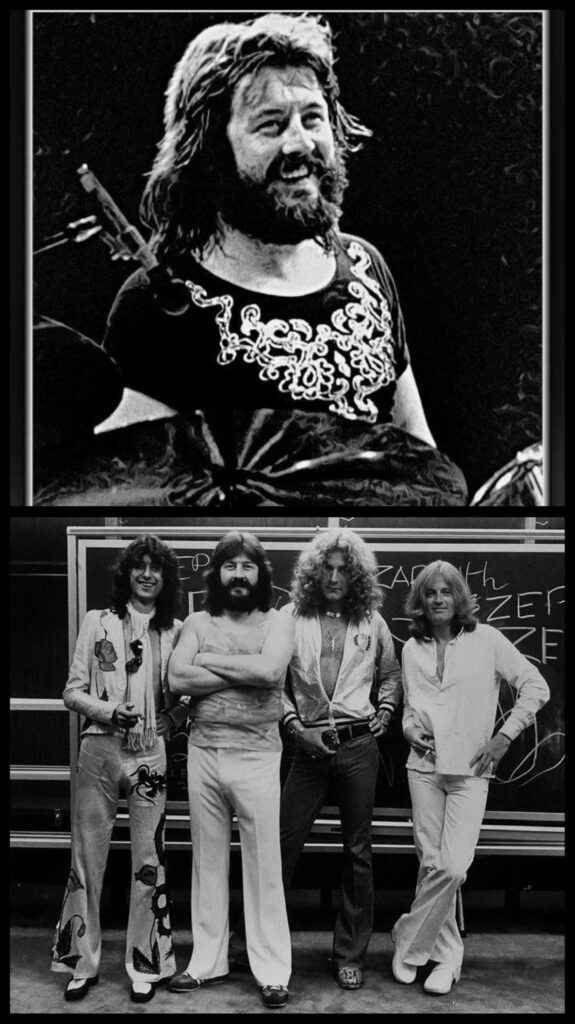
The Thunder Behind Led Zeppelin – Why John Bonham Is Still Called the Greatest Rock Drummer
Few musicians in rock history have left a rhythmic legacy as powerful as John Bonham, the iconic drummer of Led Zeppelin. The analytical video “John Bonham The Greatest Drummer of All Time Here’s Why” explores the musical reasons many critics and fans continue to regard him as the defining rock drummer of his era. Through performance analysis and historical context, the video explains how Bonham’s distinctive sound transformed the role of drums in rock music.
Bonham was born in 1948 in Redditch, England and rose to international fame after joining Led Zeppelin in 1968 alongside Robert Plant, Jimmy Page, and John Paul Jones. His powerful drumming quickly became a foundation of the band’s sound during the late 1960s and 1970s, helping propel Led Zeppelin into one of the most influential rock groups in history.
The video highlights several technical elements that made Bonham unique. One of the most frequently discussed aspects of his style is his extraordinary bass drum technique. On early recordings such as the Led Zeppelin debut album track “Good Times Bad Times,” Bonham played rapid bass drum triplets with a single pedal, a technique so precise that many listeners believed he was using two bass drums.
Equally important was Bonham’s sense of groove. Rather than simply keeping time, he shaped the rhythmic feel of a song. His drumming blended the force of rock with the swing and looseness of jazz and blues, creating grooves that felt both heavy and fluid. This ability to place accents in unexpected places and subtly shift the rhythm helped define the band’s musical identity.
Another key factor explored in the video is Bonham’s famous drum sound. He favored large drum kits, particularly Ludwig drums, combined with carefully tuned heads and distinctive recording techniques. Producer Glyn Johns famously used a minimalist microphone setup that captured the natural resonance of Bonham’s kit, producing the thunderous sound heard on many classic Led Zeppelin recordings.
Bonham’s influence extends far beyond the band’s own recordings. In 2016, Rolling Stone ranked him the greatest drummer of all time, a recognition that reflects the enormous impact his playing had on generations of rock musicians.
Although Bonham died in 1980 at the age of 32, his legacy remains deeply embedded in rock music. Songs such as “When the Levee Breaks,” “Kashmir,” and “Immigrant Song” continue to be studied by drummers seeking to understand the combination of power, feel, and musical intelligence that defined his style.
The video ultimately serves as both tribute and lesson. By breaking down Bonham’s technique and musical instincts, it demonstrates why his playing continues to inspire musicians decades after the height of Led Zeppelin’s career.