
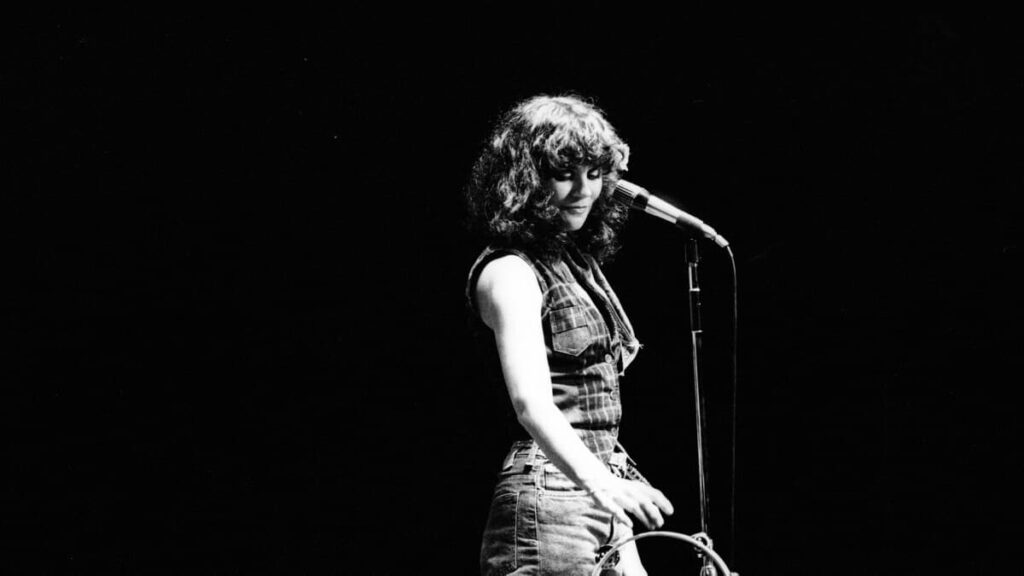
The Majestic Flourish of Tradition: Linda Ronstadt’s Commanding Grace in “Los Laureles”
There is a profound, almost spiritual resonance that occurs when a world-class artist returns to the music of her childhood with the full power of her matured talent. When Linda Ronstadt opened her 1987 masterpiece, Canciones de Mi Padre, with the classic huapango “Los Laureles,” she did more than just start an album; she reclaimed a birthright. For the sophisticated listener who has spent decades observing the shifts in the American cultural landscape, this performance stands as a monumental achievement in vocal artistry and cultural preservation. By choosing to interpret this traditional Mexican standard—a song that demands both immense technical control and raw emotional honesty—Ronstadt proved that her voice was a bridge capable of spanning the distance between the rock arenas of Los Angeles and the heart of Sonora. The album’s historic success, remaining the most popular non-English language record in the U.S., owes much to the sheer, undeniable authority of this opening track.
The story behind “Los Laureles” is one of deep-seated reverence for the masters of the genre. To ensure the absolute authenticity of the sound, Linda collaborated with the legendary Mariachi Vargas de Tecalitlán, an ensemble whose history stretches back to the late 19th century. The recording captures the quintessential elements of the huapango style: the intricate, driving rhythms of the violins, the punchy interjections of the trumpets, and the dramatic, soaring vocal “gritos” that punctuate the melody. For the discerning audiophile, the production on this track is a marvel of high-fidelity engineering, preserving the “wooden” warmth of the instruments and the crystalline clarity of Ronstadt’s high notes. It was this dedication to excellence that earned her a Grammy Award, proving that when traditional music is treated with this level of respect, it becomes universal.
For those who have lived through many chapters and understand the weight of legacy, the meaning of “Los Laureles” is found in its themes of unrequited love and stoic pride. The lyrics tell the story of a lover waiting by the laurel trees, offering a beauty that is both evocative and timeless.
“Ay! que laureles tan verdes, que rosas tan encendidas… si piensas abandonarme, mejor quítame la vida.”
To a listener with a lifetime of experience, these words are not merely romantic sentiment; they represent a cultural philosophy of passion and resilience. Ronstadt’s delivery is breathtakingly powerful; she navigates the difficult melodic leaps and the traditional “falsetto” breaks with an ease that suggests she wasn’t just learning these songs she was remembering them. She captures the essence of the ranchera spirit the ability to find beauty in suffering and strength in vulnerability.
Revisiting “Los Laureles” today serves as a poignant reminder of the power of roots. In an increasingly digital and ephemeral world, this recording stands as something solid and enduring. It invites the discerning reader to reflect on their own heritage and the “laurels” they have planted in their own lives. Linda Ronstadt took the music of her father and turned it into a gift for the entire world, leaving us with a rhythmic, soulful masterpiece that sounds as vibrant today as it did nearly forty years ago. It remains a glowing testament to the fact that while languages may differ, the language of the heart especially when backed by a world-class Mariachi band is understood by everyone who has ever truly loved and lost.
 Oldies Songs