
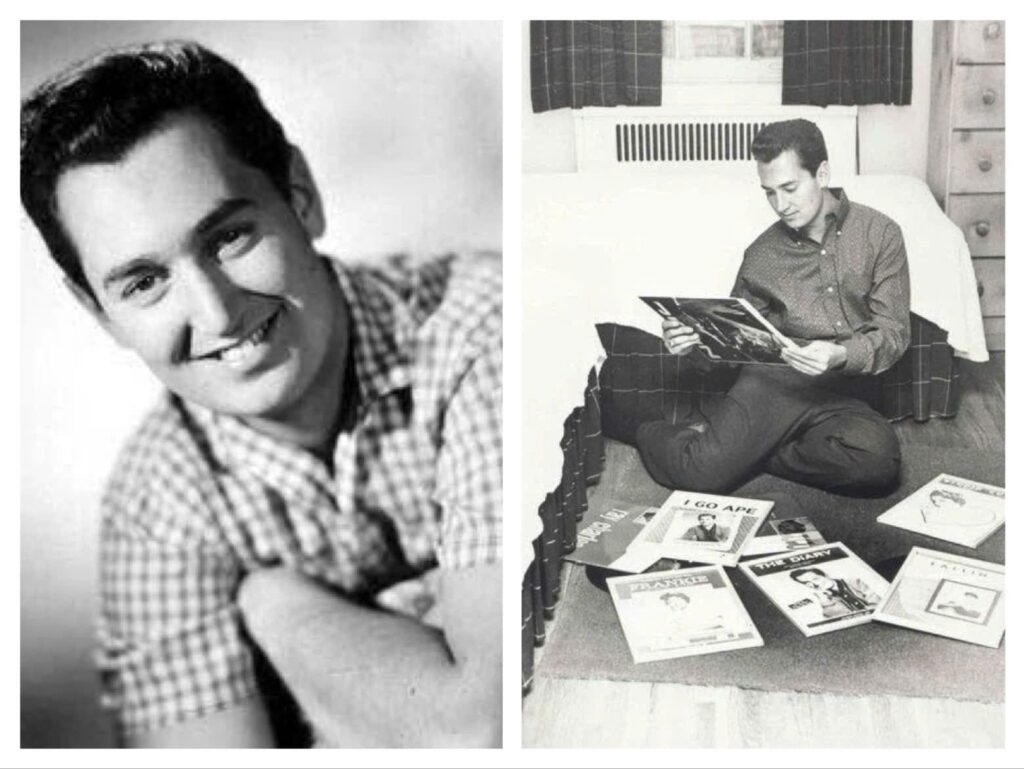
Rediscovering A Hidden Gem In Neil Sedaka’s Early Years
In the golden age of late 1950s pop, Neil Sedaka was rapidly emerging as one of the most distinctive voices of his generation. While chart topping hits often defined an artist’s legacy, it is sometimes the quieter releases that reveal the deepest emotional truth. “As Long As I Live” from 1959 stands as one such example, a song that never dominated headlines yet continues to resonate with rare sincerity.
Originally issued as a B side to major singles, the track did not carry the commercial expectations of Sedaka’s more famous recordings. This gave it a unique freedom. Without the pressure to become a hit, the song leans fully into its emotional core. It is a simple yet powerful declaration of lifelong devotion, built on a melody that reflects Sedaka’s classical piano training and his partnership with longtime collaborator Howard Greenfield.
The song belongs to Sedaka’s formative Brill Building years, a time when young songwriters crafted melodies that would define a generation. Unlike the energetic charm of “Oh Carol” or the catchy appeal of “Stupid Cupid,” this piece reveals a softer and more intimate side of the artist. It captures a young man’s belief in eternal love, unfiltered and unwavering.
What makes “As Long As I Live” particularly compelling today is its transformation over time. When first recorded, it carried the innocence of youth, echoing the hopes of teenage romance. Decades later, when revisited in performances or medleys, the same lyrics take on a deeper weight. The promise of loving someone forever, once an idealistic sentiment, becomes reflective and almost autobiographical when sung by an artist who has lived through decades of change.
There is also a subtle but meaningful connection between the song and Sedaka’s later performances, especially in more intimate settings. Songs like this often appear alongside his greatest hits, not for nostalgia alone but for emotional balance. They offer a moment of calm, allowing audiences to reflect rather than simply remember. In times of uncertainty, such as global crises when Sedaka performed from home, the message of enduring love feels especially relevant.
For audiences, the fascination lies in its quiet strength. It is a reminder that not all important songs are the loudest or most famous. Some exist in the background, waiting to be rediscovered. “As Long As I Live” is more than a B side. It is a lasting promise, one that continues to find new meaning with every listen.
 Timeless Melodies