
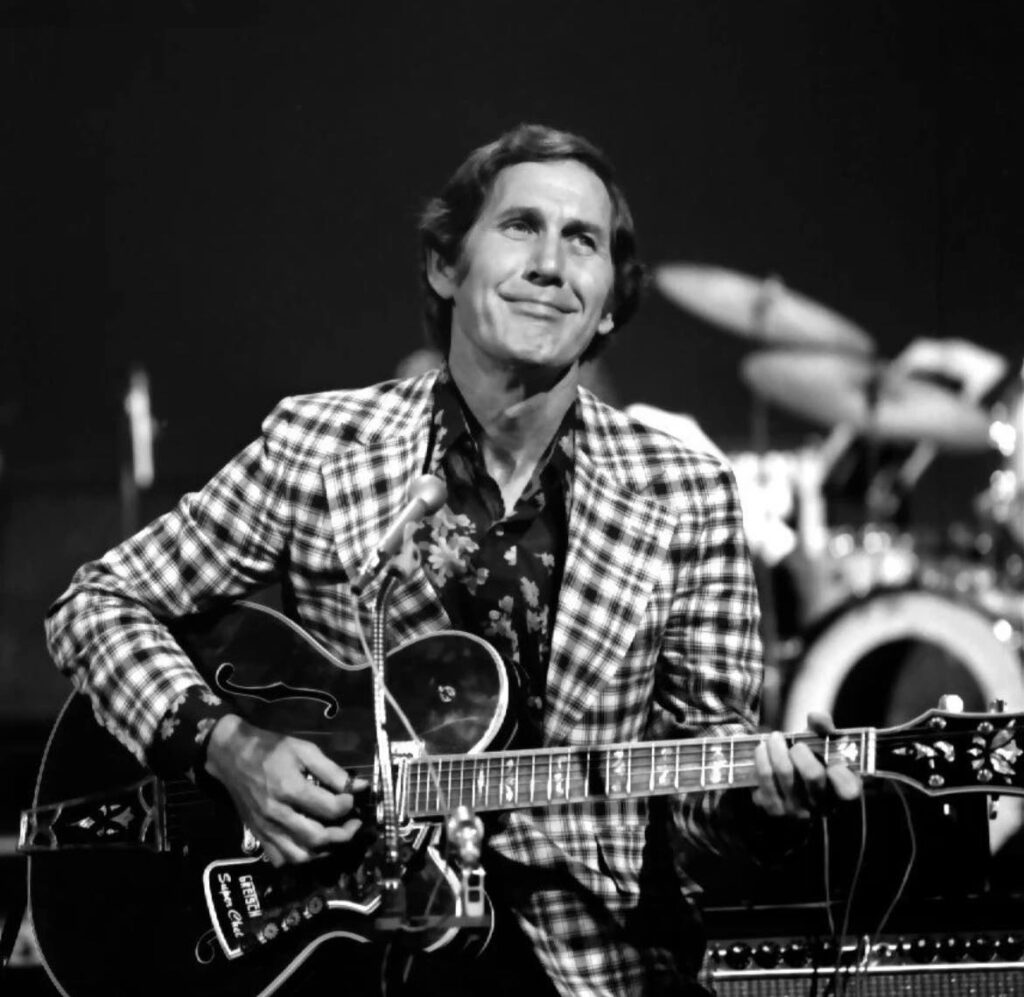
The Silent Architect of the Nashville Sound: Why Chet Atkins Remains the Ultimate “Guitar Man”
To completely understand the monumental landscape of twentieth-century American music is to recognize that its most powerful revolutionary did not command the stage with a booming vocal belt or theatrical mic-stand gestures. While casual listeners occasionally mistake his massive charting footprint and think of him as a traditional country singer, history remembers Chet Atkins as something far more influential: the definitive, peerless master of the six-string fretboard and the main sonic architect behind the modern “Nashville Sound.” Famously immortalized by his signature anthem “Guitar Man,” written by the brilliant Jerry Reed, Atkins took a track that could have been a simple country shuffle and transformed it into a towering masterclass of instrumental sophistication, establishing a permanent blueprint for generations of acoustic and electric guitar purists worldwide.
The meticulous architecture defining “Guitar Man” displays the exact genius that earned Atkins his legendary title of “Mr. Guitar.” Rather than operating as a singer who used an instrument merely for basic harmonic accompaniment, Chet used his guitar as a fully realized, independent voice. Utilizing his revolutionary thumb-and-three-finger picking mechanics—originally inspired by the pioneer style of Merle Travis—he achieved the impossible feat of tracking a steady, syncopated walking bassline, a driving rhythm section, and an intricate, fluid lead melody all at the same exact time on a single instrument. When he brought this hand-crafted style to life under the studio microphones, his hollow-body Gretsch guitar didn’t just play chords; it sang with an unadulterated, crisp analog warmth and a striking balance of classical precision and deep, blue-collar country grit that feels incredibly urgent and alive today.
Beyond his staggering physical dexterity as a performer, Chet’s true legacy lies in his historic role as an visionary record executive and producer for RCA Victor. During the late 1950s and 1960s, when the raw, energetic onslaught of early rockabilly threatened to push traditional country music off the global airwaves, Atkins stepped into the control room to save the industry from collapse. By stripping away the harsh, nasal fiddles and traditional banjos of the old-time honky-tonk era, he pioneered a smooth, highly sophisticated studio approach. He layered elegant, sweeping string sections, polished backing vocal ensembles like the Jordanaires, and rich, jazz-inflected chord progressions right into the heart of the recording tracking sessions. This revolutionary transition successfully elevated country music onto the international popular music charts, expanding its kingdom into a global phenomenon while effortlessly introducing its magic to a highly educated, mainstream audience.
To turn the volume all the way up on a classic recording of Chet Atkins today is to witness a beautiful, permanent monument to artistic humility and timeless class. He remains a premier icon who completely redefined the physical capabilities of his instrument, proving to the world that true musical majesty requires no modern studio cosmetics or digital gimmicks—only absolute sincerity, a flawless sense of timing, and a passionate heart. Chet Atkins’ definitive work on “Guitar Man” stands as a triumphant chapter in American culture, serving as a gentle, highly reflective reminder that when a beautiful melody is delivered straight from the soul of a true country gentleman, it possesses an immortal strength that will continue to cross generations, warm our souls, and echo in the hearts of music lovers forever.