
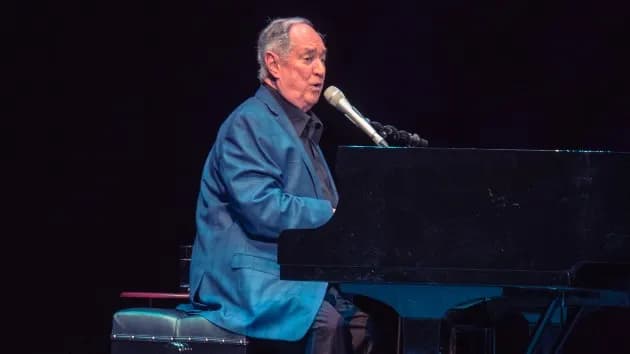
Neil Sedaka’s Unlikely 1975 Comeback: How Elton John Rescued a Legend
The mid-1970s marked one of the most remarkable career resurrections in music history, defined by an unlikely partnership between a 1950s teen idol and the world’s biggest rock star. In a 2007 interview with Pete Fornatale, Neil Sedaka recounted the pivotal moment when Elton John pulled him from the brink of obscurity and reintroduced him to the American mainstream. After a decade away from the charts, Sedaka had moved his family to England—the only place where his brand of classic American rock ‘n’ roll was still met with deep respect. It was there, at a Bee Gees concert, that a chance encounter with Elton John changed everything.
The story highlights the profound respect Elton John held for his predecessors. Recognizing Sedaka as a foundational influence, Elton requested a private listening session of Sedaka’s new material, which he was then recording with the experimental rock group 10cc. Sedaka fondly recalled the day Elton arrived at his London apartment, surprising his young son, Marc, who was a massive fan. After hearing the new tracks, Elton made a bold declaration that seemed nearly impossible at the time: he promised to make Sedaka a star in America once again. This wasn’t mere talk; Elton was launching his own label, Rocket Records, and insisted that Sedaka be his very first signing.
This collaboration resulted in the aptly titled album Sedaka’s Back, a project that bridged two musical worlds. Half of the record featured the polished, inventive backing of 10cc in England, while the other half utilized the legendary rhythm section of James Taylor in Los Angeles. The lead single, “Laughter in the Rain,” became a massive success, eventually climbing to number one and proving that Sedaka’s melodic sensibilities were timeless. During the interview, Sedaka noted that the song’s unique appeal came from his desire for a “drop-dead chord,” inspired by the American Indian sounds and the compositions of Aaron Copland. By finding that perfect harmonic shift, he captured a sound that resonated across generations.
The revival of Neil Sedaka’s career remains a testament to the “pay it forward” culture of the 1970s rock elite. Just as Bruce Springsteen championed Gary U.S. Bonds and Tom Petty supported Del Shannon, Elton John used his immense platform to ensure that a voice he loved wasn’t lost to the “Holiday Inn lounge” circuit. Through Rocket Records and a shared belief in high-quality songwriting, they transformed a nostalgic comeback into a contemporary triumph, cementing Sedaka’s legacy for the modern era.