
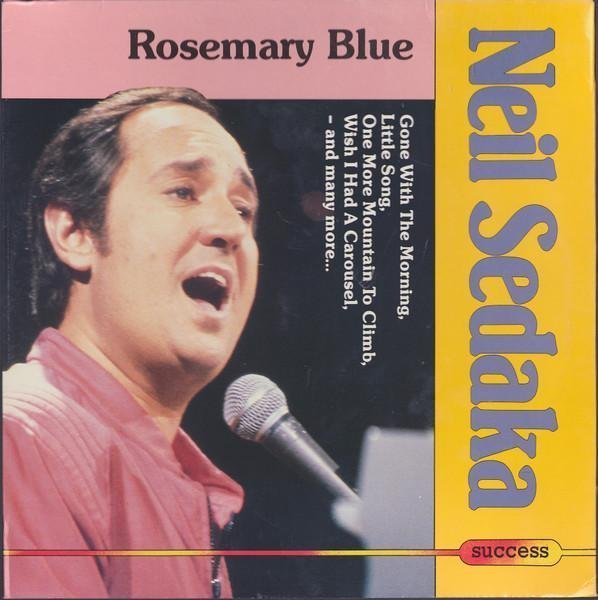
Neil Sedaka and the Melancholy of “Rosemary Blue”
In the early 1970s, Neil Sedaka stood at a delicate crossroads in his career. Once a dominant voice of early 1960s pop, he found himself navigating a changing musical landscape. It was during this transitional period that he released “Rosemary Blue” in 1971, a track from the album Emergence, a project he would later describe as one of his personal favorites despite its limited commercial success.
Performed in an intimate style often centered around piano and restrained orchestration, “Rosemary Blue” revealed a different side of Sedaka. Unlike his earlier upbeat hits, the song carried a subdued, reflective tone. Live renditions from that era, though less widely documented than his chart successes, suggest a performer leaning into emotional subtlety rather than pop exuberance. The stage presence was quieter, almost introspective, matching the song’s gentle unfolding.
The album Emergence, released in September 1971 under RCA, marked Sedaka’s brief return to the label after several years away. It ultimately failed to achieve significant commercial traction in the United States, a disappointment that led him to relocate to the United Kingdom shortly afterward in search of renewed artistic direction.
Within this context, “Rosemary Blue” can be understood not only as a song about a distant or melancholic figure, but also as a reflection of Sedaka’s own artistic uncertainty at the time. The lyrics, though not explicitly autobiographical, align with a broader emotional landscape of longing and displacement. This parallel becomes more compelling when viewed against the backdrop of a career temporarily in decline, where recognition had faded and reinvention became necessary.
Sedaka’s long collaboration with lyricist Howard Greenfield, who co wrote the track, also adds depth to the composition. Their partnership, responsible for many earlier hits, here shifts toward a more introspective tone, suggesting maturity shaped by both personal and professional change.
Though “Rosemary Blue” was not a commercial milestone, it has since developed a quiet appreciation among dedicated listeners. The song stands as a document of transition, capturing a moment when an established artist confronted uncertainty with restraint and emotional honesty.
In retrospect, the understated performances of “Rosemary Blue” offer something enduring. They reveal not the height of fame, but the complexity of persistence, where vulnerability becomes its own form of expression.
 Timeless Melodies