
60 Years at the Piano,A Living Songbook Unfolds on One of the World’s Greatest Stages
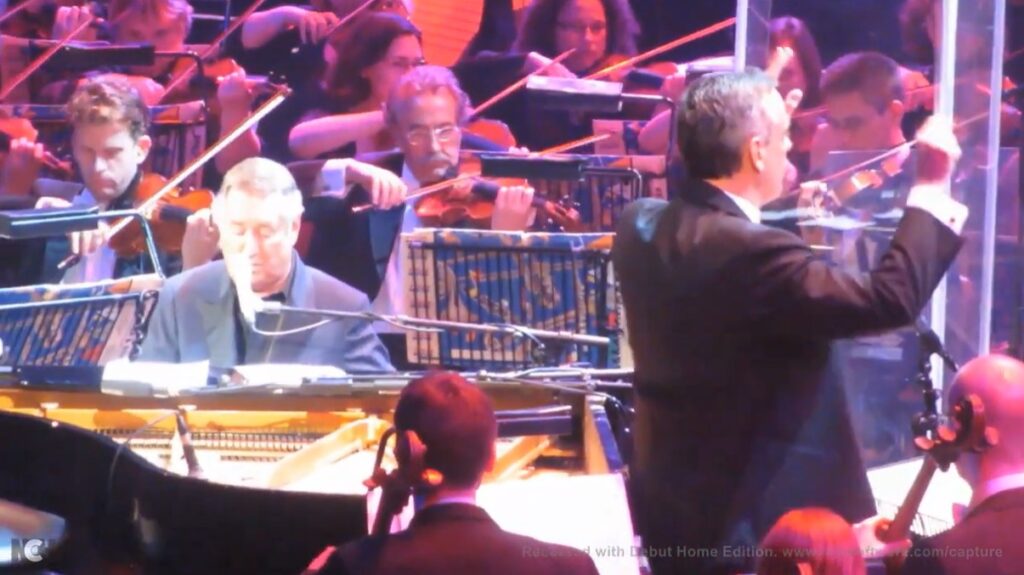
On October 17, 2012, the stage of Royal Albert Hall became more than a concert venue. It became a timeline. As Neil Sedaka sat at the piano and opened with a simple remark about writing songs for sixty years, he quietly reframed the evening. This was not just a performance. It was a life story told through melody.
From the outset, Sedaka avoided spectacle. There were no elaborate effects or dramatic staging. Instead, he relied on something far more enduring: the strength of his catalog and the intimacy of his delivery. His approach turned the concert into a continuous narrative, where songs flowed into one another like chapters in an autobiography.
One of the most compelling threads of the night emerged through “The Other Side of Me,” a song that revealed a more introspective dimension of Sedaka’s artistry. Its lyrics, centered on unspoken thoughts and emotional restraint, offered a rare glimpse into the vulnerability behind a career often associated with bright, accessible pop. In the context of this performance, the song felt less like a composition and more like a confession.
That sense of introspection made the transition into familiar hits all the more powerful. When Sedaka moved into Breaking Up Is Hard to Do, the atmosphere shifted. The personal gave way to the collective. What had begun as an inward reflection expanded into a shared memory, instantly recognizable and deeply felt by the audience. It was in these moments that the true craft of the evening became clear. Sedaka was not simply revisiting old songs. He was reshaping them within the context of time.
The use of medleys played a crucial role in this transformation. Rather than presenting each hit in isolation, Sedaka wove them together, allowing contrasts in mood and era to speak to one another. Early upbeat melodies stood alongside more mature, reflective works, illustrating not only the evolution of his music but also the complexity of the man behind it.
Performing at Royal Albert Hall carried its own significance. The venue, long associated with artistic prestige, provided an ideal setting for an artist whose career has spanned generations. Yet Sedaka did not treat the stage as a pedestal. He treated it as a space for connection, bridging decades of music with the immediacy of live performance.
By the end of the evening, the lasting impression was not defined by a single song or vocal peak. It was defined by continuity. In an era often focused on reinvention, Sedaka demonstrated the quiet power of endurance. His music did not chase time. It moved with it, carrying the audience along for the journey.
 Timeless Melodies