
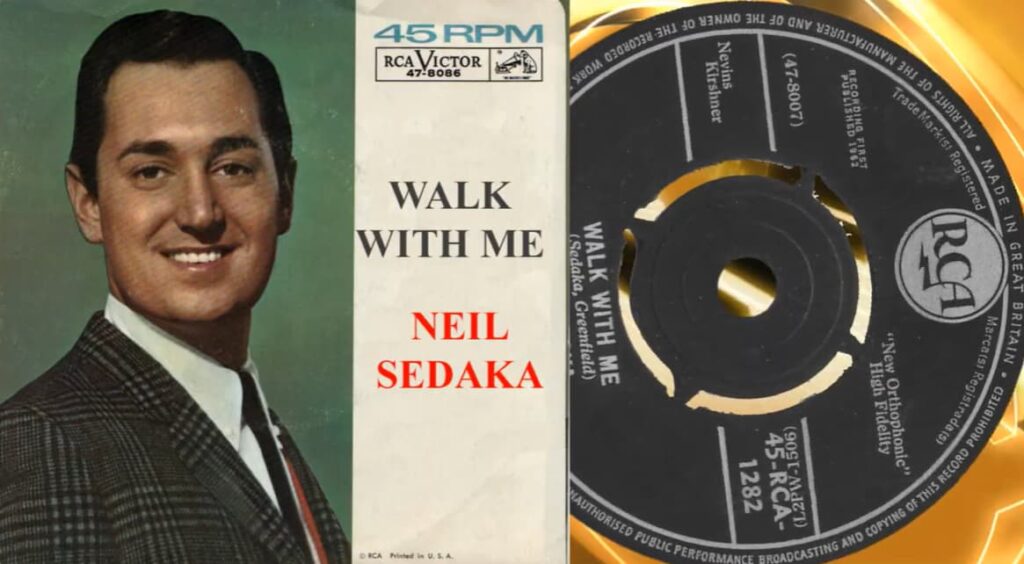
Revisiting a 1962 Recording from the Golden Era of Teen Pop
The song “Walk With Me” by Neil Sedaka represents a small but meaningful chapter in the early career of one of America’s most successful pop songwriters. The recording, released in 1962, reflects the youthful spirit of the era when Sedaka was rapidly gaining recognition in the international music scene.
“Walk With Me” was issued as the B side of the single “King of Clowns” in 1962 during Sedaka’s early years with RCA Victor. At the time, Sedaka was already becoming widely known thanks to a series of chart successes that had begun only a few years earlier. His breakthrough came with songs such as “Oh Carol,” which helped establish him as one of the defining voices of early nineteen sixties pop music.
Like many of Sedaka’s songs from that period, “Walk With Me” was written in collaboration with his longtime lyricist partner Howard Greenfield. The two writers were closely associated with the famous Brill Building songwriting community in New York, a creative center where many influential pop songs of the late nineteen fifties and early nineteen sixties were produced. Their partnership generated dozens of recordings that combined memorable melodies with lyrics aimed at the teenage audience that dominated the pop market at the time.
The song itself carries the gentle romantic tone typical of Sedaka’s early work. Built around a simple melodic structure and a soft vocal delivery, the recording expresses a hopeful invitation to walk together toward a shared future. The style reflects the sentimental character of teen pop before the dramatic changes that would later reshape popular music during the mid nineteen sixties.
Although “Walk With Me” was not among Sedaka’s biggest commercial hits, it remains an interesting example of his songwriting approach during a formative stage of his career. The recording highlights his clear vocal tone and strong sense of melody, qualities that helped him stand out in a highly competitive pop industry.
Sedaka’s career during the early nineteen sixties included a remarkable run of successful singles. Songs such as “Calendar Girl” and “Breaking Up Is Hard to Do” helped solidify his reputation as both a performer and composer. His background as a classically trained pianist also contributed to the distinctive musical character of his recordings.
Today the video of “Walk With Me” serves as a reminder of the period when Sedaka was still a young artist building his legacy. It captures the sound of an era when simple melodies and heartfelt lyrics defined the language of popular music. In retrospect, recordings like this help illustrate how Neil Sedaka developed the songwriting style that would carry his career across several decades and generations of listeners.
 Timeless Melodies