
“I’ve Loved And Lost Again” and the Making of a Timeless Voice
A vintage recording of Patsy Cline performing I’ve Loved And Lost Again continues to draw attention from country music historians and fans, offering a poignant look into the emotional core that defined her early career. Though not among her biggest commercial hits, the song stands as a powerful example of Cline’s ability to communicate heartbreak with remarkable clarity and sincerity.
Written by songwriter Eddie Miller, the track reflects the traditional themes of love and loss that shaped much of 1950s country music. Its lyrics speak from the perspective of someone caught in a cycle of failed relationships, capturing a sense of resignation and quiet despair. Lines such as “I’ve loved and lost again” underline a recurring emotional pattern, one that Cline delivers with a maturity beyond her years.
The performance itself highlights the stylistic blend that characterized Cline’s early recordings. During this period, she was working within the constraints of the 4 Star Records system, which often required artists to record material selected by the label. As a result, her catalog from the mid 1950s reflects a mixture of honky tonk, traditional country, and early pop influences. Yet even within these limitations, Cline’s voice stands out as the defining element, rich in tone and emotionally precise.
“I’ve Loved And Lost Again” was originally recorded during her early Nashville sessions, a time when she had not yet achieved the widespread success that would come with “Walkin’ After Midnight.” These formative recordings reveal an artist still finding her place in the industry, but already possessing the vocal control and interpretive skill that would later set her apart.
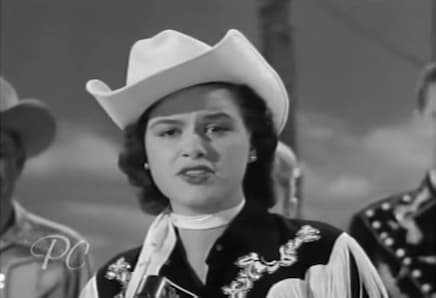
The resurfaced video of this performance adds further historical value. Like many archival clips from the era, it offers a rare opportunity to witness Cline’s stage presence in a relatively unpolished setting. There is a directness in her delivery that reflects the authenticity of live country performances during the 1950s, before the genre’s transition into the more polished Nashville Sound of the early 1960s.
Today, the song is appreciated less for chart success and more for its emotional honesty and historical significance. It captures a moment when Patsy Cline was still emerging, yet already demonstrating the qualities that would secure her legacy. For modern audiences, the performance serves as a reminder that even her lesser known recordings carry the unmistakable mark of a true artist.
 Timeless Melodies