
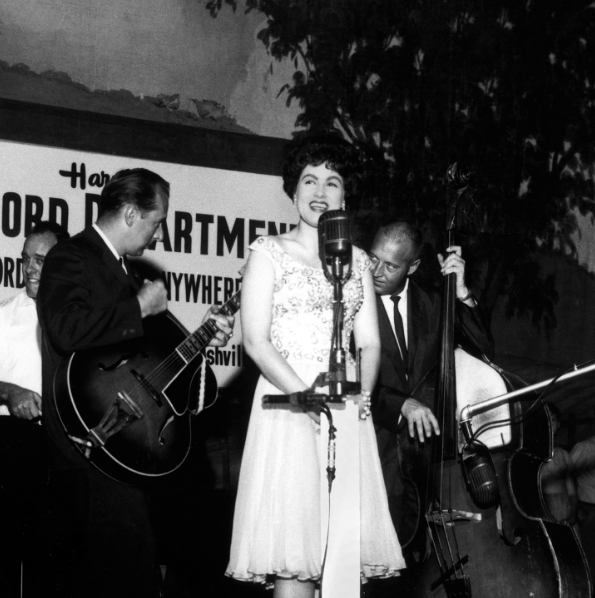
Timeless Emotion on the Opry Stage: Patsy Cline’s “Crazy” Still Resonates Across Generations
The live performance of “Crazy” by Patsy Cline on the Grand Ole Opry remains one of the most enduring moments in music history. Captured during the early 1960s, these performances showcase not only a defining song but an artist at the absolute peak of her expressive power.
Written by a then-emerging Willie Nelson, “Crazy” was released in 1961 and quickly climbed both the country and pop charts. It has since become a universal standard, celebrated for Cline’s vocal interpretation, which is widely praised for its haunting emotional depth and subtle technical control.
What makes “Crazy” especially compelling is the physical grit behind its creation. Just weeks before the recording session, Cline survived a near-fatal head-on car collision that left her with jagged scars and broken ribs.
While legend often suggests she nailed it in a single take, the reality is a testament to her professional endurance. During the initial session in August 1961, the pain in her ribs was so severe she could not reach the high notes required for the bridge. She was forced to return a week later, eventually recording the iconic vocal track as an overdub. This struggle added a palpable layer of authenticity and “ache” to the lyrics that remains unmatched.
Her live renditions at the Grand Ole Opry—the spiritual home of country music—offered a rare glimpse into her artistry beyond the polished studio environment. Recordings from her Opry appearances between 1956 and 1962 confirm her consistent ability to deliver powerful, pitch-perfect performances despite any personal or physical turmoil.
Critics and historians often highlight this “ache” as the defining element of her legacy. Her phrasing transformed a simple ballad into a universal expression of heartbreak, elevating the song beyond genre boundaries.
Decades after her tragic passing in 1963, Patsy Cline’s influence remains profound. Her performances at the Grand Ole Opry continue to introduce new generations to her artistry, reinforcing her status as one of the most significant voices of the 20th century.
Video:
 Timeless Melodies