
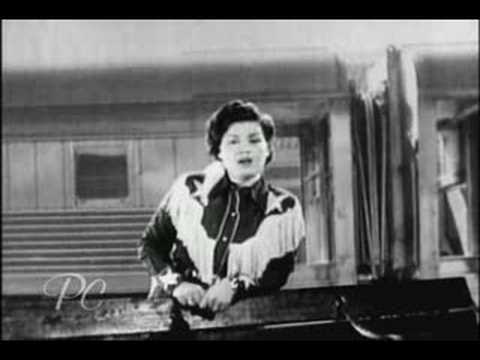
The Transcendent Voice: Patsy Cline’s Reimagining of “Lovesick Blues”
The enduring legacy of Patsy Cline continues to resonate through her heartfelt and singular interpretation of the classic song “Lovesick Blues.” While the track was immortalized decades earlier by the legendary Hank Williams, Cline’s rendition serves as a masterclass in how a transformative artist can breathe new life into a well-worn standard, turning a definitive hit into a deeply personal expression of longing.
A New Emotional Landscape
Originally a cornerstone of country music history characterized by a specific hillbilly swing, “Lovesick Blues” underwent a sophisticated evolution in Cline’s hands. When she performed the song—most notably during her appearances at the Grand Ole Opry and various televised jamborees—she brought a distinct emotional intensity that set her version apart. Introduced as a beloved figure of the genre, her presence alone created an atmosphere of hushed anticipation.
From the opening notes, her voice carries a weight of sorrow that aligns perfectly with the song’s theme of heartbreak. Where previous versions relied on the frantic energy of the yodel, Cline’s delivery is grounded in vocal clarity and rich tone. She does not rely on theatrical gestures; instead, she uses subtle phrasing and controlled emotion to let the story of loneliness and “sleepless nights” hit home with newfound sincerity.
Technical Mastery Meets Authenticity
Throughout the performance, her vocal control remains peerless. She navigates the song’s wide intervals with a smoothness that suggests both power and vulnerability.
Dynamics: At moments where the melody builds, her voice expands naturally, capturing the rising tension of a broken heart without losing its crystalline quality.
Phrasing: She inhabits the narrative, treating the lyrics not just as rhymes, but as a lived experience.
An Enduring Artistic Identity
What makes this performance particularly compelling is how Cline balanced her technical skill with genuine soul. By revisiting “Lovesick Blues,” she did more than just honor a classic; she reshaped it through her own artistic identity. She proved that a great song is never “finished” as long as there are voices like hers to reinterpret it.
Though songs like “Crazy” and “I Fall to Pieces” would eventually define her commercial peak, her take on “Lovesick Blues” remains a testament to her ability to transform familiar material into something uniquely powerful, sophisticated, and enduring.
 Timeless Melodies