
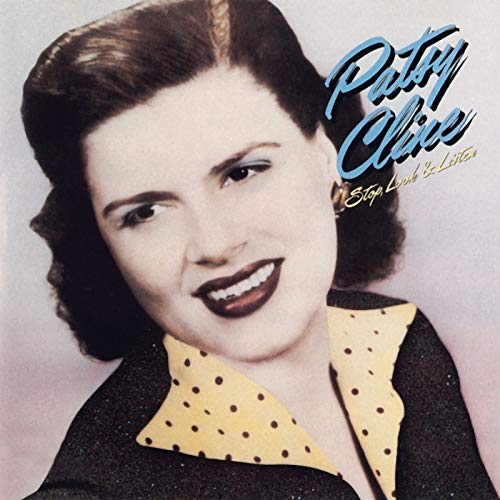
Echoes of Betrayal in Early Country: Patsy Cline’s “Too Many Secrets” Revisited
In the evolving landscape of 1950s American country music, Patsy Cline was already demonstrating the emotional precision that would later define her legendary career. Among her early recordings, Too Many Secrets stands as a compelling example of her ability to transform simple narratives into deeply affecting musical statements.
Recorded on April 25, 1957 and written by Bobby Lile, the song was part of Cline’s early catalog with 4 Star Records, a period marked by experimentation and the shaping of her vocal identity . Though it did not achieve the commercial success of later hits such as Walkin’ After Midnight, the track offers valuable insight into the foundations of her artistry.
The performance captured in archival footage and audio recordings reflects a stripped down, intimate approach. Unlike the lush orchestration that would later accompany her Decca recordings, Too Many Secrets relies on traditional country instrumentation, allowing Cline’s voice to take center stage. This simplicity enhances the song’s narrative, which unfolds through a series of quiet but devastating revelations.
Lyrically, the song tells the story of a woman gradually uncovering her lover’s infidelity through chance encounters. In one moment, a stranger reveals a past relationship. In another, a photograph found in a wallet confirms lingering deception. These scenes build toward the central refrain, where the singer realizes she has been kept in the dark. The line “you’re keepin’ too many secrets from me” captures both accusation and resignation, a hallmark of Cline’s interpretive strength .
What distinguishes this performance is not just the storyline but the delivery. Even in this early stage of her career, Cline exhibits a remarkable control of phrasing and tone. Her voice conveys vulnerability without excess, balancing restraint with emotional clarity. This approach would later become a defining feature of the Nashville Sound, a style that blended country roots with broader pop sensibilities.
Live interpretations of songs like Too Many Secrets during the late 1950s further emphasized her connection with audiences. Performing in small venues and radio broadcasts, Cline brought authenticity to every line, turning modest material into memorable experiences. These performances helped build the reputation that would eventually earn her a place among the most influential vocalists in country music history.
Today, Too Many Secrets may be considered a lesser known entry in Patsy Cline’s discography, yet it remains a significant artistic document. It reveals an artist in transition, already capable of capturing the complexities of love, betrayal, and self realization with remarkable nuance. For listeners and historians alike, the song offers a window into the early brilliance of a voice that would soon redefine the genre.