
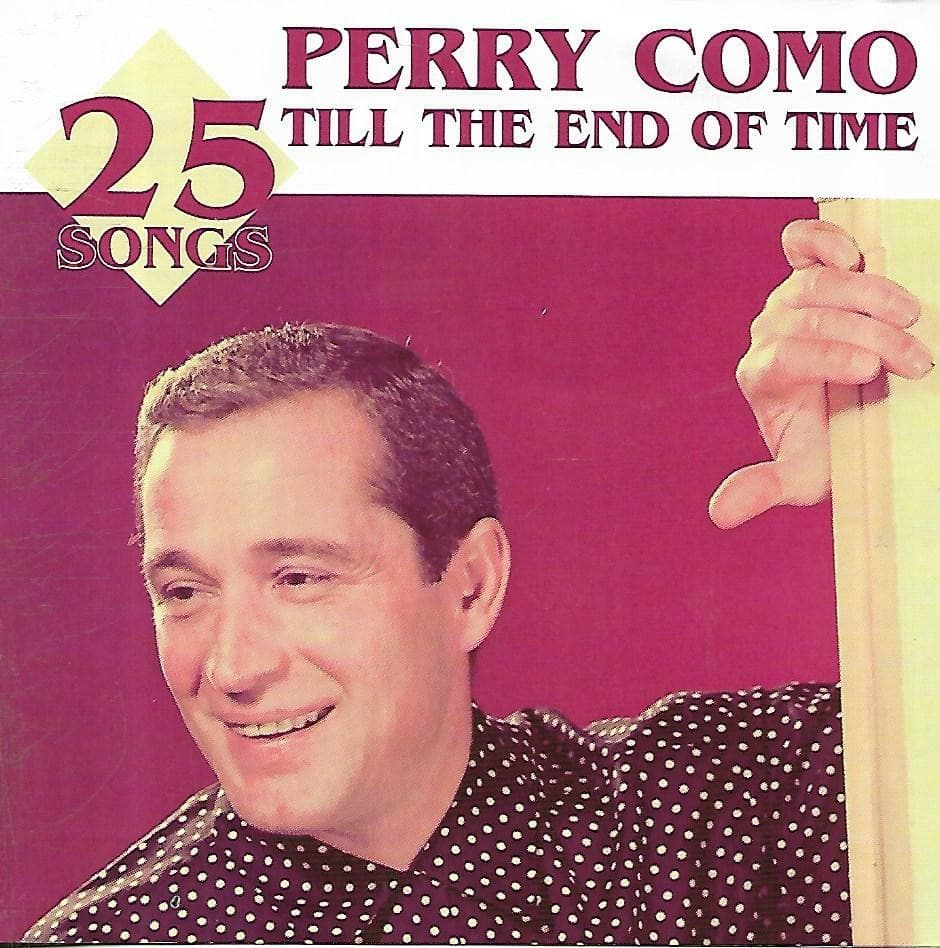
A promise of love shaped by eternity, where classical beauty meets popular devotion
When Perry Como released “Till the End of Time” in 1945, the song arrived not merely as a romantic ballad, but as a cultural moment one that spoke directly to hearts emerging from uncertainty and longing. Recorded with the Russ Case Orchestra, the song became an extraordinary success, reaching No. 1 on the Billboard Best Sellers in Stores chart, where it remained for ten consecutive weeks. In a year crowded with emotional releases, “Till the End of Time” stood apart as a declaration of permanence, comfort, and faith in love’s endurance.
The origins of the song are as fascinating as its reception. “Till the End of Time” is adapted from Frédéric Chopin’s “Polonaise in A-flat major, Op. 53”, often known as the Heroic Polonaise. Lyricists Buddy Kaye and Ted Mossman transformed Chopin’s sweeping, triumphant melody into a popular song without diminishing its grandeur. This blending of classical composition with modern sentiment was daring for its time and remarkably effective.
Perry Como was uniquely suited to carry such a piece. His voice, calm and reassuring, possessed a natural warmth that never needed force. Unlike singers who relied on dramatic intensity, Como sang as if speaking directly to one person, in a quiet room, without urgency. In “Till the End of Time,” that quality becomes essential. The song does not plead or persuade. It assures.
Musically, the arrangement honors its classical roots while remaining accessible. The orchestration swells gracefully, allowing the melody’s noble arc to unfold without excess. Strings rise and fall like measured breaths, supporting Como’s vocal rather than competing with it. The balance between singer and orchestra reflects the song’s emotional core: strength expressed through gentleness.
Lyrically, “Till the End of Time” is built on devotion without condition. The words speak of love not as passion that flares and fades, but as a steady presence one that persists beyond hardship, change, and time itself. The phrase “till the end of time” is not used as exaggeration, but as a sincere vow. There is humility in that promise, an understanding that love is sustained through patience rather than intensity.
The timing of the song’s release is impossible to ignore. In 1945, the world was transitioning from war to peace. People were returning home, rebuilding lives, and searching for stability after years of upheaval. “Till the End of Time” offered reassurance without sentimentality. It did not celebrate victory or triumph; it focused on continuity the idea that something meaningful could remain constant.
Within Perry Como’s career, this song helped define his image as a voice of calm confidence. While he would go on to record countless standards, “Till the End of Time” stands as one of his most emblematic recordings from the early phase of his success. It demonstrated that popularity did not require spectacle, only sincerity delivered with grace.
The song’s success also reflected a broader trend in mid-20th-century popular music, where classical themes were reinterpreted for mass audiences. Yet few such adaptations achieved the emotional balance found here. Chopin’s original composition carried heroism and resolve; Como’s version translated those qualities into devotion and loyalty. The transformation feels natural, respectful, and emotionally complete.
Over the decades, “Till the End of Time” has remained a touchstone for romantic balladry. It has been revisited, remembered, and cherished not because it belongs to a specific era, but because it speaks to an enduring human desire: the hope that love can be trusted, that promises can last, and that beauty does not fade simply because time moves forward.
Listening today, the song carries a particular kind of nostalgia not for youth or lost moments, but for values. It reminds us of a time when love songs were unafraid to be earnest, when devotion was expressed plainly and meant exactly as stated.
In “Till the End of Time,” Perry Como does not attempt to convince the listener of love’s power. He simply states it, calmly and confidently, as if it were the most natural truth in the world. And perhaps that is why the song has endured: it does not chase emotion it rests within it.
It is a song that still feels like a promise kept.