
The Quiet Redemption of a Man Who Has Seen Both Sin and Salvation
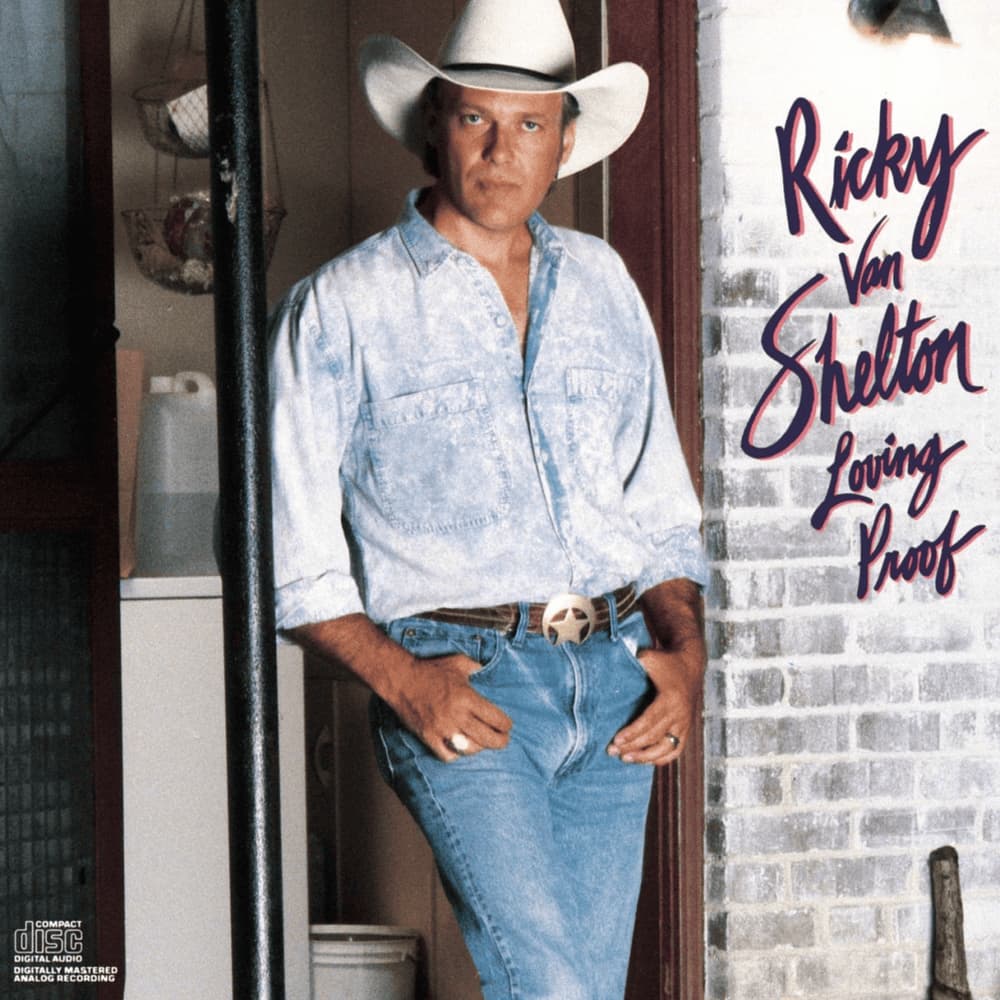
When Ricky Van Shelton released “Living Proof” in 1989, it became another jewel in the crown of his meteoric rise through country music’s late-’80s renaissance. Issued as part of his second studio album, Loving Proof, the song carried Shelton once again to the top of the Billboard Hot Country Songs chart, reaffirming his status as one of the genre’s most authentic new traditionalists. In an era when country music was flirting with pop polish, Shelton’s voice—rich, steady, and steeped in old-time sincerity—brought listeners back to the emotional rawness that first defined Nashville’s golden years.
“Living Proof” stands as one of Shelton’s most resonant performances, not because it shouts its message, but because it whispers truths that every listener has known in some form: regret, redemption, and the fragile grace of second chances. The song’s narrative traces the journey of a man who once lost his way—through heartbreak, poor choices, or simply the slow drift that comes from neglecting what matters most—and found himself again through love and faith. It is not a grand sermon but a confession set to melody, delivered with the weary humility of someone who has looked in the mirror and recognized both his failures and his fortune.
Musically, “Living Proof” embodies the neotraditional sound that defined Shelton’s artistic identity. The arrangement is elegantly restrained: steel guitar sighs softly behind him, acoustic strums keep time like a heartbeat, and subtle piano flourishes lend warmth without ever crowding his baritone. This simplicity allows the emotional weight of his voice to command full attention. There is an almost gospel-like undercurrent here—not overtly religious, but spiritual in its sense of renewal. Every phrase feels lived-in; every note seems to bear the dust of real experience.
At its core, “Living Proof” is about transformation. It reminds us that change rarely happens in dramatic flashes—it unfolds slowly, through small reckonings and moments of clarity. The protagonist becomes “living proof” that love can heal what pride or pain once broke. For listeners in 1989—and for those who discover it decades later—the song offers a mirror for their own quiet resurrections.
In retrospect, this track captures why Ricky Van Shelton mattered so deeply to late twentieth-century country music: he sang not as a performer reaching for acclaim but as a man reaching for truth. “Living Proof” remains exactly what its title promises—a testament to endurance, to grace hard-won, and to the enduring power of a voice that believes every word it sings.