
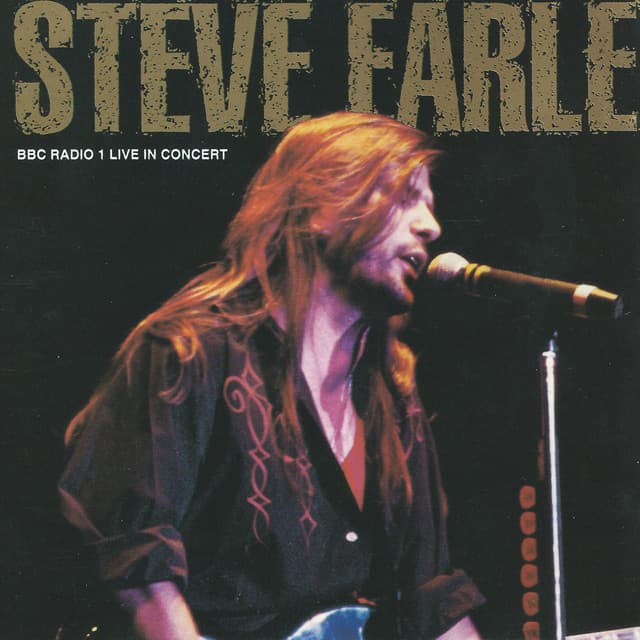
A rebel’s road through memory and myth where family history, outlaw spirit, and American sound collide.
When Steve Earle released “Copperhead Road” in 1988, it didn’t arrive quietly, nor did it fit neatly into any single genre. Instead, it tore through boundaries with a fierce sense of purpose, carrying with it echoes of Appalachian history, Vietnam-era disillusionment, and the long shadow of American individualism. From its opening mandolin riff to its defiant final lines, “Copperhead Road” announced itself as more than a song it was a statement.
Upon release, the song became the title track of Copperhead Road, the album that transformed Steve Earle from a respected songwriter into a singular voice of modern Americana. On the charts, “Copperhead Road” reached No. 10 on Billboard’s Hot Country Songs chart and achieved a remarkable crossover feat by climbing to No. 1 on the Mainstream Rock Tracks chart. This rare dual success reflected exactly what the song represented: a bridge between traditions that were never meant to be kept apart.
At its core, “Copperhead Road” is a generational narrative. Earle tells the story of a family living deep in the Appalachian hills, beginning with a moonshining grandfather who knows every back road and hollow well enough to evade the law. The song then moves forward in time, following the next generation into the Vietnam War and back home again where the same survival instincts are repurposed for a new kind of outlaw life.
What makes this story resonate so deeply is its emotional honesty. Earle doesn’t romanticize crime, nor does he condemn it. Instead, he presents it as a consequence of history, geography, and circumstance. These are people shaped by isolation, loyalty, and distrust of authority values passed down as carefully as any family heirloom.
Musically, “Copperhead Road” is just as layered as its narrative. The song fuses bluegrass instrumentation, particularly the driving mandolin, with hard rock rhythms and a relentless backbeat. This hybrid sound was bold in 1988, a time when country music and rock were often seen as opposing worlds. Earle refused that division. His music insisted that American roots were messy, loud, and interconnected.
The mandolin riff itself has become iconic sharp, urgent, and instantly recognizable. It doesn’t soothe; it pushes forward, mirroring the song’s restless spirit. Underneath, the rhythm section pounds like boots on gravel, while electric guitars add an edge that speaks to modern anger and unresolved conflict.
Lyrically, the Vietnam reference is crucial. When the narrator returns from war “learned a thing or two,” the implication is devastatingly clear. The war didn’t just scar a generation emotionally; it trained them. The skills learned overseas are folded back into a life already defined by defiance and survival. This subtle critique of American history gives “Copperhead Road” its lasting power it remembers what is often left unsaid.
For Steve Earle, the song was deeply personal. Raised around storytellers and influenced by mentors like Townes Van Zandt and Guy Clark, Earle understood that the best songs don’t preach they observe. “Copperhead Road” feels lived-in, as though the road itself has memory, carrying footsteps from one generation to the next.
Over time, the song has taken on a life far beyond its original release. It has become a staple of live performances, a cultural touchstone, and even an anthem for audiences far removed from Appalachian backroads. Its appeal lies in recognition the sense that history shapes us whether we choose it or not.
There is also a quiet melancholy beneath the song’s toughness. Each generation seems trapped by the last, repeating patterns with different tools but the same outcome. The road never really ends; it simply changes names.
Decades later, “Copperhead Road” endures because it refuses simplicity. It is loud but thoughtful, rebellious yet reflective. It honors tradition without nostalgia and challenges authority without empty bravado.
In the end, Steve Earle gave us more than a hit record. He gave us a road that winds through American memory rough, unresolved, and impossible to forget. And once you’ve traveled “Copperhead Road,” its dust stays with you long after the music fades.