
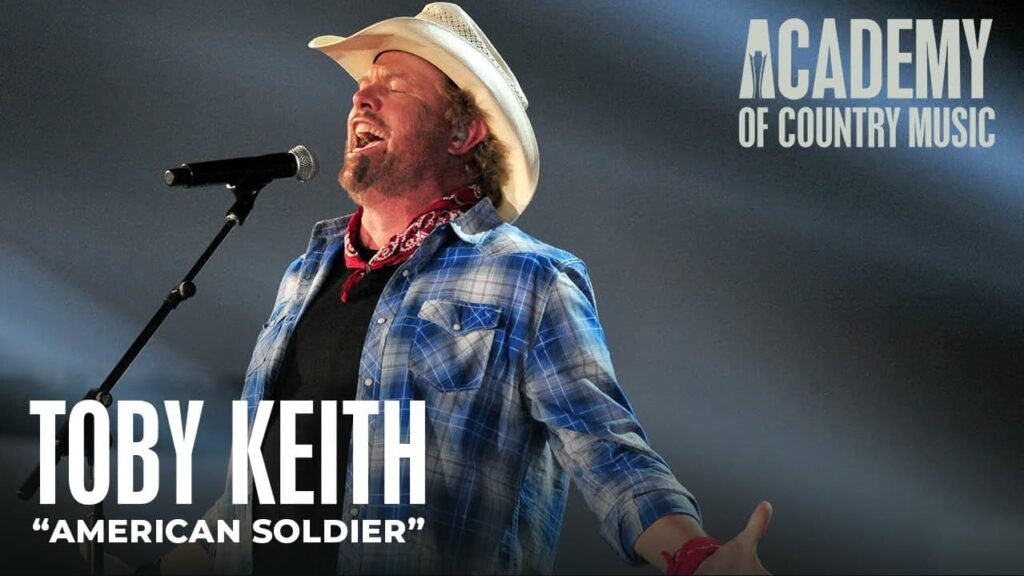
A Salute to Duty, Sacrifice, and the Quiet Weight of Honor
When Toby Keith released “American Soldier” in November 2003 as the second single from his album Shock’n Y’all, the song quickly resonated across a nation still reckoning with the profound emotions of the early 21st century. It soared to the top of the Billboard Hot Country Songs chart, where it held the No. 1 position for multiple weeks, and became one of Keith’s most enduring anthems—a piece that transcended mere radio success to become part of America’s cultural vocabulary. In a career rich with patriotic and blue-collar narratives, “American Soldier” stands apart as one of Keith’s most sincere and human portrayals of service and sacrifice.
The song was born not out of political posturing or grandstanding, but from a deeply personal space within Keith’s songwriting ethos. Co-written with Chuck Cannon, “American Soldier” captures a tone of humility—an introspective voice speaking not as a hero, but as an ordinary man who steps into extraordinary responsibility. The narrator is not draped in spectacle; he is grounded in family, faith, and quiet resolve. This emotional restraint gives the song its power. Where many patriotic tracks reach outward toward symbolism or national pride, Keith’s composition reaches inward—to the inner life of a man who must leave home yet carry its warmth with him into uncertainty.
Musically, the track is crafted with deliberate simplicity: steady percussion echoing a soldier’s march, guitars that swell without grandiosity, and a melody that feels both familiar and reverent. This restraint mirrors the stoicism of its subject matter—the quiet strength that defines real courage. The production avoids bombast; instead, it lets Keith’s baritone deliver the narrative with gravitas and tenderness. Each note feels measured, like footsteps on a long road toward duty.
Lyrically, “American Soldier” speaks to universal themes of love, responsibility, and sacrifice through the lens of military service. The protagonist is not asking for recognition or glory—he is simply doing what he feels called to do. That authenticity resonated deeply in a time when America was reflecting on its identity and values amid global conflict. Yet even beyond its immediate historical moment, the song endures because it articulates something timeless: the moral weight carried by those who serve and by those who wait for their return.
In the two decades since its release, “American Soldier” has become more than a hit—it is a ritual of remembrance at ceremonies, sporting events, and private gatherings alike. It bridges generations, reminding listeners that patriotism can exist quietly in the heart rather than loudly on display. Within Keith’s catalog—and indeed within modern country music—it remains one of the clearest expressions of empathy for those who bear the burdens of duty with dignity and grace.