
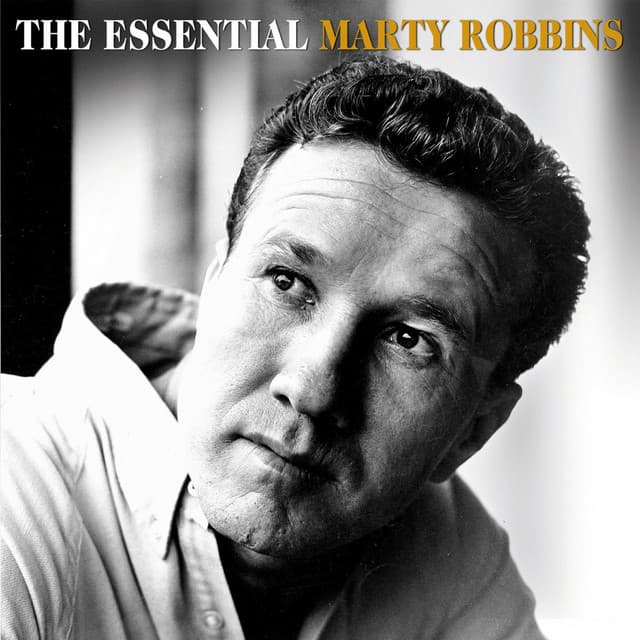
Greeting an Old Companion: Quiet Resignation and Emotional Honesty in “Hello Heartache”
“Hello Heartache” is one of those songs where Marty Robbins speaks directly to an emotion most people come to know far too well. Released in 1959, during a period when Robbins was expanding beyond honky-tonk roots into richer, more emotionally layered material, the song feels less like a performance and more like a conversation one held in solitude, after hope has already faded.
The title itself tells the story. There is no surprise, no shock, no dramatic revelation. Heartache is not new here. It is familiar. The greeting is calm, almost polite, as if sorrow has returned exactly when expected. That emotional posture sets “Hello Heartache” apart from many heartbreak songs of its era. Instead of pleading or protest, Robbins offers recognition and acceptance.
Upon its release, “Hello Heartache” became a Top 10 hit on the Billboard Hot Country Singles chart, reinforcing Marty Robbins’ reputation as an artist who could connect deeply without exaggeration. By the late 1950s, country music audiences were increasingly drawn to songs that reflected emotional realism rather than theatrical despair, and Robbins understood that shift instinctively.
The song was written by Marty Robbins himself, and that personal authorship is central to its tone. Robbins had a gift for writing lyrics that sounded lived-in phrases that felt spoken rather than composed. In “Hello Heartache,” the words are plain, direct, and unadorned. There are no metaphors reaching for attention. The pain is stated simply, and that simplicity makes it convincing.
Musically, the arrangement is understated. Gentle guitar lines, restrained rhythm, and subtle background instrumentation create an atmosphere of quiet reflection. The song never rushes. It moves at the pace of resignation, allowing each line to settle before the next arrives. The production serves the emotion rather than shaping it.
Marty Robbins’ vocal performance is where the song truly comes alive. His voice is steady, warm, and controlled, carrying no trace of bitterness. He does not accuse or lament loudly. Instead, he sounds tired but not defeated. There is dignity in the way he sings, as though heartbreak is something to be acknowledged, not feared. That restraint gives the song its lasting power.
Lyrically, “Hello Heartache” explores the moment when disappointment becomes familiar. The narrator understands that love has ended or failed, and instead of fighting that reality, he names it. This emotional maturity rare in popular music at the time resonated strongly with listeners who recognized their own experiences in the song’s calm tone.
Within Marty Robbins’ broader catalog, “Hello Heartache” occupies an important place. While Robbins is often remembered for grand storytelling ballads and dramatic Western narratives, this song highlights his quieter strength: emotional clarity. It proves that he was just as effective when he turned inward as when he painted wide musical landscapes.
The late 1950s marked a turning point in Robbins’ career, where his songwriting became increasingly reflective. “Hello Heartache” fits perfectly within that evolution. It does not seek resolution. It does not promise healing. Instead, it captures a moment of emotional truth the recognition that some pain arrives not as a shock, but as a return.
Today, “Hello Heartache” remains deeply resonant because its message does not belong to any one era. Heartbreak, when repeated, often loses its drama and gains familiarity. Robbins understood that long before it was commonly expressed in song. His calm greeting to sorrow feels timeless, honest, and profoundly human.
In the end, “Hello Heartache” reminds us that strength is not always found in resistance. Sometimes it lies in acknowledgment in the quiet courage to say a name out loud and sit with it. Marty Robbins did exactly that, and in doing so, left behind a song that continues to speak softly, yet unmistakably, to the heart.
 Oldies Songs