
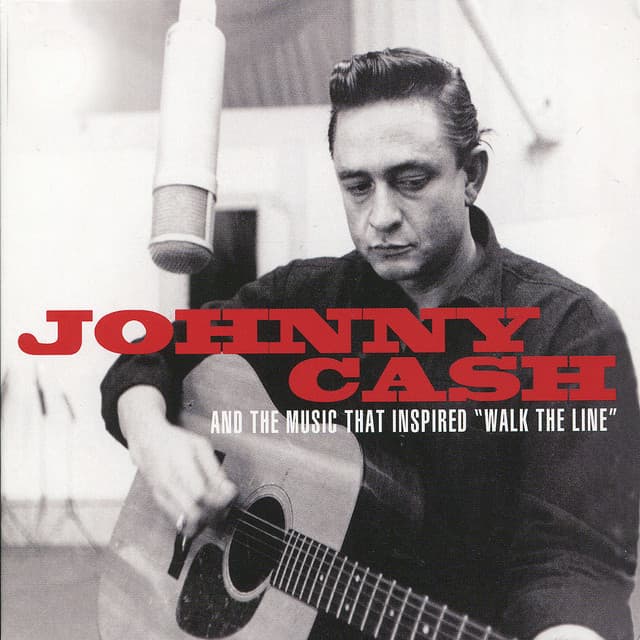
Serving a Sentence of the Soul: Guilt, Confinement, and Truth in “Doin’ My Time”
“Doin’ My Time” is one of the most revealing recordings in Johnny Cash’s early career a song that captures the emotional weight of imprisonment long before prison became his defining public image. Released in 1960 on the album Now, There Was a Song!, the track stands as a stark meditation on guilt, consequence, and quiet endurance. It is not about bars and guards alone; it is about the kind of sentence a man carries inside himself.
The song was originally written and recorded by Jimmie Skinner in 1955, where it became a country hit rooted in the honky-tonk tradition. But when Johnny Cash took hold of “Doin’ My Time,” he transformed it. Skinner’s version spoke plainly of incarceration; Cash’s version inhabited it. His voice did not merely describe confinement it sounded as though it had already learned its rhythm.
Upon its release as a single, Johnny Cash’s “Doin’ My Time” reached No. 5 on the Billboard Hot Country Singles chart, marking one of his strongest chart performances of the period. Yet numbers alone fail to explain the song’s importance. By 1960, Cash was increasingly drawn to material that reflected moral struggle and inner reckoning, and this song fit him with unsettling precision.
Musically, the arrangement is restrained and deliberate. A steady rhythm keeps time like footsteps echoing down a corridor. The instrumentation simple guitar, bass, and sparse accompaniment—creates a sense of routine, mirroring the monotony of prison life. There is no dramatic rise or fall. The song moves forward because time does, whether one wants it to or not.
Johnny Cash’s vocal performance is the defining force. His delivery is calm, controlled, and heavy with implication. He does not rage against fate, nor does he beg for mercy. Instead, he sings with the voice of a man who understands that punishment is not always unjust. This moral gravity is what separates Cash from many of his contemporaries. He does not romanticize the outlaw; he examines the cost.
Lyrically, “Doin’ My Time” operates on two levels. On the surface, it is a prison song bars, sentences, and lost freedom. But beneath that lies a deeper truth: the narrator accepts responsibility. The line between physical incarceration and moral accountability is intentionally blurred. The listener is left with the sense that the punishment fits the crime, not because the law demands it, but because conscience does.
This theme would echo throughout Johnny Cash’s career. Years later, when he famously performed for inmates at Folsom Prison and San Quentin, songs like “Doin’ My Time” gained retrospective meaning. Cash was not singing to prisoners as an outsider he was singing with them, as someone who understood inner captivity through addiction, failure, and self-reproach.
Within the album Now, There Was a Song!, which paid tribute to country classics that shaped Cash’s musical upbringing, “Doin’ My Time” stands out as the most autobiographical in spirit, if not in fact. Cash chose the song not simply because it was popular, but because it aligned with his worldview. He believed music should confront truth, not evade it.
The song’s power lies in its restraint. There is no lesson spelled out, no moral preached. The listener is trusted to understand that some mistakes carry weight, and that living with them requires endurance. That quiet dignity so central to Cash’s identity is fully present here.
Today, “Doin’ My Time” remains one of Johnny Cash’s most honest early recordings. It foreshadows the Man in Black he would later become: compassionate toward the condemned, unsparing toward himself, and deeply aware that freedom is not merely the absence of walls, but the presence of truth.
In the end, the song reminds us that time does not only pass it teaches. And sometimes, the longest sentence is not measured in years, but in understanding.
 Oldies Songs