
A Quiet Goodbye Spoken with Dignity: When Love Ends Without Drama, Only Truth
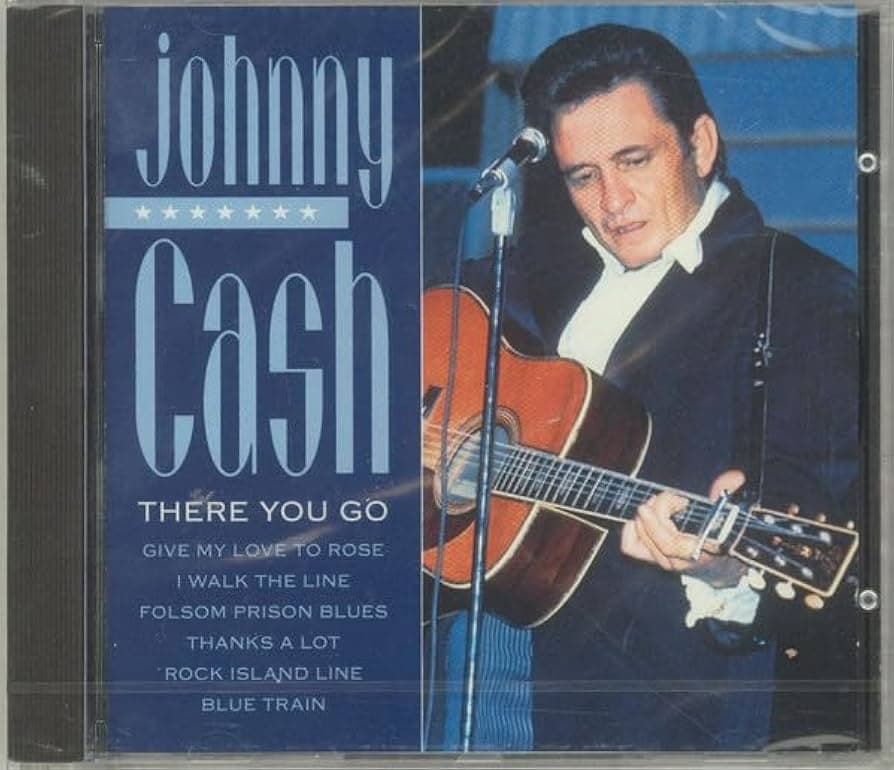
When Johnny Cash released “There You Go” in 1957, the song did not arrive with noise or confrontation. It arrived calmly, almost politely yet its emotional weight was unmistakable. Upon its release, “There You Go” reached No. 1 on the Billboard Country & Western Best Sellers chart, becoming one of Johnny Cash’s earliest chart-topping singles and helping to firmly establish him as a major voice in American country music. At a time when heartbreak songs often relied on anger or pleading, this record stood apart for its restraint and emotional clarity.
Written entirely by Johnny Cash himself, “There You Go” reflects a young songwriter already possessing a rare emotional maturity. Cash was in his mid-20s, newly successful, yet personally conflicted. His marriage to Vivian Liberto was beginning to show strain, and the pressures of fame, touring, and inner restlessness were quietly reshaping his emotional world. Though the song is not explicitly autobiographical, it carries the unmistakable tone of lived experience rather than imagined sorrow.
Lyrically, “There You Go” is deceptively simple. The narrator does not argue or beg. He does not ask for explanations or offer apologies. Instead, he acknowledges the end of love with quiet acceptance. The phrase “there you go” itself is striking it suggests finality without bitterness, closure without cruelty. It is the sound of someone stepping aside, allowing another person to leave freely, even when it hurts.
What gives the song its lasting power is this emotional posture. The narrator recognizes that love cannot be forced. There is dignity in his surrender. Rather than framing himself as a victim, he accepts reality as it is. This perspective was unusual for its time and became a defining characteristic of Johnny Cash’s songwriting: empathy without weakness, strength without hardness.
Musically, the song is built on a steady, understated rhythm that aligns perfectly with its emotional tone. There are no dramatic flourishes, no sudden shifts meant to heighten tension. The arrangement allows Cash’s voice to lead the narrative with calm authority. His vocal delivery is firm but gentle, revealing pain without exaggeration. It sounds less like a performance and more like a conversation held late at night, when the truth can no longer be avoided.
Cash’s voice in 1957 already carried the gravity that would define his career. Deep, measured, and unadorned, it conveyed sincerity above all else. In “There You Go,” that voice becomes the voice of acceptance. He does not raise it. He does not soften it. He simply states what is happening and trusts the listener to feel the weight of it.
In the broader context of late 1950s country music, the song represents a turning point. Country was beginning to move away from exaggerated sentiment and toward realism. Johnny Cash was at the forefront of this shift. His songs often focused on consequences, moral choices, and emotional responsibility. “There You Go” fits squarely within that worldview. It does not romanticize heartbreak. It respects it.
The success of the song also marked an important step in Cash’s artistic independence. Writing his own No. 1 hit affirmed him not just as a performer, but as a songwriter capable of shaping his own narrative. This autonomy would become essential to his later work, allowing him to explore themes of faith, regret, redemption, and resilience with honesty few artists dared to attempt.
Over time, “There You Go” has aged gracefully. Its emotional truth does not belong to any single generation. Youth may hear it as a breakup song. Experience hears it as something deeper a recognition that love sometimes ends not because of hatred, but because paths quietly diverge. There is sorrow in that realization, but also peace.
For listeners who have lived through love’s gradual fading rather than its dramatic collapse, the song feels especially resonant. It understands that some goodbyes are spoken softly, without raised voices or slammed doors. They are marked instead by silence, by acceptance, by the simple acknowledgment that holding on would only cause more harm.
In the end, Johnny Cash does not judge the person who leaves. He grants them their freedom. That choice to let go without bitterness is what gives “There You Go” its enduring dignity. It is not a song about defeat. It is a song about respect for love, for truth, and for the courage it takes to step aside when the time has come.
 Oldies Songs