
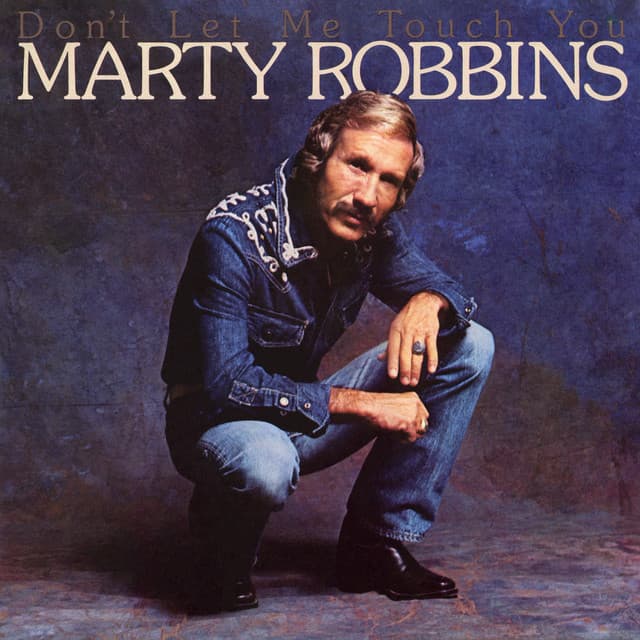
Marty Robbins – “Return to Me”: A Tender Plea That Echoes Across Time and Distance
Among the many heartfelt recordings in Marty Robbins’ rich and versatile catalog, “Return to Me” stands as a quiet, deeply emotional gem—one that reveals the softer, more intimate side of a man often celebrated for his grand storytelling and Western ballads. While Robbins built his legacy on classics like “El Paso” and “Big Iron,” this song reminds us that his greatest strength may have been his ability to express longing with simple, aching sincerity.
“Return to Me” is Marty Robbins’ interpretation of the classic pop standard originally made famous by Dean Martin in 1958, when it climbed to No. 4 on the Billboard Hot 100. Robbins recorded his version during a period when country artists frequently bridged genres, bringing pop standards into the warm, storytelling embrace of country music. Although Marty Robbins’ version was not released as a major charting single, it became a beloved part of his repertoire—especially among fans who appreciated his smooth vocal phrasing and romantic sensibility.
What makes Robbins’ rendition so compelling is not reinvention, but restraint. He doesn’t try to outshine the original; instead, he slows it down just enough to let the emotion settle into every word. His voice—gentle, controlled, and unmistakably human—turns the song into something more personal. Where Dean Martin’s version carried a cosmopolitan charm, Marty Robbins gives it a quiet, almost lonesome intimacy, as if the plea “return to me” is being whispered across an empty room late at night.
The meaning of “Return to Me” is timeless: the longing for a lost love, the hope that distance is not permanent, and the belief that hearts once joined can find their way back again. But in Robbins’ hands, the song feels less like a dramatic heartbreak and more like a patient waiting—a man holding onto memory, trusting that love, if it was ever real, might still return.
For listeners who grew up in the golden age of radio, this version carries a particular kind of nostalgia. It recalls an era when songs were not rushed, when emotion was allowed to breathe, and when a voice like Marty Robbins’ could fill a room without ever needing to rise. It’s the kind of recording that invites you to sit quietly, perhaps in the fading light of evening, and let your own memories drift back—faces, places, and moments that time has gently carried away.
In the end, “Return to Me” is not just a song about love lost. It is about hope that lingers, even when certainty fades. And in that soft, steady voice of Marty Robbins, we are reminded that sometimes the most powerful words are the simplest ones—spoken not loudly, but with the quiet conviction of a heart that still believes.
 Oldies Songs