
When Early Rock ’n’ Roll Met the Open Road, and Country Voices Learned to Swing
“Maybellene” occupies a fascinating place in American music history, and Marty Robbins’ interpretation of this landmark song stands as a quiet but meaningful bridge between genres that once seemed worlds apart. Originally written and first recorded by Chuck Berry in 1955, “Maybellene” is widely recognized as one of the foundational records of rock ’n’ roll. Chuck Berry’s original version climbed to No. 1 on the Billboard R&B chart and reached No. 5 on the Billboard pop chart, announcing the arrival of a new musical language built on rhythm, storytelling, and youthful urgency.
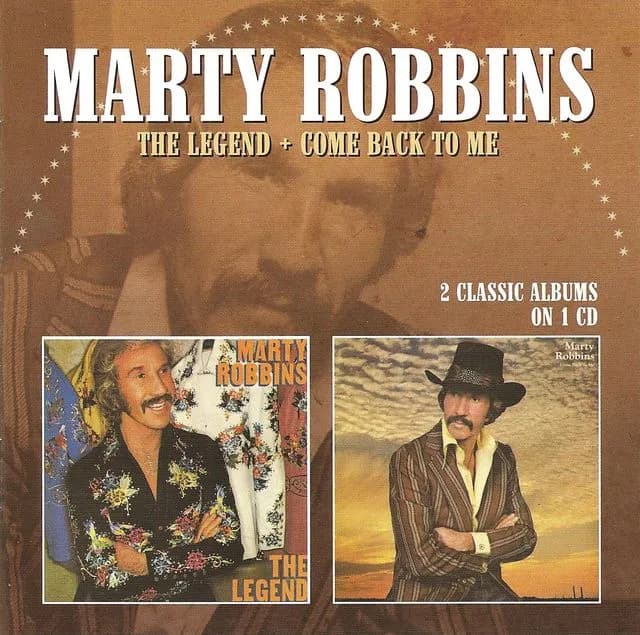
When Marty Robbins later took on “Maybellene,” he did not attempt to outshine Berry’s groundbreaking performance. Instead, he reframed the song through the lens of a seasoned country balladeer—one who understood narrative, pacing, and emotional clarity. Robbins’ version reveals how adaptable early rock ’n’ roll truly was, and how closely it was tied to country, blues, and Western swing traditions that predated it.
At its core, “Maybellene” is a chase song—fast cars, jealousy, betrayal, and pride colliding on an endless highway. Inspired partly by a rewritten nursery rhyme (“Ida Red”), the lyrics tell the story of a man racing after his unfaithful lover, watching her Cadillac pull away as his Ford struggles to keep up. It is a metaphor wrapped in speed and gasoline, capturing a postwar America intoxicated with freedom, automobiles, and restless desire.
Where Chuck Berry delivered the song with biting guitar riffs and youthful swagger, Marty Robbins approached it with control and polish. His voice, calm and confident, turns the frantic chase into a measured narrative. The urgency is still there, but it is tempered by maturity. Robbins sings not like a reckless teenager, but like a man who has seen enough of love to understand both its thrill and its foolishness.
This difference in perspective is what makes Robbins’ rendition so compelling. He does not shout or race through the lines. Instead, he allows the story to unfold clearly, almost cinematically. The listener can picture the road stretching endlessly, dust rising behind spinning tires, and the quiet realization that pride and desire often lead us into the same mistakes again and again.
Musically, Marty Robbins’ “Maybellene” leans closer to country and rockabilly than pure rock ’n’ roll. The rhythm swings rather than explodes. The instrumentation supports the story instead of dominating it. This subtle shift highlights Robbins’ strength as a storyteller—he never lets technique overshadow meaning.
The song’s deeper message remains timeless. “Maybellene” is not just about cars and speed; it is about mistrust, obsession, and the emotional cost of chasing someone who may never truly stop running. In Robbins’ voice, that lesson feels reflective rather than rebellious. There is an unspoken understanding that passion, when left unchecked, often leaves only dust and regret behind.
For listeners who came of age before music splintered into rigid categories, Marty Robbins’ version of “Maybellene” feels familiar and comforting. It recalls a time when singers could cross borders freely—when country artists borrowed from rhythm and blues, and rock ’n’ roll still carried the storytelling soul of older traditions.
Today, hearing Marty Robbins sing “Maybellene” is like revisiting a crossroads in American music history. It reminds us that genres are not walls, but roads—and the best artists, like Robbins, knew exactly how to travel them with grace, respect, and enduring style.
 Oldies Songs