
A Sacred Stillness Where Faith, Fragility, and Hope Meet in a Single Voice
“Silent Night”, when sung by Johnny Cash, becomes far more than a Christmas hymn. It turns into a moment of hushed reflection, where belief is not proclaimed loudly but held gently, almost protectively, in the palm of the hand. Cash did not sing this song to impress, nor to decorate the season. He sang it as a man who understood darkness, silence, and the quiet necessity of hope.
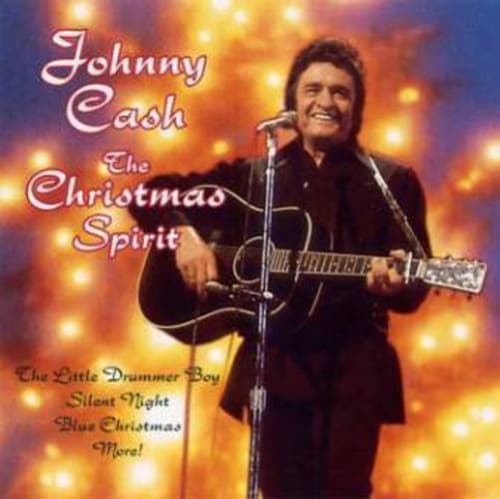
Originally composed in 1818 by Franz Xaver Gruber with lyrics by Joseph Mohr, “Silent Night” is one of the most recorded songs in music history. Its power has always rested in simplicity—a melody that moves slowly, deliberately, leaving space for thought. When Johnny Cash recorded “Silent Night”, most notably for his Christmas albums such as The Christmas Spirit (1963) and later holiday collections, he approached the hymn not as a seasonal obligation, but as a personal statement of faith shaped by hardship and humility.
Unlike many polished or choir-driven versions, Cash’s rendition is restrained and intimate. His voice, deep and weathered, carries the weight of lived experience. There is no theatrical swelling, no attempt to sweeten the edges. Instead, he allows the natural grain of his voice to remain intact, even when it trembles slightly. That imperfection is essential. It reminds the listener that faith, like life, is rarely flawless.
By the time Cash recorded “Silent Night,” he was already a man marked by contradictions—fame and isolation, belief and doubt, discipline and excess. This tension gives his performance extraordinary credibility. When he sings “all is calm, all is bright,” it does not sound like an assumption. It sounds like a longing. Calm and brightness are not taken for granted; they are hoped for.
Musically, the arrangement remains sparse. Often accompanied by gentle acoustic instrumentation or minimal orchestration, the song leaves room for silence between phrases. Those pauses matter. In Cash’s hands, silence becomes part of the message. It mirrors the stillness described in the lyrics, but also the inner quiet that comes only after struggle. This is not the silence of emptiness—it is the silence of understanding.
What makes Johnny Cash’s “Silent Night” particularly moving is its lack of sentimentality. He does not soften the hymn into background music. He treats it with reverence, as if aware that the song has survived wars, grief, and centuries precisely because it does not demand attention. It simply waits.
Historically, Cash’s Christmas recordings occupied a unique place in his catalog. They were neither commercial gimmicks nor grand statements. Instead, they felt like offerings. At a time when holiday music often leaned toward cheer and spectacle, Cash chose restraint. He trusted the song’s message—and the listener’s patience.
The meaning of “Silent Night” deepens when filtered through Cash’s life story. This is a man who knew public failure and private repentance, who understood that redemption is often quiet. His voice does not preach salvation; it acknowledges the miracle of peace arriving softly, without announcement. In that sense, his performance aligns perfectly with the hymn’s origin—a song first sung in a small village church with a broken organ, accompanied only by a guitar.
For those who have lived long enough to know that joy and sorrow often walk side by side, Cash’s “Silent Night” resonates deeply. It does not erase pain. It sits beside it. It suggests that even in weariness, there can be rest; even in doubt, there can be reverence.
In the end, Johnny Cash’s “Silent Night” is not about Christmas as an event. It is about stillness as a necessity. It is about faith that survives not because it is loud, but because it is sincere. When the song fades, it leaves behind a sense of quiet companionship—as if someone has sat with you for a moment, said very little, and somehow said enough.
That is the enduring gift of this recording. Not celebration, not spectacle—but a calm, steady voice reminding us that some truths arrive only when the world grows quiet.
 Oldies Songs