
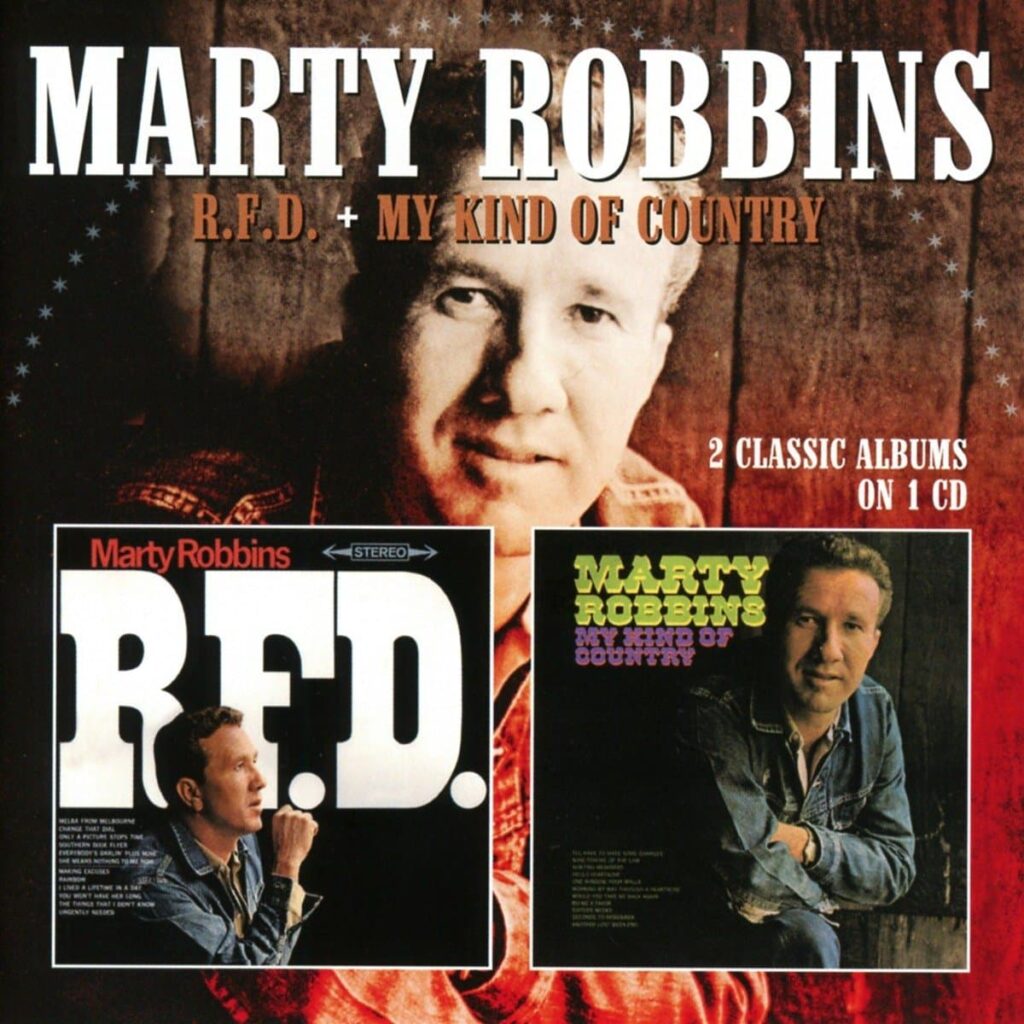
A Tender Declaration of Chosen Love, Where Devotion Rises Above Admiration and Quiet Pride Turns Into Promise
When “Everybody’s Darlin’ Plus Mine” was released in 1961, Marty Robbins once again proved that romantic conviction did not require drama to be powerful. The song reached No. 1 on the Billboard Hot Country Singles chart, reinforcing Robbins’ position as one of the most emotionally reliable voices in country music at the dawn of the 1960s. At a time when popular songs often leaned toward heartbreak or spectacle, this record chose a different path one of assurance, loyalty, and calm pride in love that feels certain.
Written by Johnny Bond and Marty Robbins himself, “Everybody’s Darlin’ Plus Mine” carries the quiet confidence of a man who knows exactly what he holds. The title alone sets the tone. It suggests admiration from the world, yes but more importantly, it emphasizes possession earned through devotion, not conquest. This is not a boast. It is a statement of gratitude, shaped by respect.
By the early 1960s, Marty Robbins had already established a remarkable range. He could deliver dramatic Western epics, aching heartbreak ballads, and polished pop-country crossovers with equal authority. Yet songs like “Everybody’s Darlin’ Plus Mine” reveal perhaps his most enduring strength: emotional balance. Robbins understood that the deepest expressions of love often come not at moments of crisis, but in the quiet certainty of everyday devotion.
From the opening lines, the song radiates warmth. There is admiration in the narrator’s voice, but no insecurity. He recognizes that the woman he loves is admired by many everybody’s darlin’ yet there is no fear in that acknowledgment. Instead, there is pride. The phrase “plus mine” is delivered not as a claim, but as a gentle affirmation, spoken with calm assurance.
Marty Robbins’ vocal performance is key to the song’s lasting appeal. His baritone is smooth and controlled, never pressing for emphasis. He sings as someone comfortable in his own skin, secure enough to let emotion unfold naturally. There is no rush in his phrasing, no attempt to heighten feeling artificially. The sincerity feels unforced, which makes it believable and deeply relatable.
Musically, the arrangement supports this emotional clarity. The instrumentation is classic early-60s country: clean guitar lines, subtle rhythm, and a melody that moves with ease rather than urgency. Everything is in service of the lyric. Nothing distracts from the central idea that love, when rooted in trust, does not need to defend itself.
The song later appeared on Robbins’ 1961 album Devil Woman, a record that showcased both his storytelling instincts and his gift for romantic material. While the album is often remembered for its darker, more dramatic moments, “Everybody’s Darlin’ Plus Mine” stands as a moment of light an emotional resting place built on certainty rather than conflict.
What gives the song its lasting resonance is its emotional maturity. There is no illusion that love exists in isolation. The narrator understands that admiration from others is inevitable. What matters is not exclusivity, but connection. The song suggests that real commitment is not threatened by attention it is strengthened by trust.
Within Marty Robbins’ catalog, this song occupies a special place. It is not as cinematic as his Western ballads, nor as sorrowful as his heartbreak songs. Instead, it reflects a settled heart. A love that has moved past questioning and arrived at assurance. That emotional stillness is rare in popular music, and it is precisely what makes the song endure.
Listening to “Everybody’s Darlin’ Plus Mine” today feels like revisiting a moment when love was spoken plainly and meant deeply. There is no attempt to impress, only to affirm. Robbins reminds us that devotion does not always announce itself loudly. Sometimes it speaks softly, with confidence earned over time.
In the end, Marty Robbins does not sing about winning love he sings about keeping it. And in that distinction lies the quiet wisdom of “Everybody’s Darlin’ Plus Mine”: a song that understands love not as a fleeting thrill, but as a steady presence, chosen each day, and held with dignity.
 Oldies Songs