
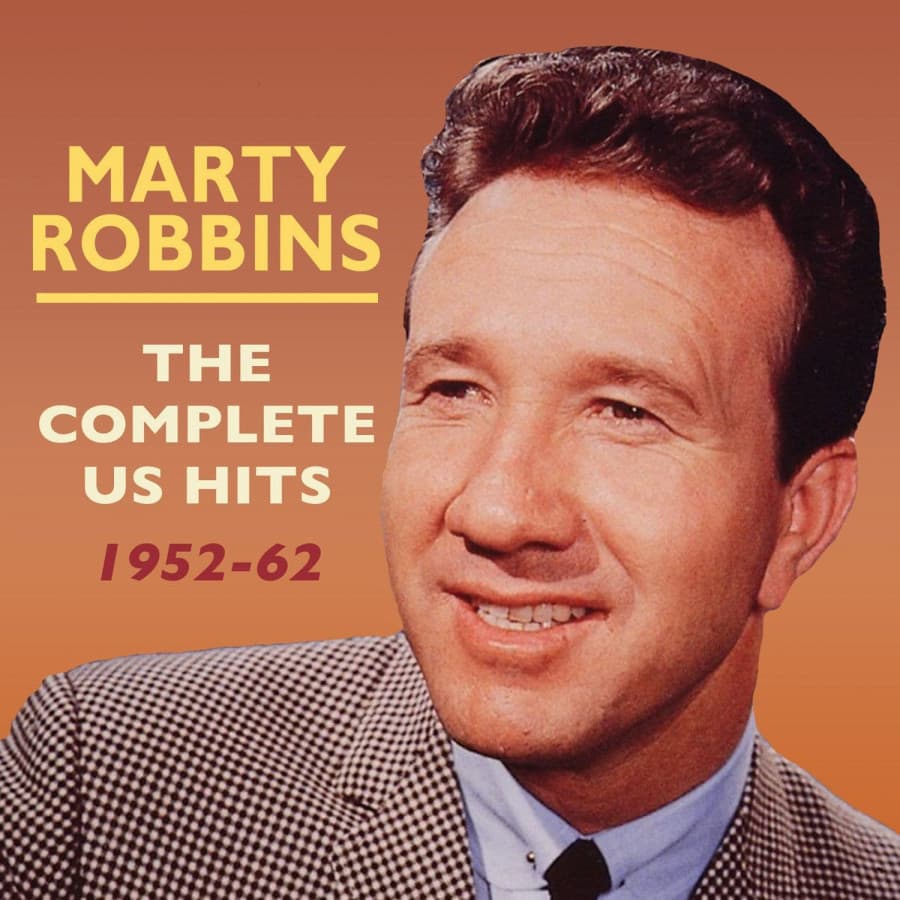
The Fragile Poetry of Promise and Heartbreak
When Marty Robbins released “Pretty Words” in 1963 as part of his album Return to Me, the song found itself nestled within a period of rich artistic maturity for the country troubadour. Although it didn’t soar to the top of the Billboard charts like some of Robbins’ earlier triumphs—“El Paso” or “Don’t Worry”, for instance—it stands as one of those quietly enduring pieces that reveal the artist’s mastery not just of melody, but of emotional truth. Its modest commercial footprint belies the depth of its craft: a song that moves with deceptive simplicity, where heartbreak is disguised as elegance, and tenderness conceals an ache that lingers long after the last note fades.
At its core, “Pretty Words” is a meditation on the gulf between what is said and what is felt—the uneasy terrain where affection becomes illusion. Robbins’ vocal performance, warm yet resigned, carries the ache of a man who has learned that love’s language can be both balm and betrayal. The arrangement is understated, almost courtly in its restraint: a gentle waltz rhythm, brushed percussion, and softly weeping steel guitar create a setting that feels timeless, suspended between romance and regret. In this quiet space, Robbins’ voice becomes the central instrument—not showy or grandiose, but intimate, confiding, as if he’s whispering the story directly into your ear across decades.
Lyrically, the song dwells in a moment of disillusionment. It explores how words—those delicate vessels of human connection—can sometimes lose their weight when stripped of sincerity. Robbins was always a storyteller first; his genius lay in his ability to turn emotional universals into miniature narratives. In “Pretty Words,” he captures that instant when someone realizes that love has been spoken beautifully but lived poorly. The phrases once cherished now echo with irony. It is not bitterness that drives the song but rather a kind of weary wisdom: a recognition that beauty alone cannot sustain truth.
Musically, Robbins was bridging worlds during this era—country balladry intertwined with pop sophistication, Nashville refinement meeting Western sentimentality. “Pretty Words” exemplifies this fusion perfectly. There’s a cinematic quality to its production, an almost orchestral smoothness that hints at Robbins’ fascination with broad musical landscapes beyond honky-tonk confines. Yet beneath that polish lies something deeply human—a tremor in his phrasing, a pause before certain lines—that betrays vulnerability more than polish ever could.
In retrospect, “Pretty Words” feels like one of those hidden gems in Robbins’ vast catalog: less heralded but profoundly revealing. It reminds us that behind every grand Western saga or chart-topping hit was an artist attuned to the subtleties of emotion—the quiet devastations that define real love and loss. Listening today, one can still feel its pulse: the lingering echo of promises made in good faith and broken by time, carried forever on the wind like those pretty words themselves.
 Timeless Melodies
  Oldies Songs