
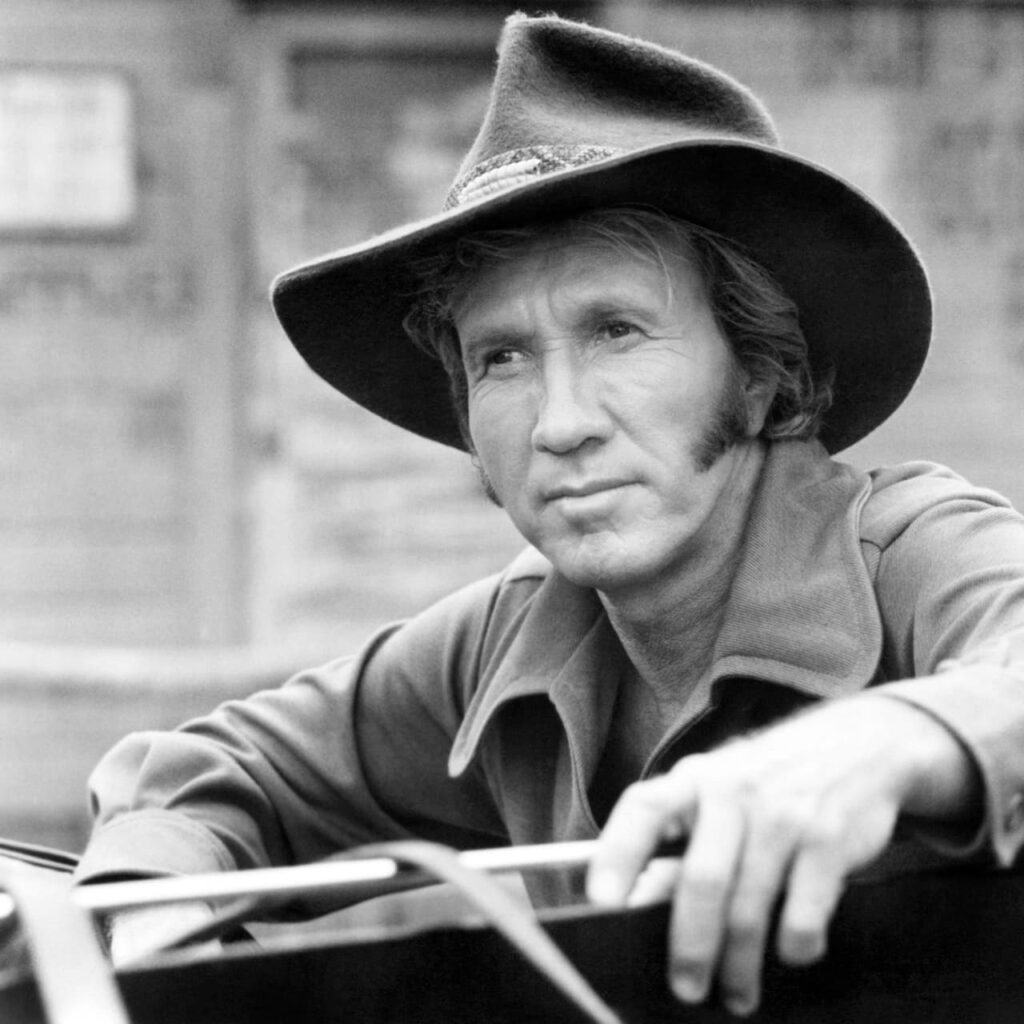
A tragic western showdown turned heartbreaking family confession “Tall Handsome Stranger” by Marty Robbins
“Tall Handsome Stranger” is a haunting ballad of vengeance, duty, and the bitter weight of blood ties, as Marty Robbins weaves a tale of a fateful duel between brothers under a dusty sunrise.
Originally released on Robbins’ 1963 album Return of the Gunfighter, “Tall Handsome Stranger” is not one of his chart singles, but it occupies a cherished place in his catalogue. The album itself peaked at #8 on the Billboard Country Albums chart after the chart was established in early 1964. Though the song never capped its own chart run, its power and storytelling have cemented it as a fan favorite.
The song, written by Henry Dorrough, opens with vivid imagery: “A tall handsome stranger rode into town / With fire in his eyes, burning red as sundown.” From his dusty boots and open coat to the ominous “six ways of dyin’ hung low on his side,” Robbins paints the stranger as both graceful and deadly a figure of myth and menace. The stranger comes seeking the narrator a town deputy and quickly reminds the town that he was once jailed for killing a guard on the Santa Fe line.
As the story unfolds, tension mounts. The stranger boasts, the crowd gathers, and Robbins gives us a simmering confrontation. He sings of silent nights and a heart that wishes the stranger would just ride away. But at sunrise, with eyes on him and fate closing in, the confrontation is inevitable. When the deputy draws his gun, the moment of truth arrives. Their bullets fly, and the stranger falls. In one of country music’s most heartbreaking reveals, Robbins confesses: “The stranger’s my brother … born an outlaw. He must have forgotten I taught him to draw.” The narrator realizes the blood he shed is the same blood he once shared a bitter, tragic recognition that cuts deeper than any gunshot.
The meaning of the song strikes at the heart of loyalty and regret. As Songtell notes, it’s not just about a gunfight; it’s about family, destiny, and the cruel inevitability of violence. The deputy isn’t proud of his victory, because the one he defeated was his own brother and in that twist, Robbins reminds us that the cost of duty can be unbearably personal. The final lines “When she hears this story … how Mother will cry” are a somber acknowledgment of grief that ripples far beyond a single town or moment.
Musically, the arrangement mirrors the emotional weight of the narrative. Robbins’ voice is calm, deliberate, almost resigned he doesn’t shout his sorrow, he speaks it. The instrumentation is spare yet effective, with a subtle guitar and atmospheric backing that keeps the listener focused on the story’s moral and emotional core.
For older listeners who grew up with vinyl and stories of the American frontier, “Tall Handsome Stranger” feels like a midnight campfire tale one that lingers in memory. It evokes the dusty streets of a Western town, the gathering crowd, and the silent heartbreak of a family torn apart by fate and gunfire. Its resonance lies not in heroic swagger but in sorrowful reflection.
Ultimately, Marty Robbins’ “Tall Handsome Stranger” is more than a Western ballad. It is a tragic meditation on loyalty, regret, and the indelible bonds of blood. It reminds us that sometimes, the most dangerous person is the one closest to us and that in the harsh West of myth and reality, the cost of justice can be heartbreakingly high.
 Oldies Songs