
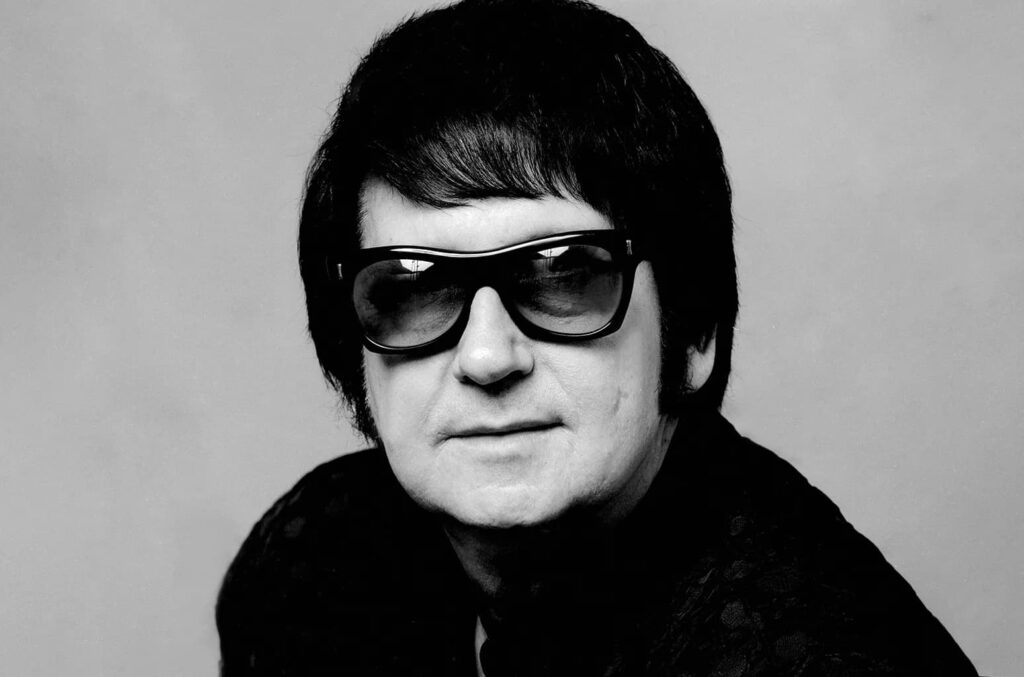
When “Crying” Became a Shared Confession Across Generations
Few songs in popular music carry the weight of heartbreak as profoundly as “Crying.” And few performances have ever redefined that weight the way Roy Orbison did alongside k.d. lang on Top of the Pops in 1988. This was not merely a revival of a classic—it was the quiet passing of emotional truth from one voice to another, across time, across generations.
Originally released in 1961, “Crying” was one of Roy Orbison’s defining works, reaching No. 2 on the Billboard Hot 100 and cementing his reputation as the master of operatic sorrow in rock and pop music. Even then, Orbison was different. While others shouted rebellion, he whispered pain. His voice didn’t just sing heartbreak—it endured it.
By 1988, Orbison had already lived several musical lives. Standing beside him was k.d. lang, an artist deeply influenced by his emotional honesty. What unfolds in this performance is remarkable for what it refuses to do. There is no dramatic staging, no exaggerated gestures. Both singers stand almost motionless, allowing the song itself to breathe. The silence between phrases feels as important as the notes.
Orbison’s voice, still hauntingly fragile, carries the memory of loss with devastating restraint. When k.d. lang enters, her voice does not overshadow—it echoes. She sings as if she has known this pain for years, as if the story already belonged to her. Their harmonies feel less like a duet and more like two souls recognizing the same wound.
The meaning of “Crying” has always been simple and brutal: the moment when pride collapses, when pretending no longer works, and grief finally reveals itself. In this 1988 performance, that meaning deepens. It becomes a meditation on time, on everything lost and everything remembered. Love does not fade here—it lingers, unresolved.
Watching it now, the performance feels almost sacred. It reminds us of an era when voices mattered more than images, when emotion was not rushed, and when a song could sit quietly with the listener long after the final note faded. Roy Orbison and k.d. lang did not just sing “Crying.” They allowed it to live again—softly, honestly, and forever.