
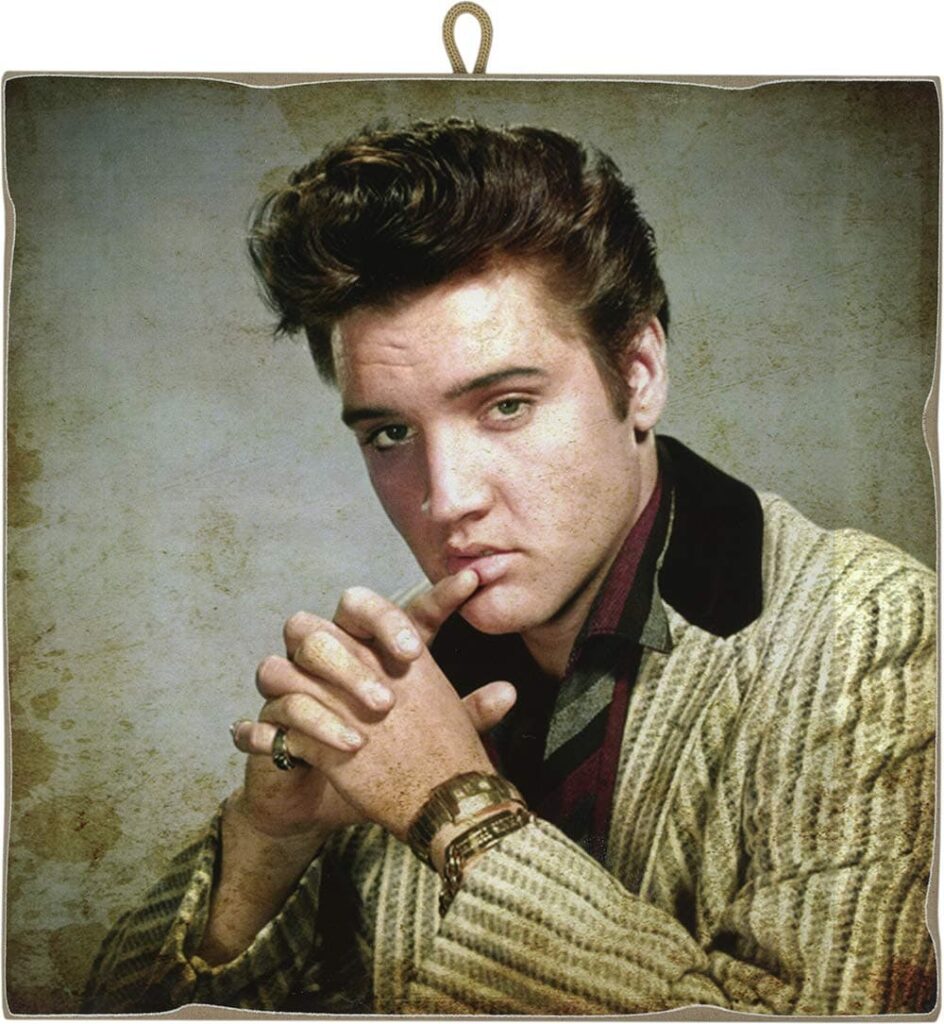
A tender confession of love and fear “I Really Don’t Want to Know” by Elvis Presley captures the ache of uncertain devotion
When “I Really Don’t Want to Know” drifts in, it carries the fragile ache of a heart that loves too much and fears too deeply; it is a song about love’s painful shadows as much as its sweet promise.
Originally penned in 1953 by Don Robertson (music) and Howard Barnes (lyrics), the song became a classic of mid-century popular music first achieving fame via versions by other artists before being reimagined by Elvis Presley in 1970.
Elvis recorded his rendition on June 7, 1970 at RCA Studio B, Nashville, as part of a prolific set of sessions that would form the backbone of his next country-focused album. The song was released as a single on December 8, 1970, ahead of the album’s full release.
Upon release, “I Really Don’t Want to Know” achieved a respectable showing: it reached No. 21 on the U.S. Billboard Hot 100, No. 23 on the Country Singles chart, and notably climbed to No. 2 on the Adult Contemporary chart underlining Elvis’s ability to transcend genre boundaries and touch listeners across musical tastes. In Canada, the song also found an audience, reaching No. 9 on the RPM Top Singles chart.
Sonically and emotionally, Elvis’s version brings a rich, soulful weight to the song. The arrangement in 3/4 time and set to a moderate tempo around 78 BPM in the key of C major allows ample space for his voice to breathe, to linger on each sorrow-tainted refrain. Supported by a chorus of backing vocals, gentle guitars, piano, and subtle country instrumentation, his performance transforms the track into a confessional hymn the kind of song that feels like a quiet conversation between listener and singer, at twilight, with the world momentarily hushed.
The lyrics speak of love shadowed by insecurity and fear:
“Oh how many arms have held you / And hated to let you go … But I really don’t want, I don’t wanna know.”
In those lines lies a universal heartache: the dread that love might be tattered by whispered pasts, and the quiet longing to stay in the dark to love without knowing, to believe without proof. Elvis doesn’t demand assurance; he begs for mercy, for the possibility of love unmarred by doubt.
In the broader arc of Elvis’s career, “I Really Don’t Want to Know” marks a mature, introspective chapter. Coming after his explosive early rock ’n’ roll fame, this song belongs to a period when he embraced country and adult-contemporary styles, demonstrating a depth of emotional expression rarely matched in his earlier work. The single helped pave the way for his 1971 album Elvis Country (I’m 10,000 Years Old), a record that affirmed his return to musical roots while exploring themes of love, loss, longing, and mortality.
For those who remember music before the digital age when songs carried in them whispers of smoky lounges, late-night radio, and the quiet ache of longing this track often evokes a bittersweet sense of nostalgia. It conjures memories of quiet rooms, hearts opened in trust, and the precious vulnerability of love unguarded.
Ultimately, Elvis Presley’s “I Really Don’t Want to Know” stands as a testament to love’s fragile beauty a song that doesn’t demand confidence or assurances, but gently acknowledges fear, hope, and the human yearning to hold on, even when the past casts long shadows. It remains a quiet masterpiece of emotional honesty, resonating even decades later with the soft ache of longing.