
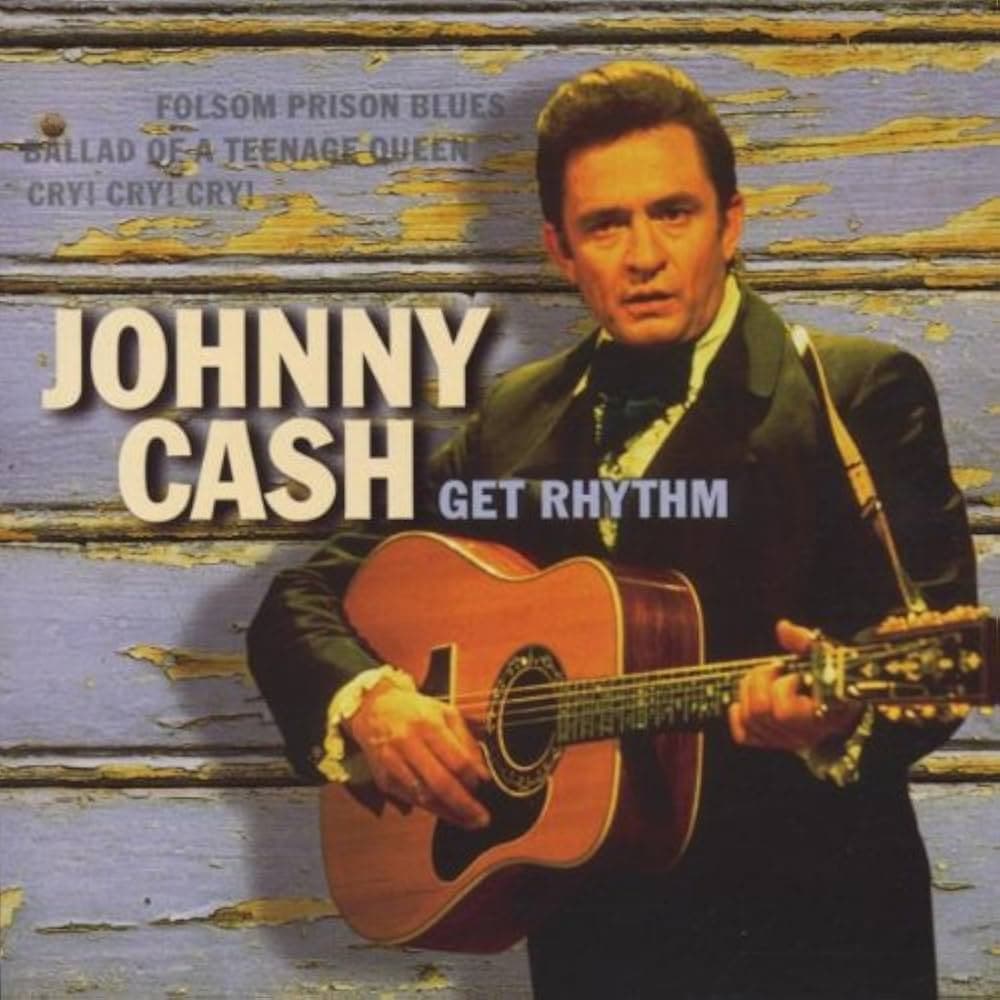
A joyful reminder that even the hardest days can be lifted by a simple beat
Get Rhythm by Johnny Cash is one of those songs that feels like a friendly nudge back into the world a bright, quick-footed tune that sweeps away gloom the moment it begins. Beneath its playful rhythm lies a gentle truth: sometimes the smallest spark of music can lighten the heaviest moments, turning burdens into something a little easier to carry.
Originally recorded in 1956 at Sun Records, Get Rhythm first appeared as the B-side to the towering hit I Walk the Line. It didn’t make much noise upon release, overshadowed by its famous companion. But more than a decade later, in 1969, when Sun reissued the song with added crowd ambience, it finally caught the attention it deserved. The revived version stepped onto the charts, reaching No. 60 on the Billboard Hot 100, No. 23 on the Billboard Hot Country Singles chart, and climbing all the way to the top position on Canada’s RPM Country Tracks. What once was overlooked became a beloved part of Cash’s musical legacy.
The inspiration behind the song came from something beautifully ordinary. Cash noticed a young shoeshine boy, working hard yet humming with happiness, tapping out rhythms with every movement as if life’s troubles couldn’t reach him. There was no glamour in that moment just the quiet strength of someone choosing joy despite hardship. Cash turned that small memory into a message, writing Get Rhythm as a reminder that lifting one’s spirit often begins with a simple beat.
Musically, the song carries that message effortlessly. The classic “boom-chicka-boom” sound of Cash and the Tennessee Two gives it an uplifting momentum, with Luther Perkins’ crisp guitar lines and Marshall Grant’s steady bass driving each verse forward. It’s a sound that doesn’t shout for attention instead, it glows, warm and steady, like sunlight slipping through a dusty window. Cash’s voice, rich and reassuring even in his youth, turns the song into a friendly piece of advice rather than a command.
And as the years pass, Get Rhythm becomes more than just a lively tune. It drifts back into memory: the sound of jukeboxes spinning in small cafés, radios humming softly on slow afternoons, the familiar comfort of hearing a song that once made a person’s day a little easier. It carries the mood of simpler times, when music stitched itself into daily life and helped mend its frayed edges.
What makes Get Rhythm truly timeless is its understanding of human resilience. It doesn’t deny that life can be wearying. Instead, it offers a gentle way through it a reminder that the heart can stay open, light, and steady if it has a rhythm to follow.
In the end, the song stands as a companion on all kinds of days. A small burst of brightness. A tap of the foot that grows into a smile. A musical way of saying: don’t forget to find your rhythm it’s still there, waiting to lift you up.
 Oldies Songs