
A Harmonic Bridge Across Time: Chet Atkins, Franz Lehár, and the Transcendent Elegance of “Villa” Live on the Ozark Jubilee
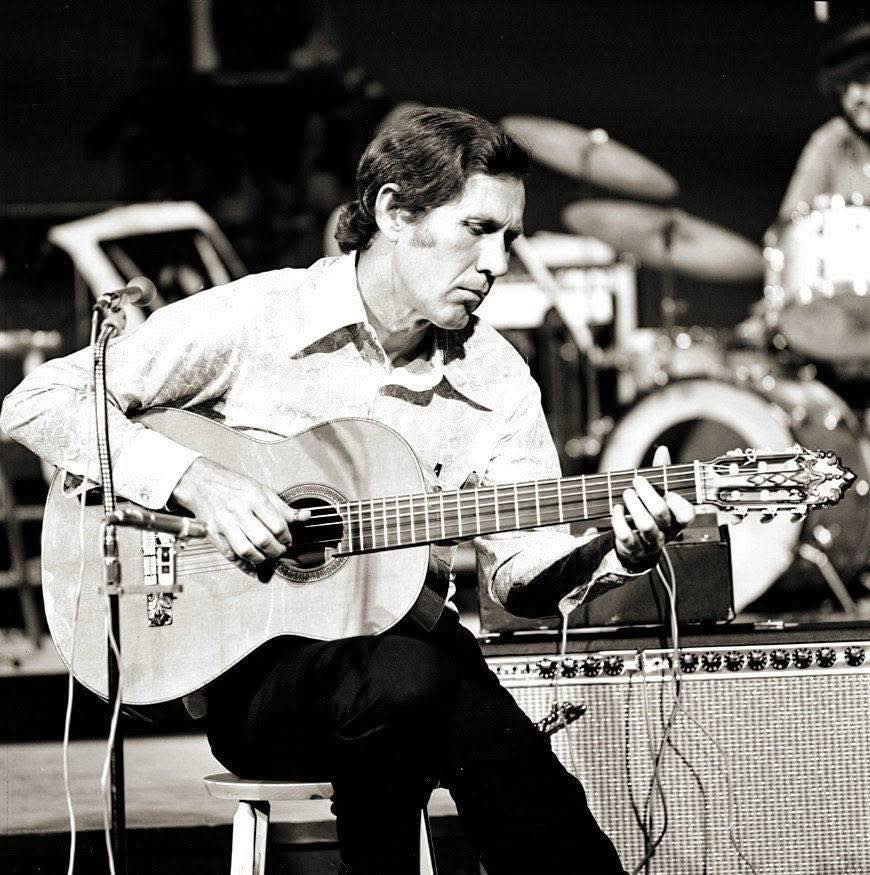
When looking back at the rich history of mid-century American entertainment, few television performances capture the flawless integration of European classical majesty and rustic Southern sophistication quite like the moment Chet Atkins stepped onto the stage of the Ozark Jubilee in 1958 to perform “Villa.” Originally composed by the Austro-Hungarian master Franz Lehár as the defining, melancholy soprano aria “Vilja-Lied” for his legendary 1905 operetta The Merry Widow, the melody had spent decades echoing through grand European opera houses as a sweeping vocal lament about an enchanting, elusive woodland nymph. However, when “Mr. Guitar” brought his hollow-body electric Gretsch to the Springfield, Missouri broadcast, he executed a breathtaking, purely instrumental reinterpretation that completely stripped away the traditional German libretto. By utilizing his revolutionary independent thumb-and-finger picking technique, Atkins transformed a classical theatrical masterpiece into an intimate, jazz-inflected mid-century standard, demonstrating to a live national television audience that a truly beautiful melody possesses a universal heart that transcends the boundaries of time, language, and genre.
The monumental commercial and critical success surrounding this arrangement highlights a golden era when instrumental guitar virtuosity could actively compete with mainstream pop vocalists on the national music charts. Chet Atkins originally recorded the definitive studio master of “Villa” for his landmark 1957 RCA Victor album, Hi-Fi in Focus. Driven by the crisp note separation of this specific track and the album’s technical brilliance, the LP achieved a magnificent milestone by climbing all the way to No. 7 on the Billboard Pop Albums chart—an extraordinary, historic feat for an entirely instrumental country-jazz guitar record during the dawn of the rock ‘n’ roll revolution. When he later traveled to perform it live on the Ozark Jubilee in 1958—the first national network television show to regularly showcase country music trailblazers—the broadcast tracking served as a pristine, high-fidelity victory of live audio engineering. The mix masterfully positioned Chet’s clean electric picking directly upfront, supported only by a subtle, acoustic rhythm section, allowing his intricate harmonics to ring through living rooms with breathtaking clarity.
The behind-the-scenes evolution of this performance reveals a fascinating narrative of artistic courage and deep musical curiosity that defined Chet’s legendary role as an innovator. During the late 1950s, the Nashville music scene was facing immense pressure to adapt to changing commercial tastes, and Atkins was actively pioneering what would become globally revered as the “Nashville Sound” by introducing lush, sophisticated pop arrangements to traditional roots music. Chet’s decision to adapt a complex, late-romantic European opera piece like “The Vilja Song” was born out of his lifelong habit of studying diverse musical vocabularies, ranging from classical piano transcriptions to Parisian gypsy jazz. Rather than limiting his instrument to basic acoustic patterns, he spent countless hours in the studio working out how to replicate the fluid, emotional phrasing of a operatic soprano singer using nothing but six steel strings and a plastic thumbpick, bridging the gap between high-art orchestral composition and regional American television showmanship.
For the serious musicologist who closely studies the delicate historical mechanics of vintage fingerstyle guitar, Atkins’ physical execution on “Villa” during the 1958 kinescope recording remains an absolute revelation. Navigating Lehár’s dramatic, winding melodic structure requires exceptional finger dexterity, absolute pitch control, and an innate sense of timing—artistic demands that the native Tennessean met with an astonishing, relaxed elegance. Utilizing his iconic thumbpick to drive a steady, walking bassline, Chet simultaneously used his fingers to weave a syncopated lead melody directly over the top, creating the vivid sonic illusion of two distinct guitarists playing in perfect harmony. The true climax of the arrangement lies in his flawless execution of artificial string harmonics; by lightly touching the wire exactly twelve frets above the fretted note while plucking, he made his electric instrument chime like a delicate music box, projecting an authentic emotional intimacy that modern digital recording software cannot replicate.
To turn back the clock and re-engage with the archival memories of Chet Atkins’ magnificent 1958 delivery of “Villa” today is to be swept away by a powerful, deeply comforting wave of sweet nostalgia and profound gratitude. Watching a premier musical vanguard command the center spotlights during the golden age of live television transports the listener back to a highly sophisticated era of entertainment history—a time when an iconic pioneer could completely captivate an international audience through the sheer strength of absolute sincerity and flawless technical precision. This definitive milestone stands as a permanent, highly reflective reminder that real, enduring stardom requires no artificial synthetic enhancements to command our deepest admiration. It leaves the global community with a timeless reminder that when a beautiful melody is delivered straight from the passionate, resilient soul of a true legend, its magic possesses an immortal strength that will continue to cross generations, warm our hearts, and shine forever.