
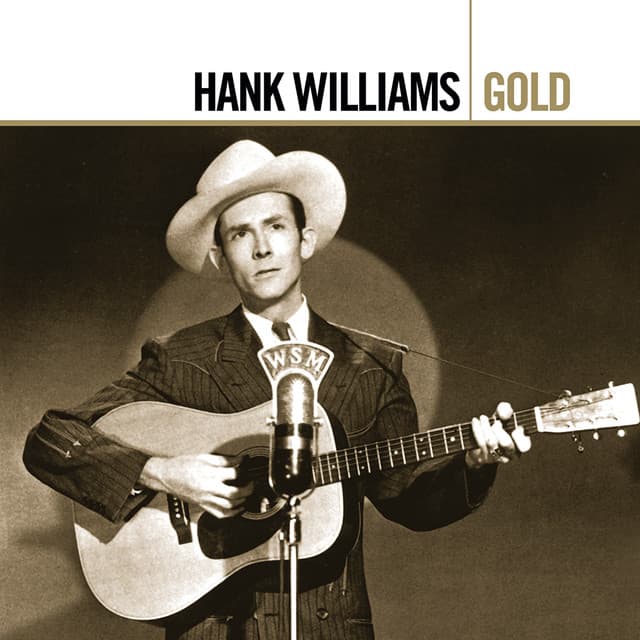
“Ramblin’ Man” — a lonesome anthem for the restless soul, carrying the dust of the road and the ache of moving on
There is a kind of song that doesn’t just play — it drifts, like a worn pair of boots on a dusty highway, echoing with footsteps and memories. Ramblin’ Man by Hank Williams is one of those timeless pieces: simple, spare, haunted — a confession sung in a minor key, where “home” is a memory and “tomorrow” always calls.
Important facts first. Ramblin’ Man was written by Hank Williams in 1951, recorded at Castle Studio in Nashville on June 1, 1951, and initially released the same year under his pseudonym Luke the Drifter — a name he used for songs that were more moral-dramas or darker reflections than his usual honky-tonk hits. The single’s B-side was “Pictures from Life’s Other Side.”
Because of both its somber tone and the “Luke the Drifter” label — a signal to jukebox operators that this was not dance-music — Ramblin’ Man did not chart at the time. It remained a deeper cut, appreciated by those who looked beyond popularity, those willing to listen for truth in the quiet verses.
Musically, the song unfolds almost like a ghostly whisper. Its backbone is a two-chord rhythm guitar figure in a minor key, accompanied sometimes by mournful steel guitar or fiddle, but never exaggerated — always minimal, always haunted. In this sparseness, Williams’s voice — with its familiar yodel-tinged lilt, its tremor, its weary resignation — becomes the soul of the record. He does not offer comfort. He offers honesty.
Lyrically, Ramblin’ Man is a sorrowful admission of destiny. The narrator confesses that though he may love a woman, he is doomed by wanderlust — by a calling he cannot ignore. He knows that staying would mean breaking her heart again. The repeated line “When the Lord made me, He made a ramblin’ man” becomes both lament and explanation, a recognition that some souls cannot settle, some hearts never rest.
The story behind the song deepens its poignancy. Within the greater arc of Hank Williams’s life, Ramblin’ Man sits among the more introspective works — not as commercial or flashy as his hits, but as raw and honest as a journal entry sung under lamplight. The “Luke the Drifter” moniker allowed Williams and his producer, Fred Rose, to record songs that were moralistic, heavy, or melancholic — songs that might not spin on every jukebox, but that spoke quietly, deeply, to personal sorrow or contemplation.
In a way, Ramblin’ Man laid a foundation — not just for Williams, but for future generations of wandering-heart songs in country music. Its influence can be felt in the many artists who followed: the drifters, the travelers, those haunted by roads they cannot stay off. And indeed, decades later, when others borrowed the title — such as the rock-blues band that took the name for a very different tune — the echo could still be heard: this was, at its root, a song about movement, longing, loss, and the restlessness of the human soul.
Listening to Ramblin’ Man today is like opening an old letter — yellowed, edges curled, words fading but meaning still sharp. It doesn’t offer easy comfort. It doesn’t promise redemption or joy. Instead, it brings understanding. It speaks of the restless nights, the long roads, the guilt of leaving, and the fragile hope of somewhere ahead. For a listener who has seen the miles stretch on, who has carried hope and heartbreak under the same sky, the song resonates — not as a relic, but as a companion in solitude.
In the end, Ramblin’ Man reminds us that not all shackles are made of steel: some are made of longing, some of memories, some of calling. And sometimes, the only way to survive is to keep moving — even if your footsteps echo through empty towns, silent rooms, and broken promises. Yet somehow, even in that sorrow, there remains dignity: the dignity of truth, admission, and the haunting beauty of a soul that knows it was forged in wander.
 Oldies Songs