
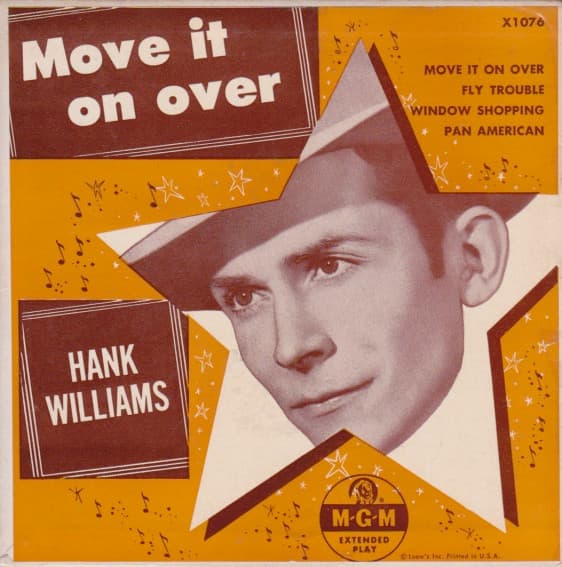
“Move It On Over” a rollicking invitation to shake off the night and step into something new
When “Move It On Over” by Hank Williams begins, it doesn’t just play it kicks open a door, drags you off the front porch, and sets you stomping down a dusty road with a wink and a grin in your heart.
In June 1947, Hank Williams released “Move It On Over” as his debut single on MGM Records the A-side was backed by “(Last Night) I Heard You Crying in Your Sleep.” That record marked a turning point: the song soared to #4 on Billboard’s Most Played Jukebox Folk Records chart, becoming Hank’s first major hit.
But beyond numbers, “Move It On Over” signaled a seismic shift in American music. Recorded on April 21, 1947, at Castle Studio in Nashville, the session featured not his usual band, but seasoned session musicians a choice guided by producer Fred Rose, who felt the arrangement needed a tighter, cleaner sound to cross beyond the rough-hewn hillbilly mold.
The song weaves a classic 12-bar blues structure a gesture toward Southern blues and rhythm that carried deep roots in Black American musical traditions. Its narrative is simple and sly: a man returning home too late to find mercy so he must “move over” and spend the night in the doghouse. The humor’s rough around the edges, but the relatability hits home; for many listeners then and now it mirrored small domestic disasters and the gentle absurdities of everyday love.
When this song hit the jukeboxes, it seemed as if the world glanced sideways: here was country music familiar twang, heartfelt vocals but wrapped in a groove that hinted at something else: an early whisper of rock ’n’ roll, alive with bluesy swagger and a foot-stomping rhythm that demanded you move. Many music historians trace a line from “Move It On Over” to later rock records; the melody and structure would re-emerge a few years later in groundbreaking tracks by other artists.
For Hank Williams, the success of the song was more than a chart position it was life-changing. The royalties and newfound popularity put his name in lights. It kicked open doors: he was invited onto the influential radio platform Louisiana Hayride, and began reaching audiences across the South, beyond the small-town bars and community dances where he had started.
Yet what makes “Move It On Over” endure is not just its music, but its spirit. There is in it a refusal of restraint a song that laughs in the face of midnight scolding, that turns the “doghouse” into a swingin’ house, that spins heartbreak into humor and blues into foot-tapping joy. It reminds us that sorrow doesn’t always demand mourning; sometimes it demands movement.
As the first major hit of the man who would become one of country music’s greatest legends, “Move It On Over” stands as both a beginning and a statement. It says: I come from the dust roads, the late nights, the crumpled boots and broken hearts but I carry rhythm in my blood, and I won’t be silent.
Decades later, when you hear that opening strum, and those words “Move over, good dog, ’cause a mad dog’s moving in,” you may no longer be young but your feet remember the shake of the guitar, your heart recalls the mischief, and somewhere inside you the memory of that first step still stirs.
 Oldies Songs