
Laughing at the Inevitable: Mortality, Irony, and Quiet Courage in “I’ll Never Get Out of This World Alive”
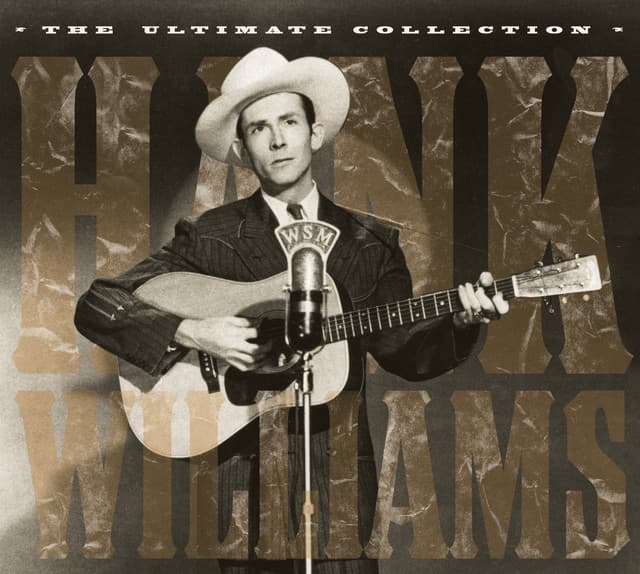
“I’ll Never Get Out of This World Alive” is one of Hank Williams’ most unsettling and revealing songs—a wry smile cast over the shadow of mortality. On the surface, it sounds almost playful, even humorous. Yet beneath that lightness lies a profound awareness of life’s limits, sung by a man who seemed to sense how little time he had left. In just a few minutes, Williams manages to turn resignation into wit and fear into fragile laughter.
The song was written and recorded by Hank Williams in 1952 for MGM Records and released as a single later that year. It reached No. 1 on the Billboard Country & Western Best Sellers chart, becoming one of his final chart-topping hits during his lifetime. By this point, Williams was already a towering figure in country music—commercially successful, culturally influential, and personally unraveling. That context gives the song a chilling resonance.
Musically, “I’ll Never Get Out of This World Alive” is deceptively upbeat. The tempo is brisk, the melody catchy, and the arrangement rooted in classic honky-tonk style. Steel guitar and rhythm section keep things moving forward, almost cheerfully. It is music that invites a toe tap—an intentional contrast to the song’s message. Williams understood the power of contradiction. By wrapping dark truth in bright sound, he made the song more human, more believable.
Lyrically, the song confronts mortality with blunt honesty. The title alone feels like a punchline delivered too early. Williams sings about trouble, money problems, and disappointment, then shrugs it all off with the central truth: none of it will matter in the end, because no one escapes life alive. There is no philosophy lesson, no sermon. Just observation—dry, ironic, and unmistakably personal.
What makes the song extraordinary is Williams’ vocal delivery. His voice, thin yet emotionally charged, carries a tone that balances humor and exhaustion. He does not sound afraid of death so much as tired of fighting the world. There is an acceptance here, but not peace. It feels like a man acknowledging reality while still trying to laugh through it.
By 1952, Hank Williams was living under immense pressure. His health was failing, his marriage had collapsed, and his dependence on alcohol and prescription drugs was deepening. Audiences heard him weekly on the radio, but few understood how fragile he had become. In retrospect, “I’ll Never Get Out of This World Alive” sounds less like clever wordplay and more like subconscious confession.
The song also reflects Williams’ genius as a songwriter. He had an unmatched ability to express complex emotions in plain language. There are no poetic flourishes here, no metaphors layered on top of one another. The power lies in simplicity. Anyone can understand the lyric. That accessibility is what makes it endure.
There is a long tradition in folk and country music of confronting death directly, but Williams’ approach is unique. He neither romanticizes nor fears it. Instead, he treats mortality as a fact of life—absurd, unavoidable, and oddly leveling. Rich or poor, hopeful or broken, everyone arrives at the same end. That idea gives the song a strange kind of equality.
Emotionally, the song resonates differently as time passes. When first heard, it can feel humorous, even jaunty. Later, it begins to sound heavier. The laughter feels thinner. The awareness sharper. This shift mirrors life itself—how truths once shrugged off grow more meaningful with experience.
Within Hank Williams’ catalog, “I’ll Never Get Out of This World Alive” stands alongside songs like “Cold, Cold Heart” and “I’m So Lonesome I Could Cry”, not because it shares their sadness, but because it shares their honesty. Williams never pretended life was simple. He only insisted on telling the truth as he felt it.
The song’s legacy is further deepened by what followed. Hank Williams died on January 1, 1953, just months after the song’s release, at the age of 29. In that light, the title takes on an almost unbearable weight. What once sounded like dark humor now reads like prophecy. Few songs in popular music history feel so tragically self-aware.
Yet the song does not ask for pity. That is perhaps its most powerful quality. Williams does not plead or despair. He acknowledges, accepts, and keeps singing. There is courage in that stance—a quiet defiance expressed through humor.
For listeners later in life, “I’ll Never Get Out of This World Alive” often becomes a companion rather than a warning. It reminds us that struggle is universal, that certainty is rare, and that laughter can coexist with truth. It does not offer hope in the traditional sense. Instead, it offers clarity.
In the end, “I’ll Never Get Out of This World Alive” is not just a song about death. It is a song about living honestly in its shadow. Through Hank Williams’ clear-eyed writing and emotionally charged voice, it becomes a reflection on fragility, endurance, and the strange comfort of acceptance. The world may be unforgiving, the ending unavoidable—but as long as the song plays, the voice remains. And sometimes, that is enough.
 Oldies Songs