
The Birth of the Big O: A Raw, Exhilarating Blast of Rockabilly that Traded Tears for Teenage Kicks.
Before the black suits, the signature dark glasses, and the ethereal, operatic ballads of heartbreak that would define Roy Orbison as “The Big O,” there was the raw, unpolished energy of a young man from Wink, Texas, eager to find his place in the burgeoning sound of rock and roll. That definitive starting gun was the electrifying 1956 track, “Ooby Dooby.” It is an essential piece of rock history the first nationally charting single for Roy Orbison and a quintessential slice of the frenetic, joyous sound of Sun Records.
This song is a true relic of the mid-1950s the sound of rebellion set to a driving, almost frantic rhythm. It was a time when the world was changing, and the airwaves were crackling with the new, infectious sounds of Memphis.
The journey of “Ooby Dooby” began not in Memphis, but in the college scene of Denton, Texas. The song was written by two of Orbison’s North Texas State college friends, Wade Moore and Dick Penner, reportedly scribbled out in a mere fifteen minutes on a fraternity house roof. It was pure, distilled teenage excitement, a dance-craze novelty tune with lyrics that were simple, nonsensical, and designed purely for movement: “Hey baby, jump over here / When you do the Ooby Dooby / I just gotta be near.”
Orbison and his band, The Teen Kings, recorded an early version for the local Je-Wel label in 1956. This is where fate intervened. Johnny Cash, who was already established at Sun Records, saw the group perform and, recognizing Orbison’s undeniable talent, urged him to take his record to the legendary producer, Sam Phillips, in Memphis.
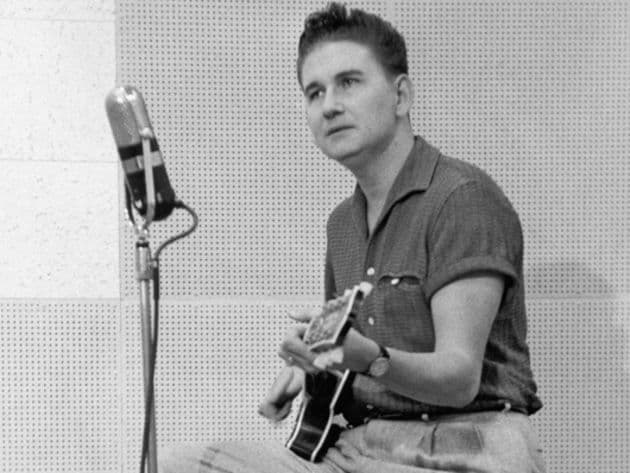
Phillips, the man who discovered Elvis, heard the raw, youthful excitement in the track and signed Orbison and The Teen Kings. They re-recorded “Ooby Dooby” at the hallowed Sun Studios in May 1956, giving it the signature echo and propulsive drive that defined the Sun Rockabilly sound. This version, released as Sun Records single #242 with the Orbison-penned track “Go! Go! Go! (Down The Line)” on the B-side, became his first success.
Its chart position, while modest by the standards of his later career, was groundbreaking for the young artist. “Ooby Dooby” peaked around Number 59 on the Billboard Hot 100 chart in late 1956/early 1957. More importantly, it was a huge regional hit, dominating local charts in cities across the South and Midwest, putting Roy Orbison’s name on the national rock and roll map for the very first time.
What’s fascinating to revisit now, knowing the man he would become, is the sound of his voice. In “Ooby Dooby,” Orbison’s voice is clear, confident, and energetic, but it lacks the quivering emotional complexity and multi-octave range of his monumental ballads like “Crying” or “Only the Lonely.” Here, he’s simply a rockabilly cat, playing a scorching lead guitar break himself a skill often overshadowed by his singing later on and shouting out the infectious, primal rhythm of the dance floor. Sam Phillips believed in the raw, unrestrained energy of youth, and “Ooby Dooby” captured that perfectly.
For those of us who lived through that initial explosion of rock and roll, “Ooby Dooby” is a powerful time capsule. It’s the sound of the moment when a future legend was just another hungry kid in a small recording studio, chasing a dream. It shows the incredible versatility of Orbison, who moved from this frantic, upbeat rockabilly to the solemn, almost operatic pop of the 1960s a musical pivot that is virtually unparalleled in popular music. It’s a nostalgic nod to the beginning, a reminder that even the deepest, most melancholic artists started with a simple call to the dance floor.