
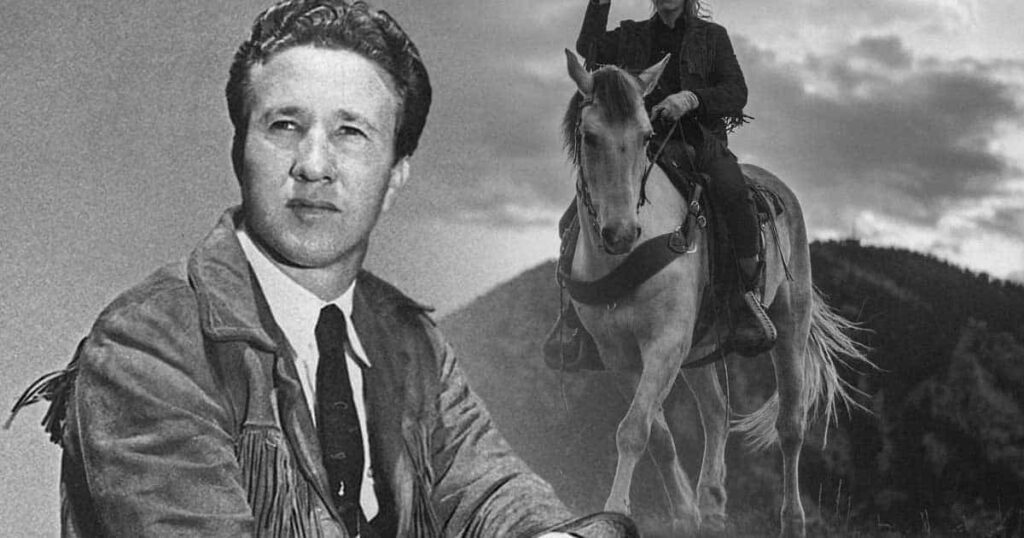
Coming Home to a Song, a City, and a Ghost: The Quiet Reflection of “El Paso City”
“El Paso City” is not merely another Western ballad in Marty Robbins’ legendary catalog it is a reflective conversation between an artist and his own past, a song that looks backward with humility, wonder, and a hint of mystery. Where “El Paso” told a dramatic tale of love and death, “El Paso City” asks a far subtler question: What remains with us after the song is over? In doing so, it became one of the most poignant late-career statements Robbins ever recorded.
Released in 1976, “El Paso City” was the title track of the album El Paso City, issued by Columbia Records. Against expectations in an era dominated by slicker country sounds, the song rose steadily and reached No. 1 on the Billboard Hot Country Singles chart, giving Marty Robbins his final chart-topping hit. It was a remarkable achievement proof that storytelling, when done with sincerity and depth, could still move audiences decades after an artist’s initial success.
The premise of “El Paso City” is deceptively simple. The narrator is driving through West Texas, passing through El Paso, when memories begin to surface memories not just of a place, but of a song he once sang. As the lyrics unfold, Robbins blurs the line between the singer himself and the fictional cowboy from “El Paso”, suggesting a spiritual connection between artist and creation. “Wonder why I keep coming back to this place,” he muses, as if haunted by a life he once lived only in music.
This self-awareness is what makes “El Paso City” so unusual in country music. Rarely does a songwriter revisit his own myth with such gentleness. Robbins does not attempt to rewrite history or extend the original story’s drama. Instead, he treats it like an old photograph faded at the edges, emotionally charged, and impossible to fully explain. The idea that a song can leave a permanent imprint on the soul becomes the emotional core of the piece.
Musically, “El Paso City” is restrained and mature. The arrangement is smooth and unhurried, anchored by acoustic guitar, soft harmonies, and subtle Western flourishes. Robbins’ voice, older now, carries a warmth and calm authority. Gone is the youthful urgency of 1959. In its place is a seasoned narrator, comfortable with silence, reflection, and unresolved feelings. The performance feels less like a declaration and more like a late-night confession.
The lyrics resonate deeply because they speak to something universal: the way certain places, songs, or moments continue to call us back long after life has moved on. Robbins suggests that creativity is not a one-way act. Once released into the world, a song begins to shape its creator in return. The cowboy from “El Paso” may have died in the desert, but his story followed Robbins for the rest of his life, becoming part of his identity.
Within Marty Robbins’ career, “El Paso City” stands as a bookend to his Western saga. It honors the past without being trapped by it. At a time when many artists were chasing trends, Robbins looked inward instead. The song’s success both commercial and emotional affirmed that listeners were willing to follow him there. The No. 1 chart position was not driven by novelty, but by recognition: recognition of memory, aging, and the quiet pull of unfinished stories.
There is also a gentle spirituality beneath the surface. Robbins hints at reincarnation, destiny, or perhaps simply the idea that stories live beyond the people who tell them. He never explains it outright, which gives the song its lingering power. Like the desert landscape it describes, “El Paso City” leaves space for contemplation.
For listeners, the song often feels personal, even intimate. It mirrors the experience of hearing an old record decades later and realizing it has somehow changed not in sound, but in meaning. What once felt like adventure now feels like memory. What once felt distant now feels close.
In the end, “El Paso City” is about reconciliation with the past, with one’s own legacy, and with the knowledge that some songs never truly end. They simply wait, patiently, for us to pass through again. In capturing that feeling, Marty Robbins offered one of the most graceful reflections on artistry and memory ever recorded in country music.
 Oldies Songs