
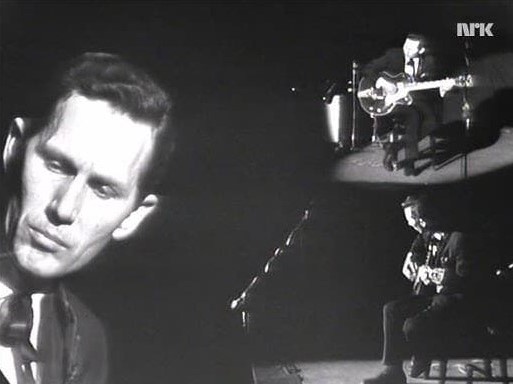
A Masterclass in Syncopated Groove: Chet Atkins and the High-Fidelity Grit of “Levee Walking”
When mapping the evolutionary peaks of twentieth-century fingerstyle guitar literature, certain instrumental trackings emerge as definitive, towering monuments to rhythmic independence, syncopated blues phrasing, and absolute structural precision. A magnificent milestone in this creative timeline was achieved when the incomparable “Mr. Guitar,” Chet Atkins, recorded his definitive interpretation of “Levee Walking.” Originally penned by his legendary protege and fellow guitar vanguard, Jerry Reed, the track was immortalized by Atkins on his landmark 1964 RCA Victor studio album, My Favorite Guitars. Operating at the absolute absolute peak of his technical and narrative powers, Chet delivered a blistering, high-fidelity showcase—proving to a sophisticated listening community how a single hollow-body electric guitar could replicate the driving, foot-stomping energy of a full southern blues ensemble.
The unique creative and historical context surrounding this specific recording project captures a golden era of deep collaboration between Atkins and Jerry Reed on the Nashville scene. Reed, renowned for his highly intricate, funk-infused clawhammer picking technique, wrote “Levee Walking” to mimic the steady, syncopated stride of a laborer walking along the southern river deltas. When Chet adapted the composition for his own catalog, he brought his signature, smooth classical restraint to Reed’s raw, driving energy. The resulting studio tracking represents a spectacular victory of mid-sixties analog sound engineering. Free from the compressed digital cosmetics or synthetic sequencing of modern commercial programming, the production masterfully positions Chet’s Gretsch guitar directly upfront in the center soundstage, capturing the woody acoustic warmth of the chambered body and the immediate, crisp pop of his thumbpick with pristine stereophonic clarity.
The behind-the-scenes fascination of this specific arrangement lies in the astonishing, mind-boggling complexity of its independent physical mechanics. The piece opens with immediate, commanding authority, as Chet’s right thumb establishes a relentless, pulsing alternating bass groove on the lower strings, perfectly capturing the heavy, rhythmic footprint of a delta walk. Rather than allowing the bassline to dictate the timing, his index, middle, and ring fingers act completely independently on the higher treble strings—plucking out a series of sharp, syncopated blues slides, double-stops, and cascading open-string runs. This intricate independent mechanical architecture creates an illusion of two distinct guitarists playing simultaneously, weaving a complex, shifting dialogue directly into a tight, relentless swing pocket.
For the serious musicologist who treasures the deep structural nuances of classic phrasing, dampening techniques, and absolute tone control, Atkins’ studio execution on “Levee Walking” remains an absolute revelation. Navigating a fast-paced, highly syncopated blues melody requires exceptional hand-eye coordination, precise palm-muting to give the bass notes their distinctive “thud,” and an innate, pocket-perfect sense of timing—demands that the Country Music Hall of Fame legend met with his trademark, gentlemanly poise. The unvarnished honesty of the performance, where you can hear the physical snap of the strings against the frets and feel the immediate, vibrant response of his custom amplifiers, projects an authentic human intimacy that modern, computer-sequenced musical programming simply cannot duplicate.
To turn the volume all the way up and re-engage with the pristine, historic textures of this magnificent masterpiece today is to be swept away by a powerful, deeply comforting wave of sweet nostalgia and profound gratitude. Listening to this premier vanguard effortlessly command the intricate, driving lines of Reed’s southern treasure transports the educated listener back to a highly sophisticated era of entertainment history—a time when true, enduring stardom required an authentic powerhouse delivery to captivate an audience. For the dedicated scholars and collectors who spend lifetimes archiving these priceless musical footprints, this definitive performance remains a permanent, highly reflective blessing. It leaves the global community with a timeless reminder that when a powerful melody is delivered straight from the passionate, resilient soul of a true legend, its magic possesses an immortal strength that will continue to cross generations, warm our hearts,