
“I Will Always Love You”: When Dolly Parton Turned Goodbye Into One of Country Music’s Most Beautiful Songs
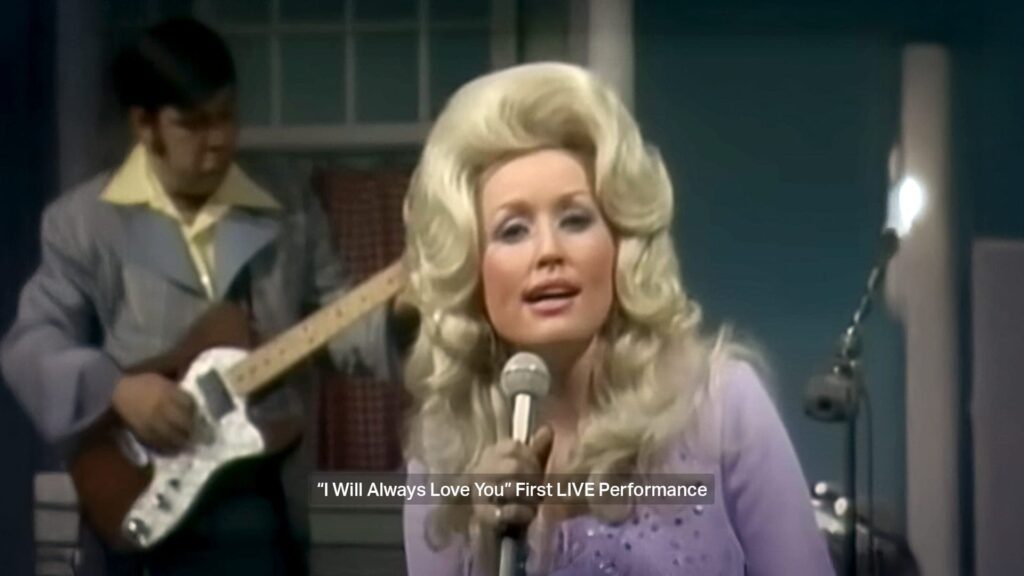
Few songs in popular music carry the emotional weight of “I Will Always Love You.” In a heartfelt live performance, legendary country star Dolly Parton introduced the song with a simple but powerful explanation: it was written for someone very special in her life.
Before singing the opening line, Parton told the audience that everyone has a person they love more than anyone else. The song, she explained, was her way of expressing that kind of love—one that remains even when paths must separate.
With only gentle guitar accompaniment, Parton delivered the song in her signature style: intimate, sincere, and emotionally transparent. The lyrics tell a story of farewell without bitterness. Instead of heartbreak or anger, the song offers gratitude, respect, and a quiet promise that love can remain even after goodbye.
Originally released by Parton in 1974, the song became one of the defining moments of her songwriting career. It reached No. 1 on the Billboard Hot Country Songs chart, demonstrating the deep connection listeners felt with its message. Over time, the composition would become one of the most beloved ballads in modern music history.
In this live performance, the simplicity of the arrangement allowed the emotion of the lyrics to shine. As Parton sang lines wishing happiness and love for the person she was leaving behind, the audience witnessed the rare combination of vulnerability and strength that has always defined her artistry.
More than just a farewell song, “I Will Always Love You” stands as a timeless reminder that sometimes the most sincere expression of love is the ability to let someone go while still wishing them happiness. For Dolly Parton, that honesty transformed a personal story into one of the most enduring songs ever written.